With a substantial volume of work to be completed within a tight timeframe, Ho Chi Minh City has entered a final sprint to develop the regulatory framework for implementing the Urban Development Law during a 30-day intensive drive. In the afternoon, experts were consulted on the draft policies. That same evening, officials from the Ho Chi Minh City Department of Industry and Trade continued working with the municipal People’s Council’s Economic and Budget Committee to finalize draft resolutions for submission to the People’s Council at a special session scheduled for September 21.
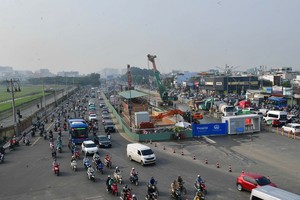
 "Phuoc Long Port area in Thu Duc Ward, Ho Chi Minh City, one of the city’s key logistics hubs (Photo: SGGP)")
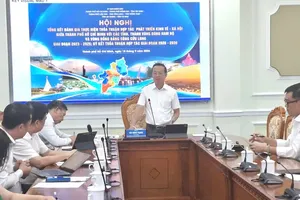
A representative of the Department of Industry and Trade said that under the Urban Development Law, the Ho Chi Minh City People’s Council is responsible for specifying a range of policies concerning the establishment and boundary adjustments of the free trade zone, as well as its organizational and management model and incentive policies. The department began preparing the relevant dossiers in June 2026, solicited feedback from municipal departments and agencies twice, and organized consultation conferences with experts and business associations.
The Department of Industry and Trade is not alone. Numerous municipal agencies are stepping up preparations for dossiers to be submitted to the Ho Chi Minh City People’s Council during the 30-day intensive drive to implement the Urban Development Law.
In September 2026 alone, the People’s Council’s Urban Affairs Committee was assigned to appraise 22 draft normative resolutions covering a wide range of issues that will directly shape the city’s urban space and development approach. Rather than waiting for official submissions, the committee has become involved at an early stage, as departments and agencies begin drafting the resolutions.
Mr. Hoang Tung, head of the Ho Chi Minh City People’s Council’s Urban Affairs Committee, said the committee had proactively coordinated with relevant agencies to discuss key issues concerning legal grounds, jurisdiction, policy content, and feasibility. Once official dossiers are submitted to the People’s Council, each member and advisory team is assigned to study specific areas, review relevant legal provisions, and assess potential impacts.
Issues on which differing views remain are discussed further with the Department of Justice and relevant agencies so that they can be resolved promptly, preventing a backlog at the final stage. For new policies with broad impacts or special mechanisms, the appraisal process is conducted in greater depth and through multiple rounds.
Measures such as the formulation, appraisal, and approval of the city’s master plan, transit-oriented urban development, and policies supporting science and technology will have long-term impacts on Ho Chi Minh City’s development structure and therefore require thorough review, Mr. Tung said.
Following the Urban Affairs Committee’s appraisal, 14 submissions on normative regulations are expected to be presented at the September session. Therefore, he said the key requirement is to organize the work systematically and ensure close coordination among relevant agencies. The overall approach is to avoid compromising the quality of appraisal for the sake of speed while ensuring that procedures do not delay mechanisms essential to the city’s development.
Keeping the policy mechanism on track
The Ho Chi Minh City People’s Council’s Legal Affairs Committee is also working at full capacity to fulfill its assigned tasks on schedule and to the highest possible standard.
Head of the committee, Pham Quynh Anh, said that immediately after receiving draft resolutions from the relevant advisory agencies, the committee assigned members to conduct preliminary reviews by subject area and organized field surveys to promptly identify and revise inappropriate provisions.
The committee has conducted surveys and appraisals under the principle of “processing each dossier thoroughly as it arrives.” It has closely combined in-house research with expert consultations involving legal specialists, listened to the views of groups affected by the proposed policies, and conducted field surveys. This approach provides a multidimensional perspective while ensuring legal rigor, alignment with practical conditions, and policy feasibility. To date, the committee has completed surveys of all assigned contents and is working closely with municipal departments and agencies to expedite the completion of appraisal dossiers for submission to the upcoming session.
During the 30-day intensive drive to implement the Urban Development Law, the Ho Chi Minh City Department of Science and Technology is advising on the formulation of seven draft resolutions related to science and technology development for submission to the People’s Council at its September special session. Deputy Director of the Department of Science and Technology, Vo Minh Thanh, affirmed that the work was being carried out with a sense of urgency while ensuring both progress and quality.
Meanwhile, according to the director of the Ho Chi Minh City Department of Justice, Nguyen Thi Hong Hanh, as of September 14, the department had completed the appraisal of nearly 30 draft-resolution dossiers expected to be submitted to the municipal People’s Council’s September session. Municipal departments and agencies, together with the People’s Council’s committees, are urgently finalizing dossiers for submission at the September session, particularly provisions that need to be issued and take effect simultaneously from October 1.
For matters expected to be submitted at subsequent sessions, the director of the Department of Justice said they are complex and challenging issues that affect the rights and responsibilities of citizens and businesses and therefore require sufficient time for thorough research and comprehensive assessment. Nevertheless, these items must still be completed in 2026.
At a meeting on the socio-economic situation in August and the first eight months of 2026, as well as key tasks and solutions for September, Chairman of the Ho Chi Minh City People’s Committee, Nguyen Van Duoc, emphasized the need for departments, agencies and local authorities to urgently complete the system of normative legal documents needed to implement the Urban Development Law.
He called for a pragmatic approach rather than seeking perfection, with implementation proceeding alongside the drawing of lessons from experience. Clearly defined measures should be confidently put into practice, while unclear provisions should continue to be studied, supplemented, and adjusted during implementation to meet the requirements for the city’s breakthrough development in the coming period.