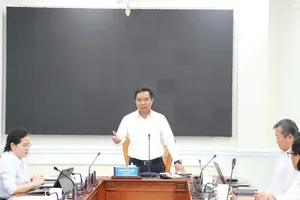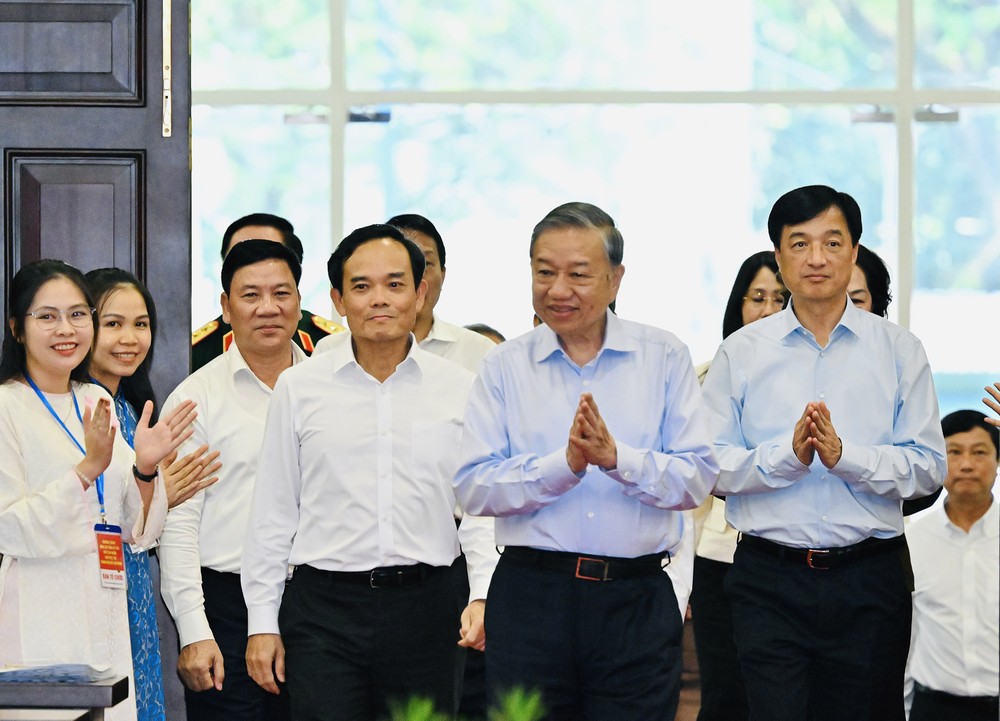
Commending the city’s initial success in stably operating the two-tier local government model, Mr. To Lam stressed the need for an early review to consolidate effective elements and proactively propose adjustments to aspects that fall short of requirements. He underscored the importance of institutionalizing an appropriate urban governance model in the forthcoming Law on Special Urban Areas.
Amid direct exposure to global volatility, he noted that Ho Chi Minh City must strengthen its resilience with a long-term development security vision, proactively preparing response scenarios for fluctuations in oil prices, supply chain disruptions, inflationary pressures, and rising production costs.
The General Secretary and State President underscored the necessity for double-digit growth to be in harmony with the city’s function in propelling the wider economy. The city must guarantee that capital, land, projects, and opportunities are not hindered; persist in decisively addressing legal, planning, and investment challenges; expedite the disbursement of public investments; and efficiently harness social resources.
He expressed support for the city’s proposal to issue a new Politburo resolution to replace Resolution 31, reflecting the evolving context and development space, alongside the formulation and enactment of a Law on Special Urban Areas for Ho Chi Minh City. He further called on the city to more deeply translate central strategic resolutions into policies tailored to local realities, not stopping at action plans, but transforming them into concrete development models. Ho Chi Minh City, he stressed, must lead in turning these resolutions into living practice.
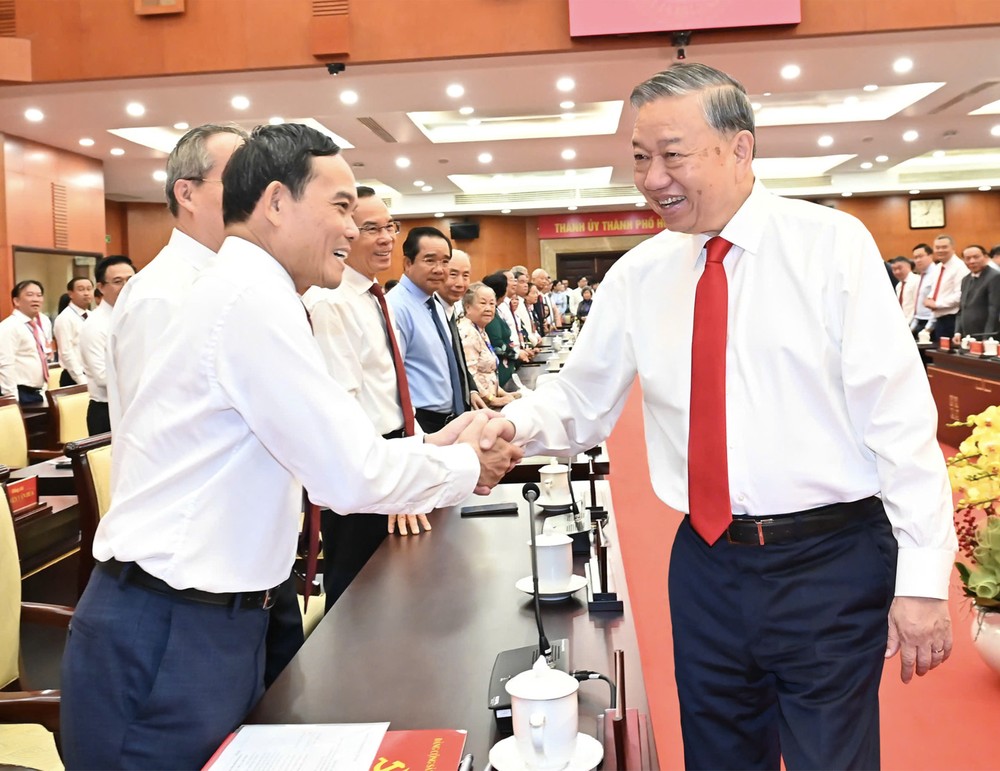
On planning, he emphasized a people-centered approach aimed at improving quality of life and building a livable, smart, ecological, and culturally distinctive city while ensuring national defense and security. Under its 2025–2050 master plan, with a 100-year vision, Ho Chi Minh City aspires to become a sustainable, innovative, and livable megacity, developing a multi-center structure linked to international finance, free trade, and modern logistics.
While describing this direction as commensurate with the city’s stature, he cautioned that greater ambition must be matched by scientific rigor, ensuring planning becomes a true driver of development. The city should take a proactive role in regional connectivity and reorganize development space across southern Vietnam. Its new growth model must be grounded in productivity, science and technology, innovation, digital transformation, and the quality and efficiency of resource allocation.
As Ho Chi Minh City expands, its governance model must evolve in step, Mr. To Lam underscored. Rising responsibilities, he said, demand unity, discipline, and cohesion. The city should strengthen cadre work, ideological alignment, public engagement, inspection and supervision, while intensifying the fight against corruption and waste.
Building a corps of competent, accountable officials is essential, he said. Leaders must be willing to think, act, and take responsibility. At the same time, mechanisms should be in place to swiftly remove those who are complacent, evasive, or risk-averse ensuring that progress is not obstructed.
He expressed confidence that Ho Chi Minh City will continue to serve as the country’s economic locomotive, a regional growth pole, and a hub for new models and initiatives in the nation’s next phase of development. He affirmed that the central government will continue to support and accompany Ho Chi Minh City.
In response, Ho Chi Minh City Party Secretary Tran Luu Quang stated that the delegation’s feedback, particularly the in-depth guidance from To Lam, provides not only strategic direction but also concrete requirements for the city to review, refine, and complete its development plans to ensure the achievement of its goals.
In the presence of General Secretary and State President To Lam and senior Party and State leaders, Ho Chi Minh City Party Secretary Tran Luu Quang pledged that the city will fulfill its targets at the highest possible level, achieve double-digit growth in 2026, and strive to reach a budget revenue milestone of VND1 quadrillion.
Elaborating on the budget target, Mr. Tran Luu Quang said the city has developed a plan to increase revenue by approximately 20 percent compared to 2025, a level he described as feasible, with projected collections of around VND964 trillion. To attain the VND1 quadrillion benchmark as encouraged by the General Secretary and State President, the city will make efforts to secure an additional VND36 trillion.
He added that once the new Politburo resolution on the city’s development in the new era is finalized, the comprehensive development plan is approved, and the Law on Special Urban Areas is enacted by the National Assembly, Ho Chi Minh City will gain additional conditions and mechanisms for breakthrough growth.
He further noted that the city has submitted proposals to the Government to address issues related to the supervisory body of the International Financial Center. It has also called for enhanced coordination with ministries and central agencies to review and resolve underutilized land and properties managed by central government representatives in the city, thereby unlocking resources to meet development needs in the coming phase.