Politburo Resolution No. 09-NQ/TW dated May 19, 2026, has established new development goals, a long-term vision, and an expanded development space for Ho Chi Minh City over the coming decades. The city is moving swiftly to align with these strategic directions, focusing on improving planning, institutions, infrastructure, and human resources to ensure it does not miss the opportunity for rapid and sustainable growth.
Accelerating the development of a strategic blueprint for the future
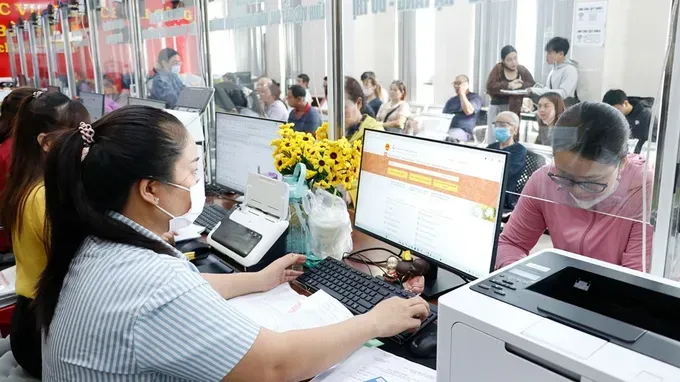
Immediately after the Politburo issued Resolution 09, the Ho Chi Minh City Party Committee promptly formulated and implemented Action Program No. 21-CTrHD/TU to carry out the resolution while also accelerating the drafting of the Law on Special Urban Areas. The city has proactively prepared and promulgated legal normative documents within its authority, rather than passively waiting for resolutions or implementing circulars from central agencies.
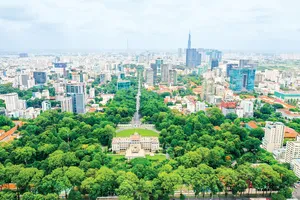
This approach helps shorten the time needed to complete the system of subordinate legal documents, creating a foundation for mechanisms and policies to be put into practice at an early stage. One of the city’s key tasks currently underway is the formulation of the Ho Chi Minh City Master Development Plan, which is expected to be approved by the end of October 2026. The plan will serve as a crucial framework for shaping the city’s development space with a long-term vision.
According to Chairman of the National Assembly's Finance and Budget Committee Phan Van Mai, the formulation of the Ho Chi Minh City Master Development Plan should be approached with a new mindset, a new vision, and a renewed development aspiration. The plan should not merely address immediate development challenges or guide spatial development over the coming decades; rather, it should serve as a strategic blueprint for the future of a global megacity.
The city should establish a clear 100-year vision of becoming an international financial center, a leading innovation hub, and a premier logistics and maritime economy center in Asia. It should serve as a gateway connecting Vietnam to global economic networks, a destination that attracts talent, technology, and international capital, while also standing as a model of green, smart, and climate-resilient development—a city that is both livable and highly desirable.
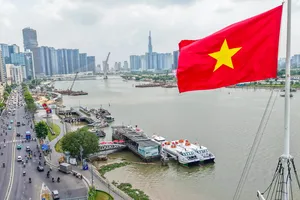
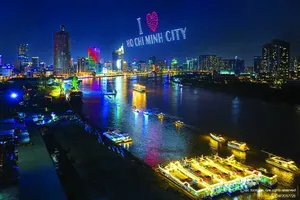
The master plan should be designed to fully leverage the city’s riverine advantages, encompassing its extensive network of rivers and canals as well as its coastal and marine spaces. These natural assets should be more clearly identified and recognized as the city’s “natural infrastructure,” forming the very “soul of the master plan.” On that basis, the plan should accurately define key riverfront and coastal growth zones, accompanied by effective solutions for adapting to climate change, sea-level rise, and land subsidence.
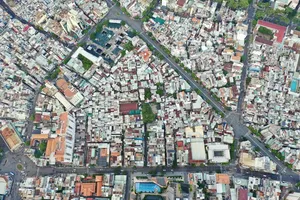
The Ho Chi Minh City Master Development Plan should not only identify new development spaces but also reshape the urban structure through the reorganization of functional zones in tandem with a more balanced population distribution. At the same time, it must embody a 100-year vision while remaining highly feasible—not merely impressive on paper, but effective and beneficial in real life.
The city should also study and propose governance models and management approaches suitable for a global megacity, along with strategies for mobilizing resources, as essential safeguards for the successful implementation of the master plan. To ensure the plan’s practicality, careful consideration should be given from the outset to key factors such as governance structures, resource mobilization mechanisms, culture, and human capital,” emphasized Mr. Phan Van Mai.
Grassroots human resources serve as the pillar of effective governance
Resolution 09 provides an important political foundation for Ho Chi Minh City to further advance the drafting of the Law on Special Urban Areas, based on the principle of comprehensive decentralization and delegation of authority. This reflects a strategic investment mindset directed toward one of the nation’s most dynamic growth poles, with strong spillover effects across the broader economy. As greater authority is devolved, each level of government, sector, and agency head will be required to assume clearer responsibility for implementation outcomes.
In particular, Ho Chi Minh City is expected to play a more proactive role in workforce management, personnel allocation, talent recruitment, and the development of appropriate incentive mechanisms. This will provide the city with the conditions needed to mobilize and deploy human resources commensurate with the governance requirements of a special metropolitan area.
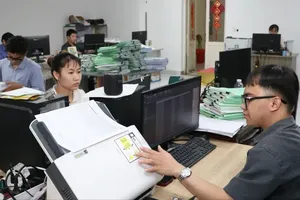
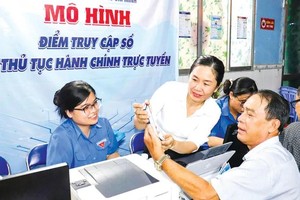
Following a period of implementing the two-tier local government model, many wards, communes, and special zones in Ho Chi Minh City have reported positive improvements in governance, administrative procedures, and public service delivery. The reduction of intermediate administrative layers has helped streamline workflows, shorten processing times, and enhance the effectiveness and efficiency of the administrative apparatus.
According to Vice Secretary of the Standing Committee of the Tan Tao Ward Party Committee, Le Thi Ngoc Dung, governance and administrative operations have become increasingly flexible and responsive to practical needs, supported by stronger application of information technology and digital transformation in management and administration.
In response to the demands of a new development context, Chairman of the People's Committee of Phuoc Thang Ward Nguyen Viet Dung noted that ward- and commune-level officials must now master the entire process of handling administrative dossiers, rather than being responsible for only specific tasks as in the past. This has enhanced both initiative and accountability among public servants.
Meanwhile, the leadership of Xuan Hoa Ward observed that workloads have increased significantly, with many officials required to take on multiple responsibilities across complex and interdisciplinary fields, while legal documents and operational procedures are continuously updated.
These realities underscore the fact that effective institutions require a capable, resilient, and responsible implementation workforce. Therefore, alongside decentralization and the delegation of authority, Ho Chi Minh City continues to review and assign personnel based on the principle of “the right person for the right job,” while maximizing the strengths of officials with specialized expertise to ensure that the grassroots administrative system operates smoothly and efficiently.
According to Dr. Tran Thi Ha Van, Head of the Department of Party Building under the Ho Chi Minh City Cadre Academy, the city is in urgent need of a special civil service and personnel mechanism. Ho Chi Minh City’s large population, vast number of enterprises, and high volume of economic transactions require it to address a wide range of complex and distinctive challenges related to transportation, urban planning, digital transformation, public finance, environmental management, and social welfare. Therefore, its civil service framework and personnel policies must be commensurate with the governance demands of a special metropolitan area.
The city is continuing to review and reassess its workforce, promptly replacing underperforming personnel and assigning responsibilities in line with each individual’s capabilities, expertise, and strengths. At the same time, Ho Chi Minh City needs sufficiently competitive policies to attract experts, scientists, and talented professionals from both Vietnam and abroad, particularly in knowledge-intensive fields such as the digital economy, artificial intelligence (AI), international finance, and research and development (R&D).
These human resources will be critical to enabling the city to maintain its role as the nation’s economic locomotive, a key growth pole, and a leading center for innovation and creativity.
Deputy Head of the Legal Affairs Committee of the Ho Chi Minh City People's Council, Le Minh Duc, emphasized that the greater the authority delegated, the more rigorous the oversight must be. The fundamental principle is to use the people’s satisfaction, prosperity, and well-being as the benchmark for evaluating leadership, governance, and policymaking effectiveness.
Such an approach helps promptly identify administrative bottlenecks as well as instances of reluctance or avoidance of responsibility among a segment of public officials. It also underscores the role of agency heads while ensuring that decentralization is accompanied by clearly defined responsibilities, duties, and accountability.
According to Dr. Hoang Van Tu of the Ho Chi Minh City Cadre Academy, Resolution 09’s provision allowing Ho Chi Minh City greater autonomy in staffing, protection mechanisms, remuneration policies, and talent attraction represents a highly significant breakthrough in development thinking and modern urban governance. This is not merely a personnel policy; rather, it is a mechanism for unlocking human potential, the decisive factor in enhancing the city’s competitiveness and development momentum in the new era.
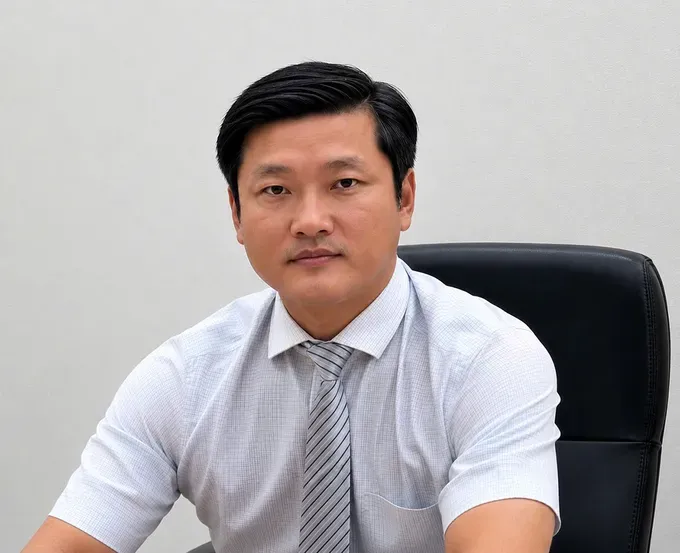
Chairman of the People's Committee of Kim Long Commune, Ho Chi Minh City, Do Chi Khoi, noted that decentralization and the delegation of authority are being implemented in tandem with the accountability of agency heads, while information technology adoption and the digitalization of administrative procedures are being accelerated. He suggested that Ho Chi Minh City should continue expanding the autonomy of grassroots administrations in recruiting, assigning, and managing civil servants and public employees to better meet practical requirements.

According to Secretary of the Party Committee and Chairwoman of the People's Council of Hoa Hung Ward, Ho Chi Minh City, Nguyen Thi Thu Huong, if grassroots administrations are granted comprehensive autonomy from finance and personnel to policymaking, ward- and commune-level officials will be empowered to think boldly, act decisively, and take responsibility before the people. Such an approach would help remove institutional barriers, mobilize social resources more effectively, and create stronger momentum for development.