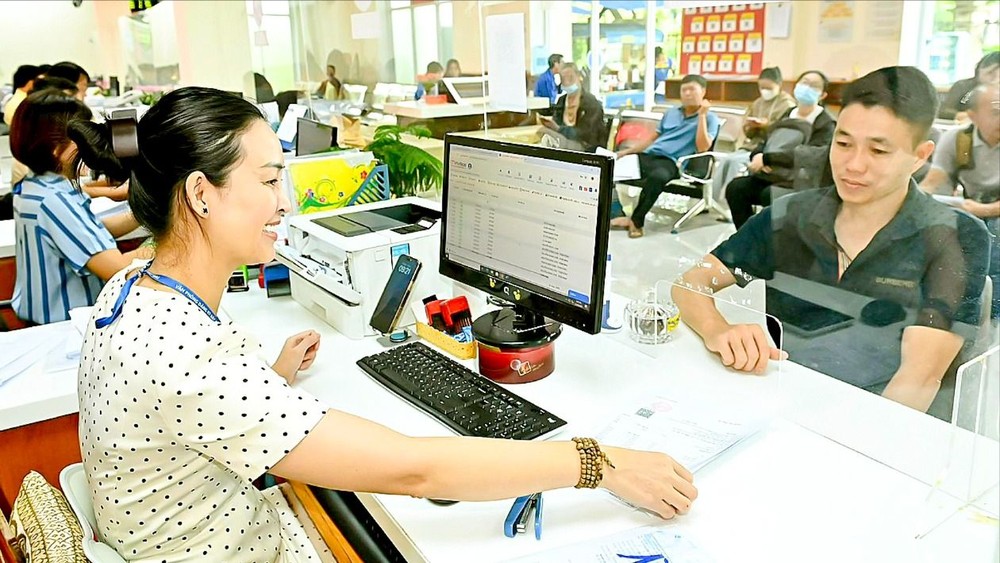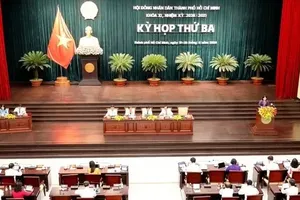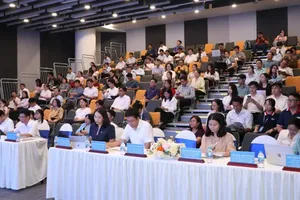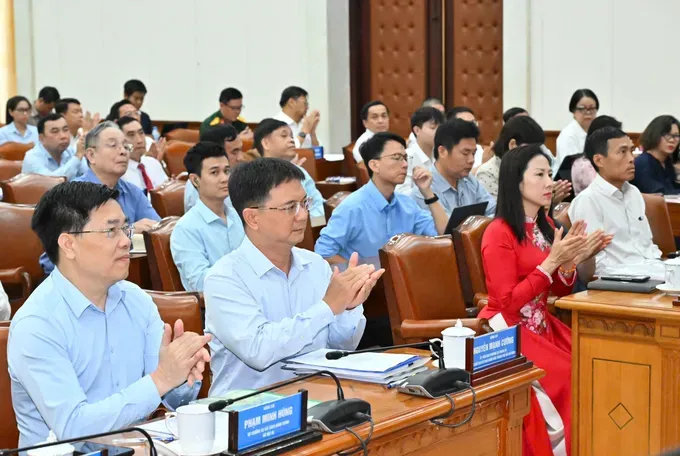
The conference was conducted in a hybrid format, with in-person attendance at the city-level venue and online participation from 168 wards, communes, and special zones. The event was chaired by Vice Chairman of the HCMC People's Committee Nguyen Manh Cuong.
Also attending the conference were Director General and Deputy Director General of the Administrative Reform Department under the Ministry of Home Affairs, Pham Minh Hung and Nguyen Manh Cuong, respectively.
93.3 percent of administrative procedures provided online
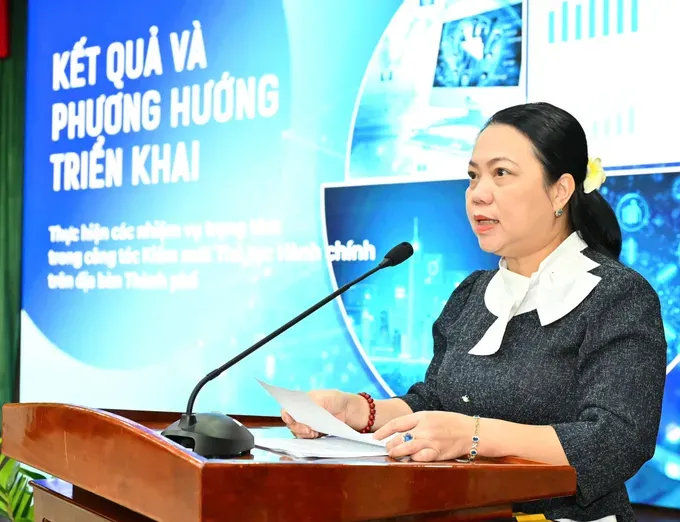
Reporting at the conference, Deputy Chief of the Office of the HCMC People's Committee, Vu Thi Huynh Mai, said that in recent years, the city has resolutely directed the reform of administrative procedures in line with the Government's directives on promoting data-driven reform, reducing, and simplifying administrative procedures.
In the first quarter of 2026 alone, the HCMC People's Committee issued 149 directive documents and three thematic plans, focusing on three key tasks: maximizing the reduction of administrative procedures related to production and business activities; improving the substantive effectiveness of online public services; and strengthening solutions for handling administrative procedures regardless of administrative boundaries.
The city has organized training and capacity-building programs for local officials and civil servants while also reviewing 643 administrative procedures subject to decentralization, reduction, and simplification to proactively monitor and implement them. Of these, 157 procedures have been decentralized, 234 abolished, and 250 reduced or simplified.
The publication, disclosure, and standardization of administrative procedures have continued to be strengthened. In the first five months of 2026, the city issued 161 decisions announcing a list of 1,329 administrative procedures.
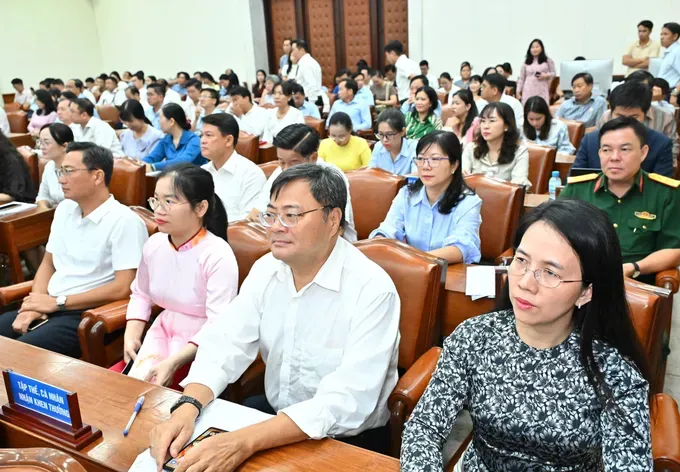
Regarding the implementation of the Government’s Resolution No. 66 on the program to reduce and simplify administrative procedures related to production and business activities in 2025 and 2026, Ho Chi Minh City has directed agencies and units to review 100 percent of administrative procedures falling under the regulatory authority of the HCMC People’s Council and the HCMC People’s Committee.
As a result, all administrative procedures in the fields of maritime affairs, inland waterway transport, social protection, and international trade have been simplified, with processing times reduced by between 50 percent and 59 percent.
Since 2025, the city has also proactively reviewed all administrative procedures under its management and proposed reduction plans to central ministries and agencies for 578 administrative procedures administered by 14 agencies and units. The reduction in processing times at these agencies and units has ranged from 30 percent to 50 percent.
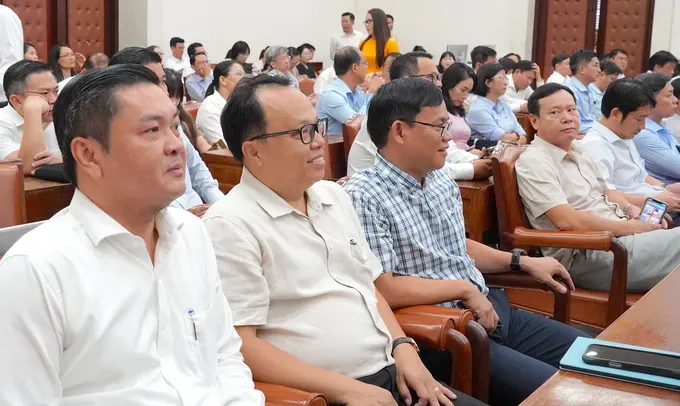
To date, Ho Chi Minh City has provided online public services for 2,042 out of 2,188 administrative procedures, accounting for 93.3 percent of the total, with fully online services making up more than 80 percent. All administrative procedures related to production and business activities, equivalent to 1,301 procedures, are now processed electronically.
As of mid-May 2026, the city had received 1,673,708 applications and completed the processing of 1,503,636 of them, with an on-time completion rate of more than 99 percent. A further 84,176 applications remain under processing.
The city has also announced 2,065 administrative procedures eligible to be handled regardless of administrative boundaries, achieving full coverage at 100 percent.
Reducing processing times, enhancing convenience for residents

Providing an update on digital transformation efforts linked to administrative reform in the first quarter of 2026, Deputy Director of the Ho Chi Minh City Department of Science and Technology, Vo Minh Thanh, said the city had issued a range of mechanisms, policies, and plans to promote the development of science and technology, innovation, digital transformation, and administrative reform.
Ho Chi Minh City has invested more than VND2.9 trillion (US$110 million) in upgrading network infrastructure and information technology equipment. The city has also organized training programs on the use of artificial intelligence tools for 4,548 officials and civil servants, helping enhance their capacity for data analysis and process automation.
The Ho Chi Minh City Department of Science and Technology has also coordinated the deployment of 54 personnel from enterprises and information technology associations to provide direct support to wards and communes facing difficulties over a three-month period. At the same time, the department is developing a plan to recruit additional personnel to support grassroots-level administrations and special administrative zones.
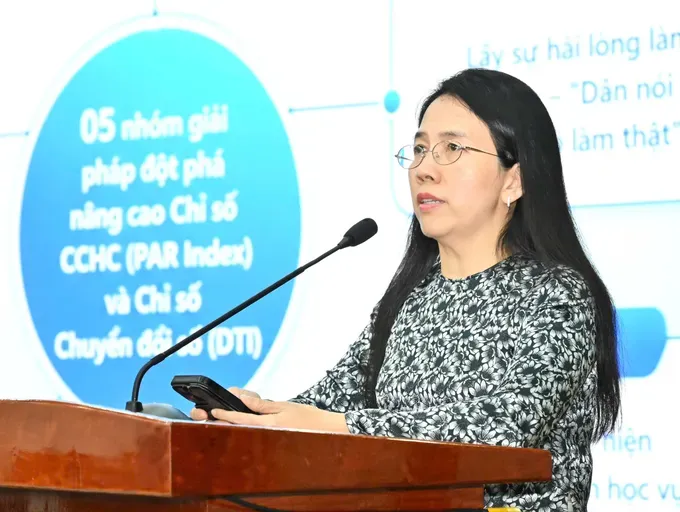
To date, Ho Chi Minh City has integrated 30 of its 45 shared databases, published 70 of 91 databases on its open data portal, and enabled data sharing through its digital mapping platform.
Drawing on the practical operation of the two-tier local government model, many localities have proactively implemented administrative reform measures in tandem with digital transformation.
At Tan My Ward, Chairwoman of the Ward People's Committee Nguyen Thi Be Ngoan said the locality has focused on implementing the six-step digitization process in accordance with the guidance of the Ministry of Science and Technology and Ho Chi Minh City authorities. The ward has adopted the commitment that “citizens are not required to submit the same document more than once,” ensuring that information provided once is shared across different levels of government.
Tan My Ward is also finalizing its commune-level digital transformation model and has put into operation an Intelligent Operations Center (IOC) integrated with information dashboards to monitor the progress of public service delivery. The system enables the timely handling of overdue applications and real-time responses to feedback received through the 1022 Call Center.
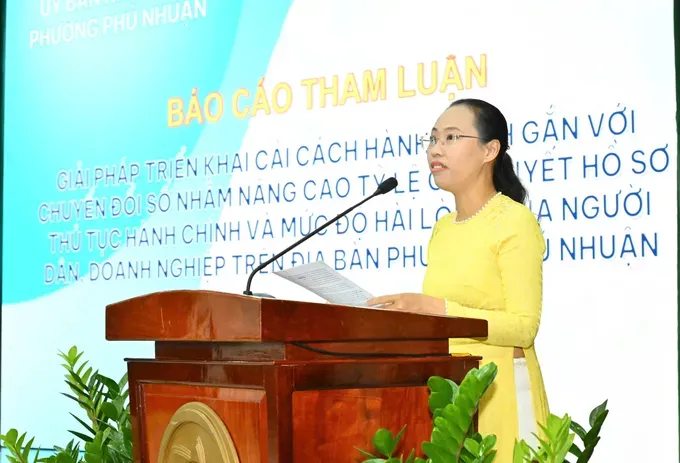
In Phu Nhuan Ward, Chairwoman of the Ward People's Committee, Nguyen Thi Nhu Y, said that the model of a “Public Administrative Service Center as a Digital Guidance Hub,” operating under the hands-on approach of “guiding residents step by step,” has assisted more than 31,000 residents in accessing online public services and making digital payments.
The close support provided by local authorities at the grassroots level has helped raise the electronic data reuse rate to over 80 percent, reducing by approximately 12,000 the number of documents that residents would otherwise have had to resubmit. Processing times for procedures related to civil status registration and social assistance have been shortened by an average of 30 percent, while satisfaction rates among residents and businesses have exceeded 98 percent.