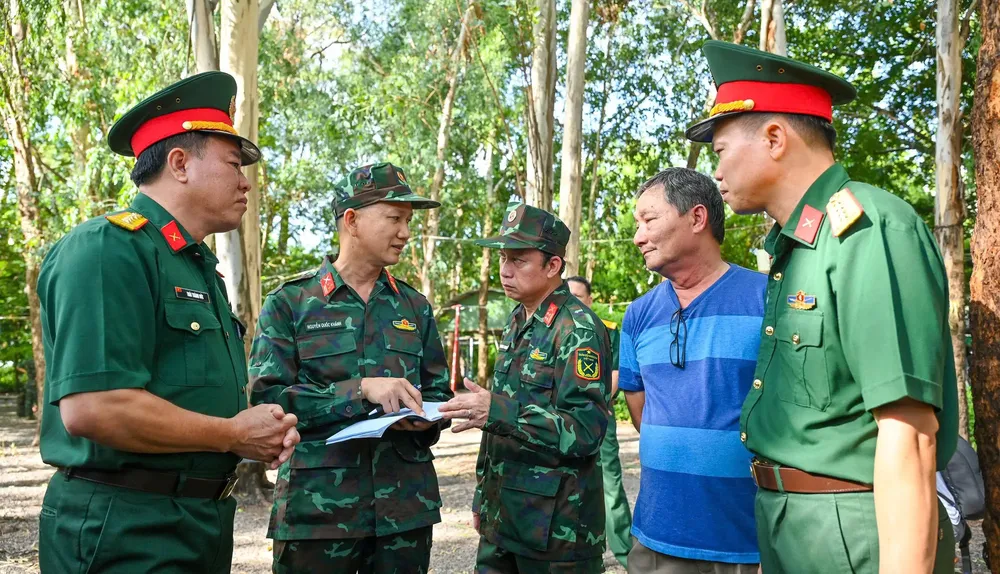
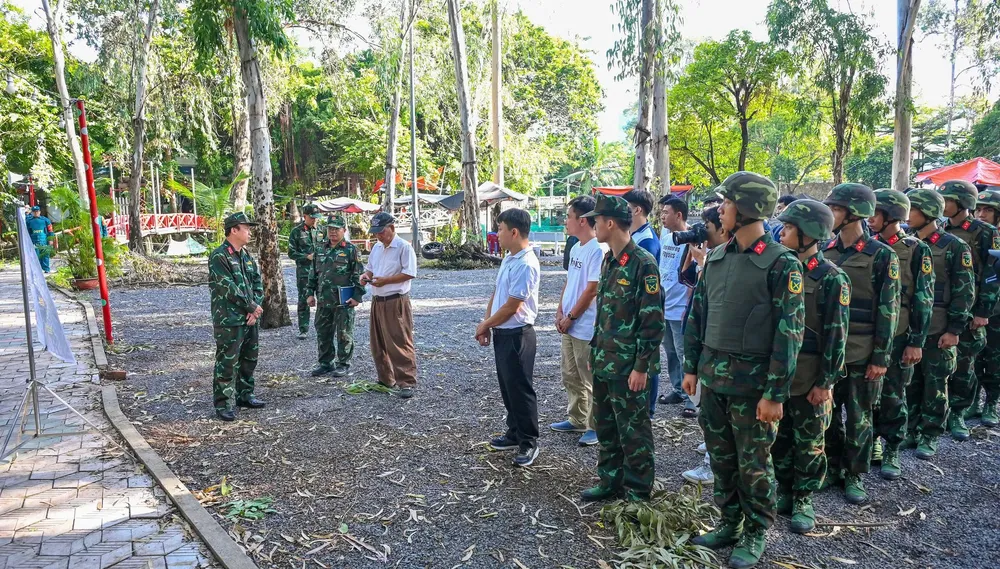
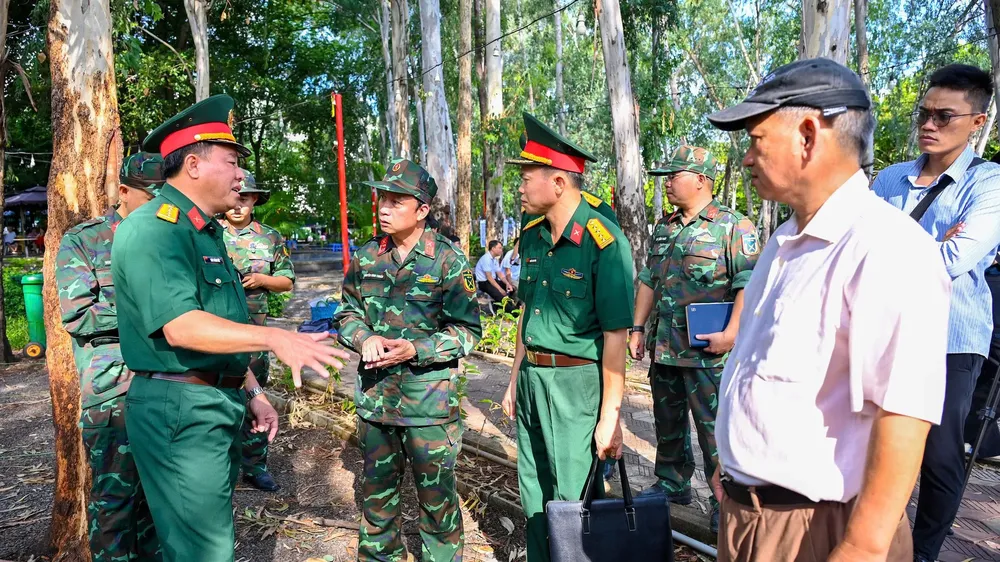
At around 7 a.m., officers and soldiers from the engineering force under the Ho Chi Minh City High Command, together with personnel from the Institute of Design under the General Department of Logistics and Technical Services of the Ministry of National Defense, a team of experts from the University of Science under Vietnam National University - Ho Chi Minh City (VNU-HCM), and eyewitnesses gathered at the site to participate in the survey and search effort.
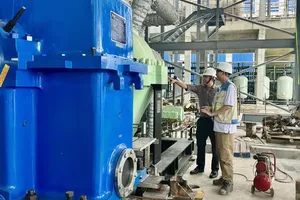
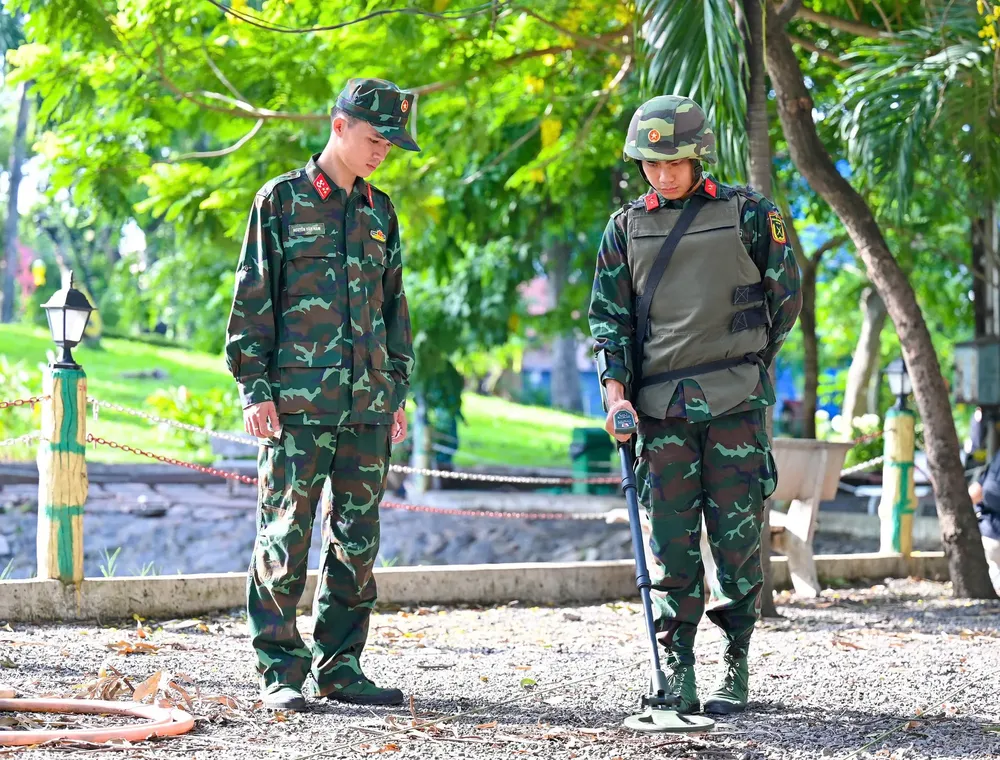
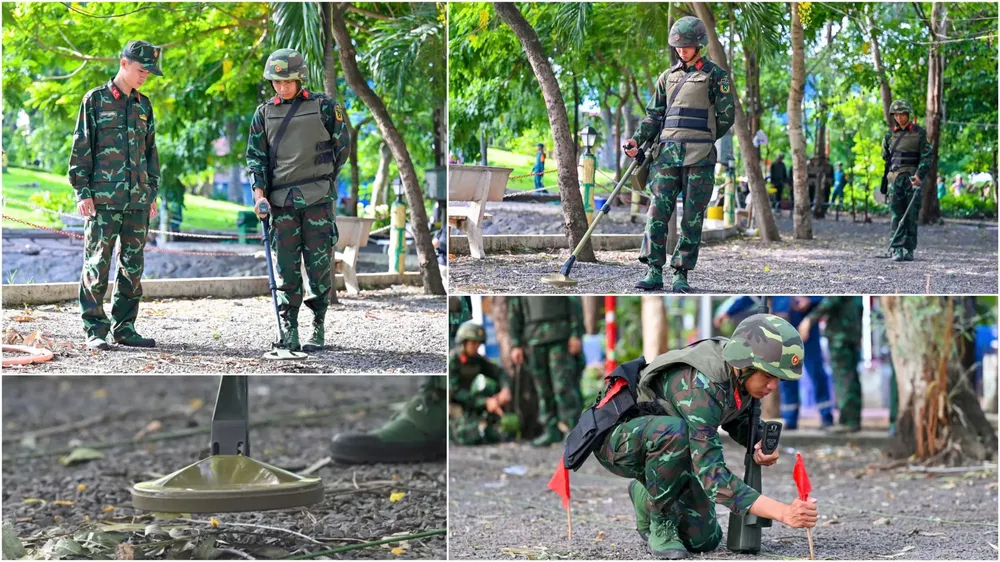
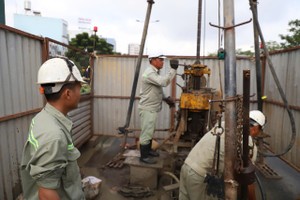
At locations suspected of containing collective burial trenches, engineering units promptly deployed specialized equipment and carefully inspected each site before commencing survey work. At the same time, participating forces conducted field verification, identified coordinates, and marked locations requiring further examination in accordance with the planned search operation.
At the survey, Senior Colonel Nguyen Dinh Chuan, Deputy Political Commissar of the Ho Chi Minh City High Command, delivered instructions and assigned tasks to the participating forces.
Senior Colonel Nguyen Dinh Chuan directed all units to survey scientifically and rigorously, ensuring thorough preparation for subsequent phases of the operation. The survey is expected to last three days. The Deputy Political Commissar of the Ho Chi Minh City High Command called on all participating units to uphold a strong sense of responsibility and effectively apply their professional expertise and practical experience to achieve the best possible results.
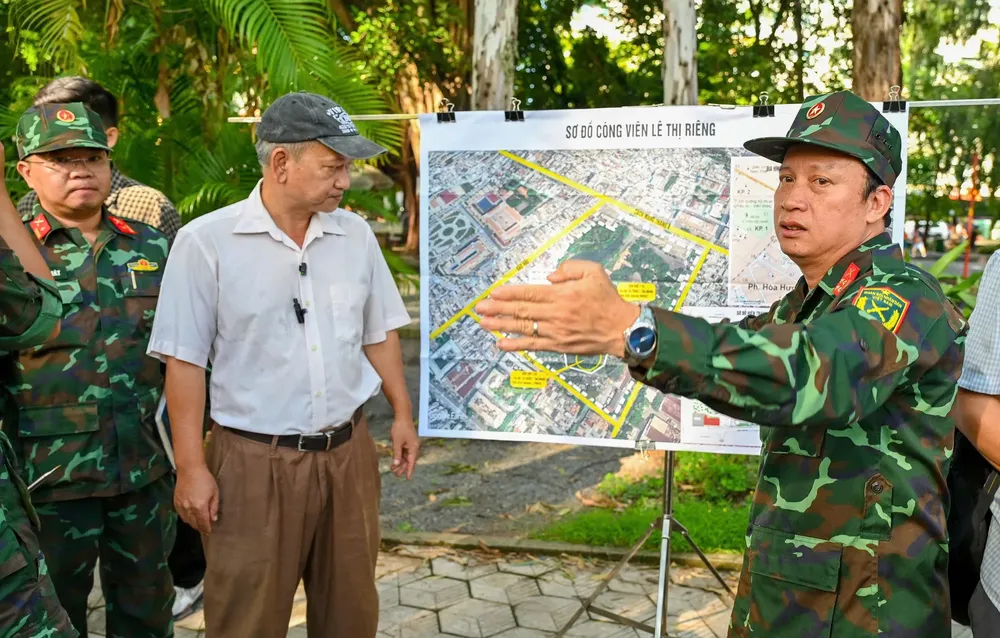
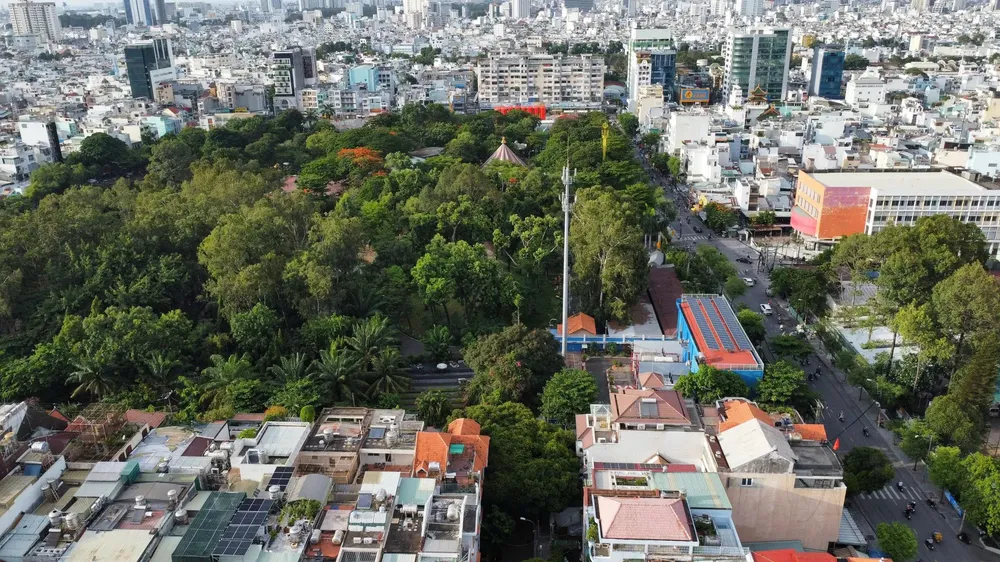
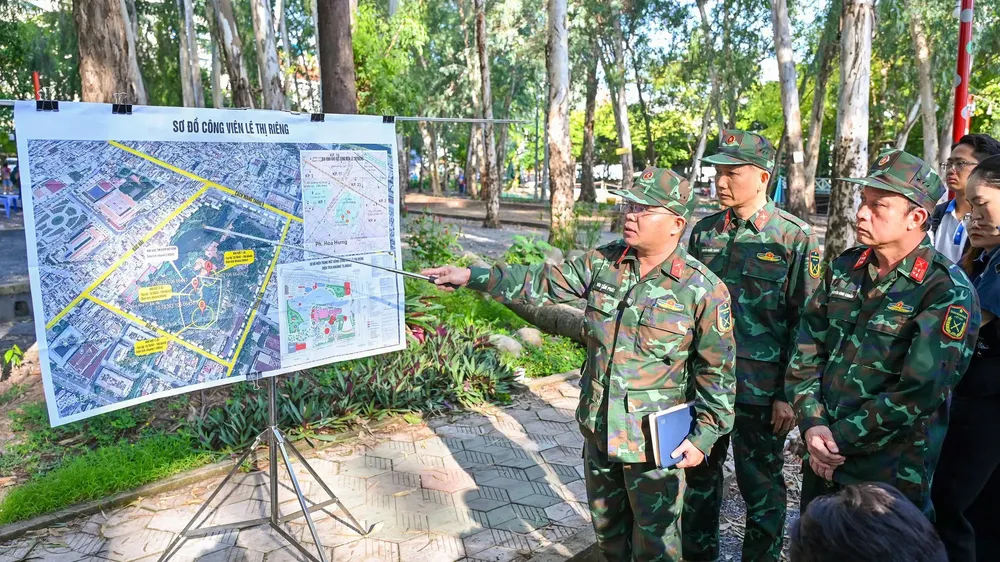
Under the approved plan, the exploratory survey will be conducted from June 15 to 18 across three locations within Le Thi Rieng Park, covering a total survey area of approximately 2,500 square meters. These sites were identified based on historical records, eyewitness accounts, and findings from previous research.
To ensure absolute safety, engineering units have been tasked with inspecting, detecting, and disposing of any unexploded ordnance or explosive remnants of war that may remain in the area before handing over the site to survey teams. At the same time, participating forces are cross-checking coordinates from archival records against field conditions to accurately determine the locations that require further exploration.
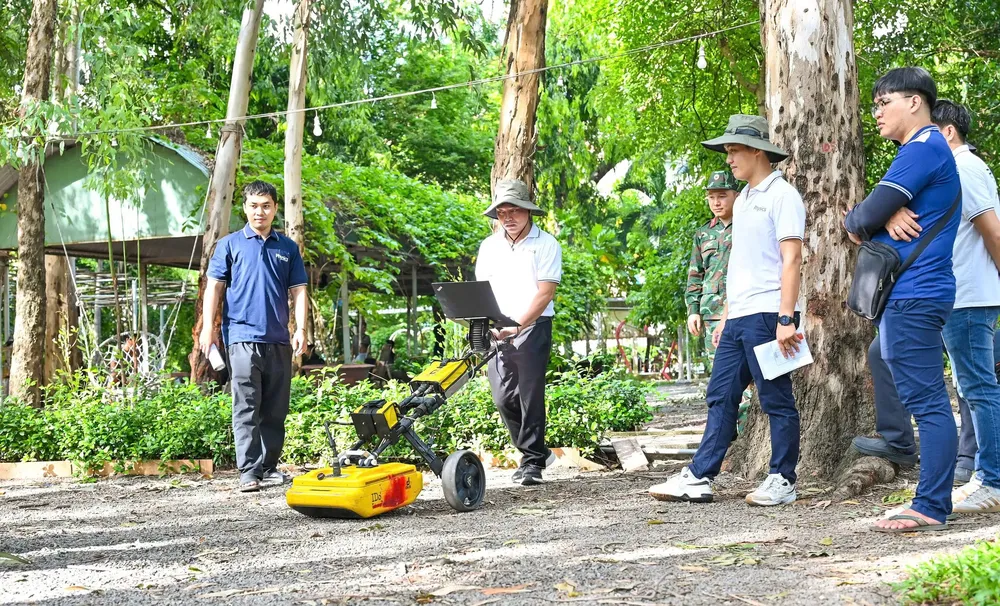
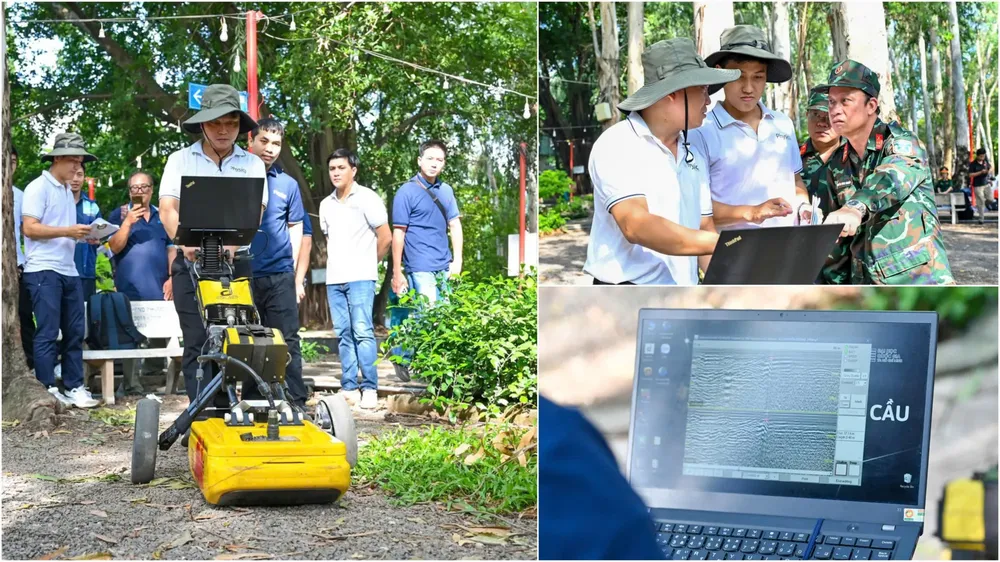
Participating units employed a range of modern equipment during the survey, including ground-penetrating radar (GPR), to help detect subsurface anomalies and support the search for martyrs’ remains.
Present at the survey site, Associate Professor and Dr. Le Van Anh Cuong, head of the Faculty of Geology at the University of Science under Vietnam National University—Ho Chi Minh City (VNU-HCM), said that the team of experts is currently implementing two survey methods to support the exploration and search for martyrs’ remains at Le Thi Rieng Park.
Specifically, the team is employing a combination of ground-penetrating radar (GPR) and electrical resistivity imaging to detect subsurface anomalies. The data collected will help identify geological disturbances and distinguish undisturbed soil layers from areas that may have been excavated in the past.
The survey results will provide an important scientific basis for identifying indicators associated with the possible presence of martyrs’ graves within the area.
The survey marks the next phase in the process of verifying information and historical records related to the site, which is believed to have served as a mass burial ground for soldiers who fell during the 1968 Tet Offensive and General Uprising.


)