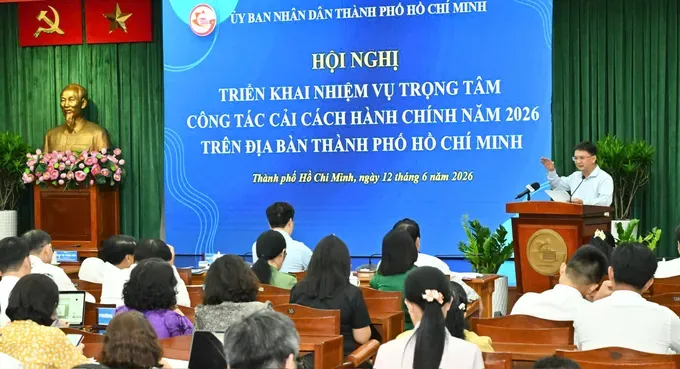
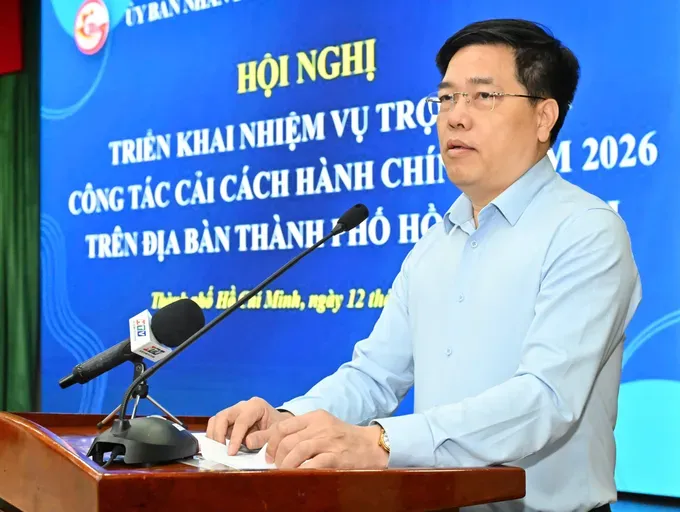
Speaking at a conference on tasks for administrative reform in 2026 held on June 12, Vice Chairman of the Ho Chi Minh City People’s Committee Nguyen Manh Cuong called on departments, sectors and local authorities to strictly implement the comprehensive administrative reform program.
He stressed the need to reduce administrative procedures, enhance inter-agency coordination, and integrate reform efforts with the development of smart urban governance.
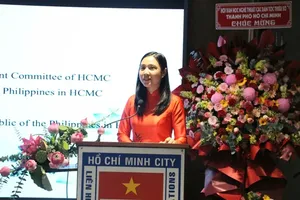
The conference was chaired by Nguyen Manh Cuong, Alternate Member of the Party Central Committee and Member of the Standing Committee of the Ho Chi Minh City Party Committee, Vice Chairman of the municipal People’s Committee.
Speaking at the conference, Pham Minh Hung, Director General of the Public Administration Reform Department under the Ministry of Home Affairs, highly appreciated Ho Chi Minh City’s achievements in administrative reform over recent times, particularly its ability to maintain a stable and smoothly functioning apparatus following restructuring. He noted that the city’s set of indicators in 2025 improved both in value and ranking, placing Ho Chi Minh City among the top 10 localities nationwide in administrative reform performance.
Reviewing the city’s recent achievements in administrative reform and economic growth, Vice Chairman of the Ho Chi Minh City People’s Committee Nguyen Manh Cuong acknowledged the strong efforts of the entire political system, while noting that implementation of reforms has not been uniform across all areas.
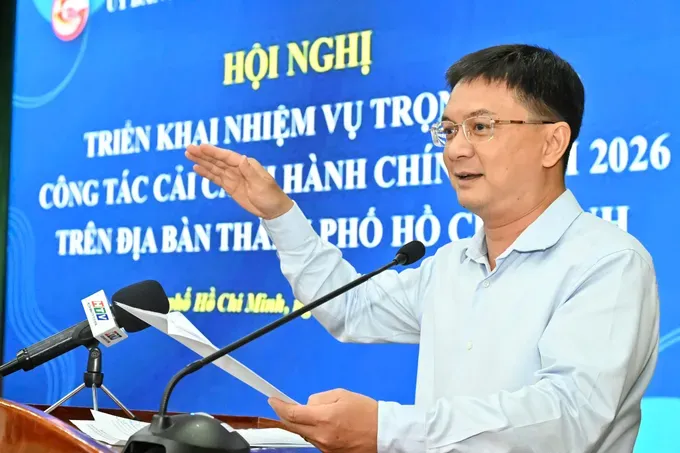
To achieve the goal of entering the national top five in administrative reform performance, particularly as 2026 is considered a pivotal year for accelerating development in the 2026–2030 period, he instructed all levels of government to deeply internalize the importance of reform, strengthen the responsibility of leaders, and shift mindsets from “management” to “service provision.”
He also urged agencies to implement reforms effectively and substantively, including strict execution of the overall reform program, accelerating reductions in administrative procedures in line with the Prime Minister’s directives, and improving coordination among agencies. Administrative reform must be closely linked with the development of smart urban governance.
The city was also tasked with urgently completing a shared data system based on the principles of “accurate, sufficient, clean and live” data, emphasizing that without reliable data, full online public services cannot be implemented effectively.
The Vice Chairman also called for expanded training initiatives to build a more flexible and skilled civil service workforce, along with the creation of a standby support team to assist in workload management when required. In addition, he emphasized the need to implement a “digital literacy for all” program to help disadvantaged groups adapt to the digital era and take part in the development of a digital society.
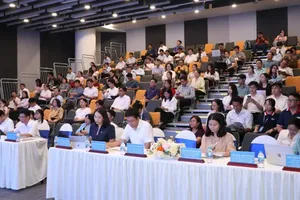
 "Delegates attending the conference. Photo: SGGP/ Viet Dung")
During the conference, the Ho Chi Minh City People’s Committee launched a campaign to promote the completion of administrative reform targets for 2026.
On this occasion, the Chairman of the Ho Chi Minh City People’s Committee awarded Certificates of Merit to 21 collectives for their outstanding performance in administrative reform in 2025, along with six collectives and 16 individuals recognized for their contributions to reform advisory work.
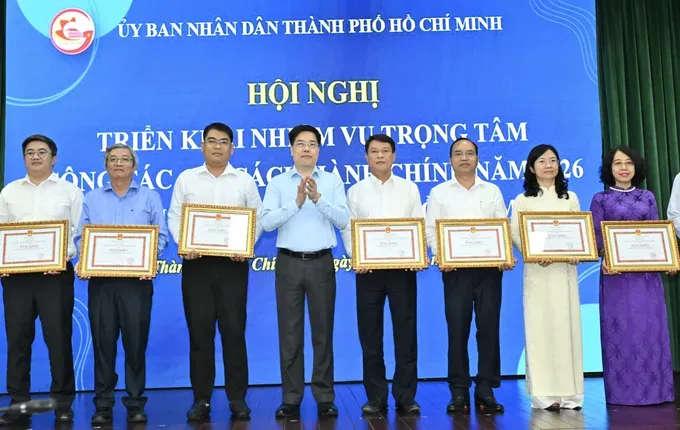
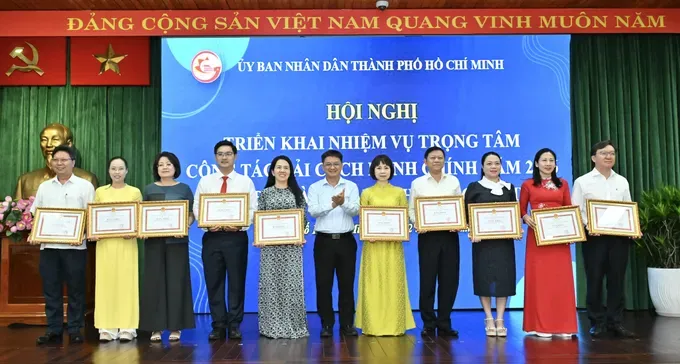
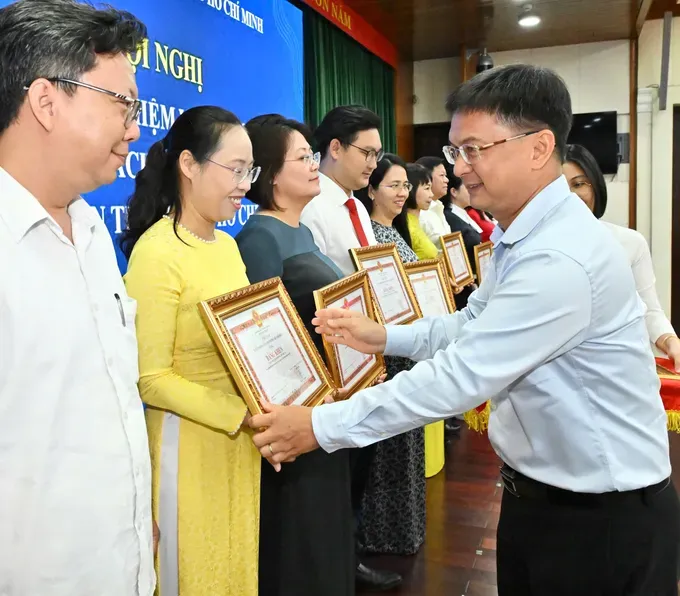
The city also announced the 2025 administrative reform index rankings for departments, agencies and local authorities. Among departments, the Ho Chi Minh City Department of Education and Training led with 90.62 points, followed by the Department of Internal Affairs with 90.57 points and the Office of the Ho Chi Minh City People’s Committee with 90.44 points.
At the local level, Tan My Ward ranked first with 92.5 points, followed by Binh Tan Ward with 91.96 points and Phu Nhuan Ward with 91.78 points.




)