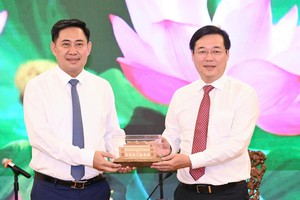
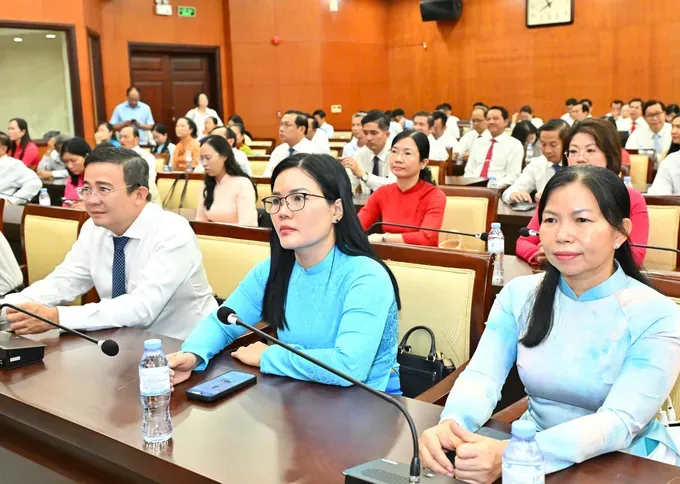
Attending the working delegation were Politburo member and Permanent Deputy Prime Minister Pham Gia Tuc; member of the Party Central Committee and Deputy Prime Minister Nguyen Van Thang; along with leaders of ministries, central agencies, and departments.
The event also saw the presence of Ho Chi Minh City’s leaders, including Secretary of the Ho Chi Minh City Party Committee Tran Luu Quang; Standing Deputy Secretary of the municipal Party Committee Le Quoc Phong; Chairman of the Ho Chi Minh City People’s Committee Nguyen Van Duoc; Chairman of the Ho Chi Minh City People’s Counci Vo Van Minh; Vice Secretary of the Party Committee and Chairman of the Vietnam Fatherland Front Committee of Ho Chi Minh City Nguyen Phuoc Loc; Vice Secretaries of the Party Committee of the city Dang Minh Thong and Van Thi Bach Tuyet.
Also in attendance were members of the Standing Committee of the Party Committee, the Standing Committee of the People’s Council, the People’s Committee, and the Vietnam Fatherland Front Committee of Ho Chi Minh City.
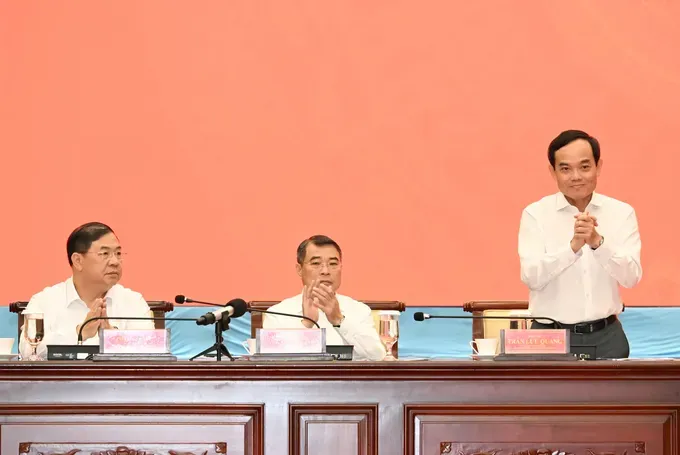
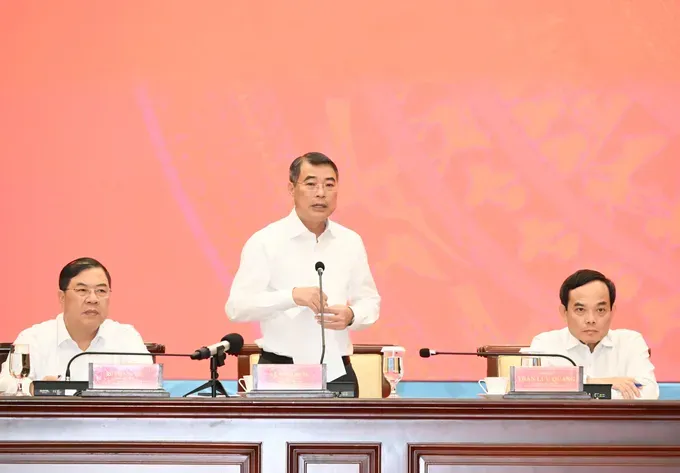
Speaking at the working session, Prime Minister Le Minh Hung noted that the socio-economic situation nationwide and in localities has shown many positive signals. However, the socio-economic development goals and tasks for both the country as a whole and Ho Chi Minh City in particular remain very demanding, requiring clear identification of specific and feasible solutions.
On that basis, the Prime Minister, together with leaders of ministries and agencies, is working with Ho Chi Minh City and several other localities that play an important role as growth engines.
He requested that Ho Chi Minh City clearly present existing difficulties, obstacles, and challenges, and in particular put forward specific policy recommendations to the Prime Minister, the Government, and relevant ministries and sectors.
He also instructed ministers attending the meeting to directly respond to the city’s proposals and recommendations and to clarify issues within their respective fields of management to reach consensus on key tasks to be implemented.
The Prime Minister further informed that he had held a working session with Hanoi over the past weekend and will continue working with Dong Nai City following the meeting with Ho Chi Minh City.
The objective is for the Government and localities, especially key localities, to resolve proposals and recommendations as quickly as possible. It must directly confront the challenges at hand to reach consensus on approaches and unified action, Prime Minister Le Minh Hung emphasized.
The Prime Minister requested that, following this working session, a conclusion notice be issued no later than Monday, June 15, so that Ho Chi Minh City and relevant ministries and agencies can promptly implement the agreed measures.
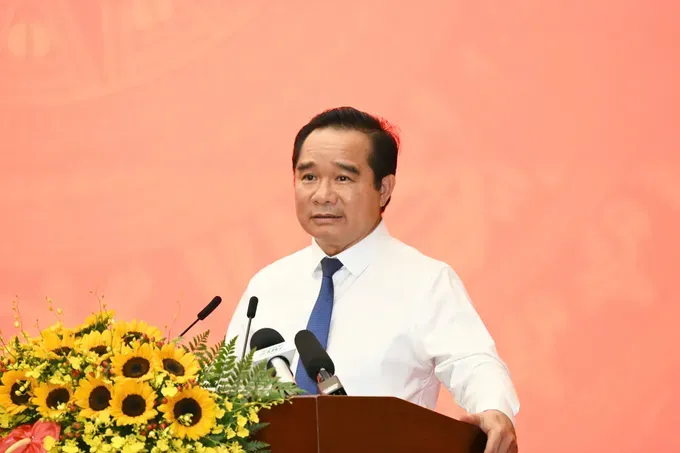
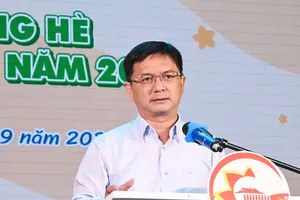
At the working session, Chairman of the Ho Chi Minh City People’s Committee Nguyen Van Duoc respectfully thanked the Government and the Prime Minister for directing the resolution of the city’s previous recommendations.
He stated that, in order to create breakthroughs in the development of social housing, rental housing, and worker accommodation in line with a business-supporting approach, Ho Chi Minh City has proposed that the Government and the Prime Minister allow the city to directly assign investors for land funds managed by the State, public land funds, or land consistent with approved planning. The city also suggested that no auction or bidding procedures be applied to social housing projects, rental housing, and worker accommodation.
In addition, Ho Chi Minh City recommended that the Government soon issue policies on exemption and reduction of land-use fees and taxes, as well as interest rate support from commercial banks, for social housing, rental housing, and worker accommodation projects.
Regarding housing development management, the Chairman of the Ho Chi Minh City People’s Committee also proposed allowing flexible conversion between different types of housing (commercial housing, social housing, resettlement housing, and rental housing) within the same project when conditions are met, to optimize the use of housing land funds and balance supply and demand.
He emphasized that, given its position and role as a special urban center and a key growth engine of the country, Ho Chi Minh City is fully aware of its responsibilities to the Government and the people nationwide. The city will continue to promote its tradition of dynamism, creativity, solidarity, decisiveness, and accountability for the common good. It is determined to successfully achieve the double-digit growth target in 2026, as well as for the 2026–2030 period, thereby making an increasingly greater contribution to the country’s overall development in the new era.
According to the Ho Chi Minh City People’s Committee, in the first five months of 2026, the city focused on the decisive implementation of tasks and solutions to promote economic growth; accelerated administrative reform; and removed difficulties and obstacles facing enterprises and investment projects. It also shortened the time required for administrative processing, sped up investment preparation, land clearance, and the implementation of key infrastructure projects.
At the same time, the city concentrated on mobilizing, activating, and accelerating the disbursement of social investment resources. Efforts to resolve difficulties and obstacles related to projects were carried out in a resolute manner and achieved notable results, which were highly appreciated by both citizens and businesses.
The city completed the handling of 838 out of 838 projects and land plots under Official Dispatch No. 112/CD-TTg, thereby unlocking investment capital of more than VND206 trillion (US$7.8 billion) and approximately 17,000 hectares of land; fully resolved 11 out of 11 projects under Conclusion No. 77-KL/TW and Resolution No. 170/2024/QH15; and completed compensation and site clearance for the Thu Thiem New Urban Area.
These outcomes have helped unlock resources, accelerate the implementation of major projects, expand development space, and create additional growth momentum for the city.
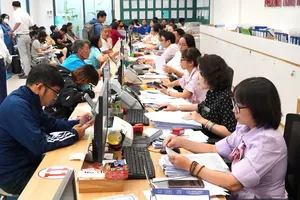
Administrative reform and the investment and business environment implementation continue to be identified as one of the key solutions for promoting growth. The city reviewed 298 administrative procedures, cutting 1,944 working days; at the same time, it set a target for 2026 to reduce administrative compliance time and costs by 50 percent and to abolish business conditions that are no longer appropriate.
In addition, the city is focusing on implementing business support programs for the 2026–2028 period and regularly organizing meetings and dialogues with both domestic and international business communities to promptly understand and address difficulties and obstacles arising during investment, production, and business activities.
With the synchronous and resolute implementation of tasks and solutions, the socio-economic situation in the first five months of 2026 continued to achieve positive results. GRDP in the first quarter grew by 8.27 percent (or 8.58 percent excluding crude oil), marking the highest growth rate in the past 10 years.
Foreign direct investment (FDI) attracted to the city reached more than US$6.6 billion, equivalent to about 60 percent of the annual plan and an increase of 106.25 percent compared to the same period last year. Many strategic infrastructure projects were approved for investment, with a total capital of about VND520 trillion (US$19.7 billion) from domestic enterprises and investors.
Cultural and social sectors continued to receive attention, while social welfare was ensured. In particular, implementing Politburo Resolution No. 72-NQ/TW, the city has intensified the rollout of the nationwide health check-up program. It conducted two rounds of free medical examinations and screenings across 168 communes, wards, and special zones for more than 41,000 residents, enabling the early detection and timely referral for treatment of chronic diseases. The city also organized free medical check-ups and vaccinations and successfully activated hemodialysis services in Con Dao Special Zone.
Additionally, the city continued to develop green spaces and urban parks while expanding citizen-oriented policies to improve quality of life.
External relations were further expanded; national defense, security, and public order were maintained; and the administrative apparatus, after restructuring, has operated stably and smoothly, contributing to the effective implementation of policies and directives from the Party Central Committee, the National Assembly, and the Government in daily life.