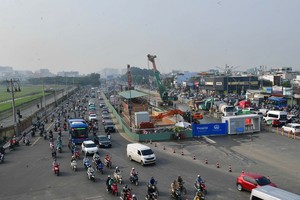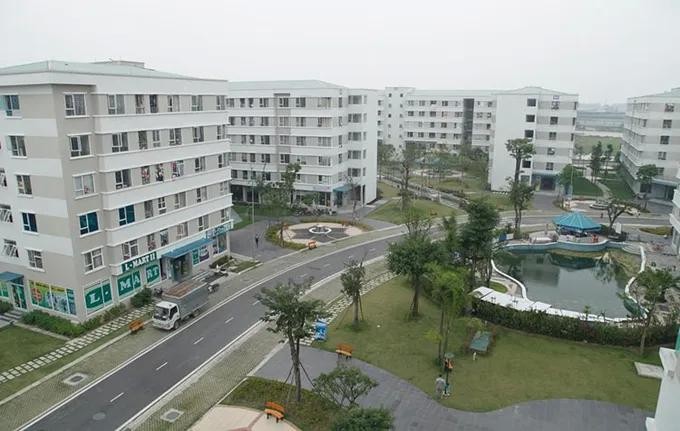
The Government has issued Resolution No. 7/NQ-CP, assigning social housing development targets to localities for the period 2026–2030, with Ho Chi Minh City receiving the largest target of 28,500 apartments. Yesterday’s announcement highlights both the city’s achievements and the challenges ahead in bridging the gap between ambitious national goals and the pressing needs of low-income earners and workers.
In 2025, Ho Chi Minh City is on track to complete 14 social housing projects with a scale of 12,799 apartments, achieving 98.2 percent of its plan. Looking ahead to 2026–2027, the city will promote 58 condo projects totaling 43,500 apartments. Of these, 11 projects including 12,000 apartments already have construction permits or are under construction, while 47 projects with approximately 31,500 apartments have received investment approval and are undergoing procedures such as land allocation, wastewater discharge agreements, traffic and drainage connections, fire protection design, and construction permits.
These efforts are commendable, with the Department of Construction and investors preparing to commence construction in early 2026. Yet, compared to the Government’s broader target of 199,400 social housing units for Ho Chi Minh City under the national program to build at least 1 million units by 2030, the shortfall remains significant. The city’s housing market reflects a paradox: 70 percent of available products belong to the mid-to-high-end segment, while 82 percent of actual demand comes from low-income groups. This imbalance calls for a fundamental shift from the traditional “build to sell” model toward diversified approaches including rental, lease-to-own, and purchase.
To bridge this gap, experts emphasize the need for simultaneous solutions spanning spatial planning, land fund creation, streamlined legal procedures, and innovative financial mechanisms.
Diversification of housing models is central:
- Long-term rentals with government price support for vulnerable groups with unstable incomes.
- Preferential credit packages for salaried workers and civil servants to enable purchase or lease-purchase options.
- Worker housing in industrial zones, with manufacturing businesses encouraged to lease land and build housing for employees under Housing Law No. 27/2023/QH15.
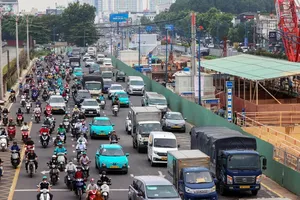
Supporting infrastructure is equally vital. Subsidized or free public transportation should be developed to connect workers’ housing with industrial zones, easing commutes and reducing costs. In spatial planning, the city is applying the Transit‑Oriented Development (TOD) model, situating social housing along metro lines and near industrial and export processing zones to integrate housing with employment and transport solutions.
Procedural reform remains a key priority in accelerating social housing development. The city aims to shorten project appraisal and approval timelines from 109 days to just 60 by streamlining administrative processes and adopting a one-stop mechanism that integrates investment, land, planning, and construction procedures. Under the new framework, the municipal People’s Committee will take charge of project implementation, while the Party Committee will oversee the identification and allocation of eligible beneficiaries.
Land allocation remains a decisive factor. Authorities are considering stronger sanctions and conversion mechanisms for businesses that delay social housing construction within the mandated 20 percent of commercial housing projects. By 2026, a dedicated social housing fund is expected to be established, drawing from both existing stock and new developments. Adjusting planning from low-rise to high-rise where appropriate will maximize land use efficiency, accelerating progress toward the city’s targets.
Ultimately, Ho Chi Minh City’s push to diversify social housing development models is not only about meeting numerical targets but also about reshaping the housing market to reflect real demand. By combining innovative financial solutions, integrated spatial planning, and streamlined procedures, the city aims to transform the dream of home ownership or secure housing into reality for millions of low-income earners, workers, and civil servants.





)