One of the main reasons rental housing has been neglected and become a gap in the real estate market in recent times is that mechanisms and policies have not been sufficiently incentive-driven to encourage business investment.
Rental housing gains momentum nationwide
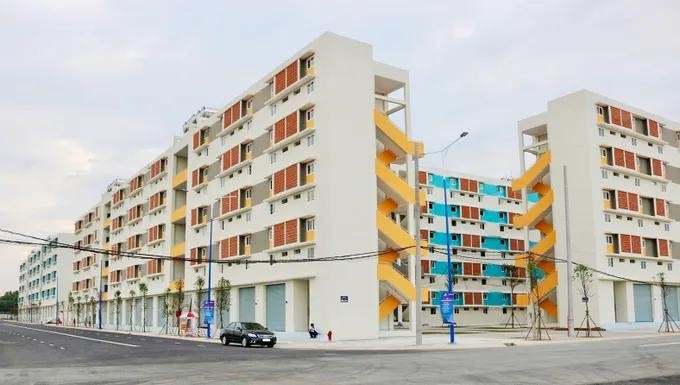
The Government shifting its focus toward developing social housing and rental housing represents a breakthrough in management thinking and real estate market development.
Recently, the Ministry of Health has requested localities to promote the development of rental housing and break ground on large-scale public-funded rental housing projects right in the third and fourth quarters of 2026.
Hanoi City is one of the active localities responding to the call, simultaneously breaking ground on three rental housing projects with a total scale of over 8,000 apartments and an estimated total investment exceeding VND30,000 billion. These projects lay the foundation for forming a new housing segment in Hanoi.
In Ho Chi Minh City, Vo Khac Thai, Standing Vice President of the Ho Chi Minh City Federation of Labor, said the agency signed cooperative agreements with eight businesses to develop 135,000 social housing units under lease and lease-purchase models through 2030.
The Ho Chi Minh City Federation of Labor also continues to proactively seek, connect, and work with partners and businesses to coordinate investments in developing social housing for workers and laborers.
In Hai Phong City, 15 rental housing projects have initially taken shape, with a total of more than 4,900 units. To date, 744 apartments have been completed and meet conditions for use.
According to Le Anh Quan, Standing Vice Chairman of the Hai Phong City People's Committee, developing the rental housing segment is a key strategic orientation closely linked to overall urban planning. By 2030, the city expects to establish a diverse, adequately scaled, and reasonably distributed rental housing system, with a total planned rental housing fund of 15,000 to 17,000 units.
In localities such as Hung Yen, Dong Nai, and Bac Ninh, the first rental housing projects have also recently broken ground. These projects are all allocated local budget funds with the goal of bringing tens of thousands of rental units into operation as early as possible.
Localities are also actively drafting regulations on social housing leasing and lease-purchase. For instance, in Dong Nai, the proposed rental price for social housing apartments ranges from VND25,000 to VND110,000 per square meter per month, depending on the building's floor count.
CEO Pham Duc Toan of EZ Real Estate proposed applying a public-private partnership (PPP) model, specifically the build-transfer (BT) arrangement, to develop rental housing. Under the proposal, the State would clear the site and hand over cleared land to businesses to develop housing projects, with payment made through other land funds that businesses could use to develop commercial housing and offset investment costs. He also proposed that the National Assembly adopt a separate resolution on rental housing, accompanied by specific implementation guidelines.
Property experts call for stronger State incentives
Chairman Le Hoang Chau of the Ho Chi Minh City Real Estate Association recommended that the State introduce various preferential mechanisms and support policies to attract investors. For rental housing projects priced within the financial capacity of middle- and low-income earners, the minimum payback period extends to over 20 years. This prolonged capital recovery period leaves many investors unenthusiastic.
Concurring, Nguyen Van Dinh, Vice President of the Vietnam Association of Real Estate Realtors, noted that after being brought into operation for a period, projects face heavy pressure from maintenance, repair, equipment replacement costs, and financial obligations, while rental revenue cannot increase correspondingly. Consequently, many businesses still prioritize developing projects for sale rather than lease.
International experience shows that most countries feature State leadership in rental housing development. Localities should allocate available land funds, potentially exempting land use fees and placing procedures on a "green channel" mechanism, even handling procedures for rental housing faster than for social housing.
In addition, long-term low-cost capital sources should be made available. For rental housing, target profit margins should be clearly specified, while allowing a certain percentage of land to be allocated for commercial housing development to offset costs.
Some businesses have outlined clear profit calculations. A social housing apartment requires an investment cost of about VND1 billion. If a business borrows about 80 percent of the value, equivalent to VND800 million, at a commercial interest rate of 13 percent to 15 percent per year, interest costs alone reach VND8 million to VND10 million per month, whereas rental prices can hardly exceed this figure.
Businesses must consider very carefully before deciding to invest, despite recognizing large market demand and being aware of their social responsibility. With high land tax rates and unclear payback mechanisms, businesses will not achieve efficiency and may even suffer losses when constructing rental housing.
From this reality, Pham Duc Toan, General Director of EZ Real Estate Company, proposed that the State support businesses through preferential policies such as granting cleared land, providing low-interest or zero-interest loans, and building appropriate rental price determination mechanisms so businesses can recover capital and make a profit.
At the same time, the State should directly invest in building rental housing through state-owned enterprises or national housing funds, viewing this as a political mission rather than a profit-driven goal.
Huynh Thanh Khiet, Deputy Director of the Ho Chi Minh City Department of Construction, suggested that the State should expand the scope of eligible tenants for worker accommodation facilities.
Vuong Duy Dung, Deputy Director of the Department of Housing and Real Estate Market Management under the Ministry of Construction
Rental housing is a strategic, long-term segment

The draft amended Housing Law marks a major shift in approach, moving from a primary focus on developing commercial housing to simultaneously developing commercial housing, social housing and rental housing. Each type of housing will be subject to corresponding mechanisms and policies.
Rental housing, in particular, is identified as a strategic, long-term segment serving a large number of people and receiving special attention in the new period. The draft amended Housing Law includes a separate chapter on rental housing development and introduces new provisions to promote housing development and create supply from various sources of capital. It also sets out specific policies on investment, construction and land.
Huynh Thanh Khiet, Deputy Director of the Ho Chi Minh City Department of Construction
Expand eligibility for worker accommodation rentals
Under the draft amended Housing Law, only workers currently employed an industrial park are eligible to rent worker accommodation within that industrial park.

If a worker has a family, however, family members who do not meet the eligibility requirements are not allowed to stay there. As a result, many worker accommodation facilities in industrial parks still have vacant units.
In addition, current regulations limit rental eligibility geographically, meaning accommodation at a particular industrial park primarily serves workers employed at that park.
To address these shortcomings, during the drafting of the Urban Development Law, the Department of Construction proposed expanding the group of people eligible to rent worker accommodation in order to make more effective use of the existing housing stock.
Another issue concerns regulations on investors developing worker accommodation. Currently, only primary investors, secondary investors and businesses operating within industrial parks are eligible to invest in this type of housing.
The Urban Development Law allows Ho Chi Minh City to expand eligibility to investors with the appropriate functions, as well as investors that acquire projects or assets from businesses eligible to develop worker accommodation in industrial parks. This would help mobilize additional social resources and improve the utilization of existing worker accommodation facilities.
Architect Dao Ngoc Nghiem, Vice Chairman of the Vietnam Association of Urban and Regional Planning and Development
Draft amended Housing Law should be passed soon

The draft amended Housing Law has basically addressed key areas of reform, including housing types, while establishing a comprehensive cross-sector institutional framework linked to urban development.
The draft also provides for greater decentralization and delegation of authority in housing investment and development, while clearly identifying the resources needed for implementation. It comprehensively addresses issues ranging from rental eligibility and land development mechanisms to investment capital sources and financial policies.
The draft law should be passed soon, together with specific implementing regulations, so that it can take effect promptly and fundamentally address people's housing needs.