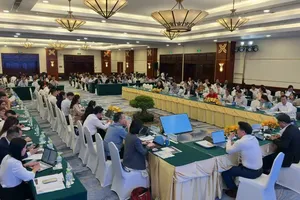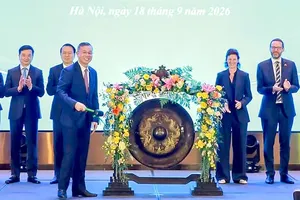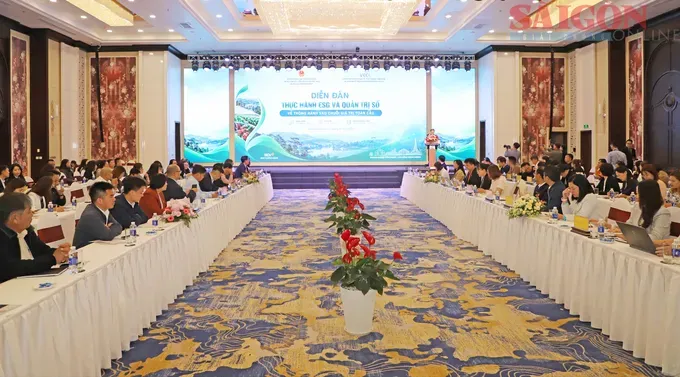
On September 24, the Lam Dong Provincial People’s Committee, in collaboration with the Vietnam Chamber of Commerce and Industry (VCCI), held a forum on ESG (Environmental, Social, and Governance) practices and digital governance themed "Passport to the Global Value Chain." The event gathered representatives from more than 100 domestic enterprises and organizations.
The forum focused on helping small and medium-sized enterprises (SMEs) enhance their understanding of ESG while clarifying the relationship between ESG standards and digital transformation in the context of international economic integration.
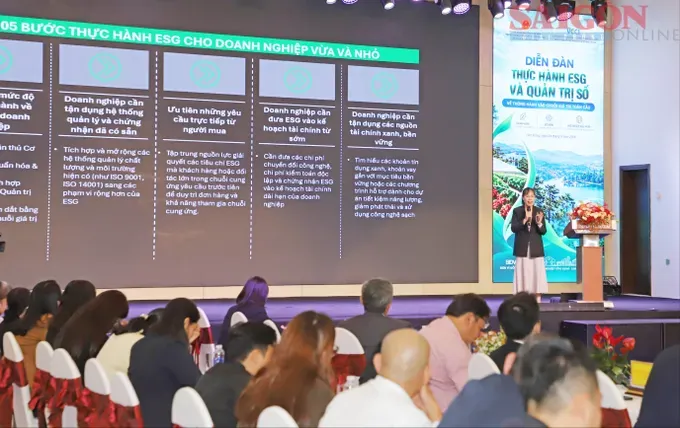
During the forum, experts and managers discussed new requirements imposed by major international markets like the EU and the U.S. and practical approaches to implementing ESG, digital governance, and transparency. Speakers also presented financial solutions for exporting businesses undergoing the dual transition and shared strategies for meeting the requirements of international buyers and import markets.
The forum gave businesses access to solutions that help meet increasingly strict standards on green requirements, traceability, supply chain management, and sustainable development, boosting competitiveness and expanding export markets.
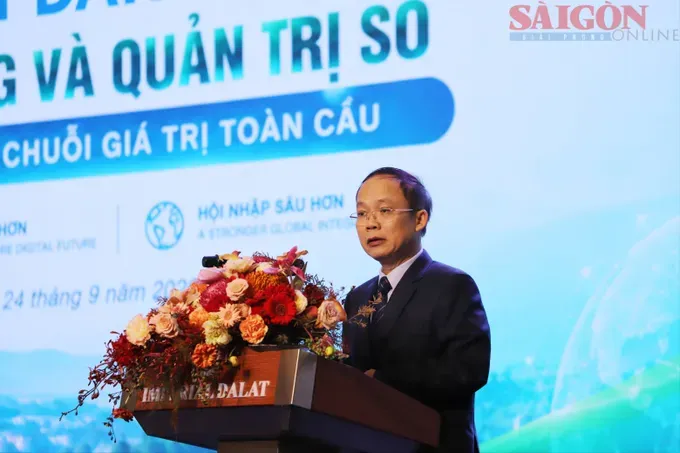
Mr. Bui Trung Nghia, Vice President of VCCI, noted that the rules of international trade are changing rapidly. Beyond traditional competition based on price, quality, and delivery schedules, developed markets worldwide are increasingly focusing on raw material origins, environmental impact, carbon emissions, green products, social responsibility, and corporate governance transparency.
According to the VCCI leader, ESG requirements, product traceability, and green technical standards are becoming mainstream. At the same time, importers, major corporations, and investors are increasingly demanding that suppliers provide data, proof, and accountability throughout their production processes.
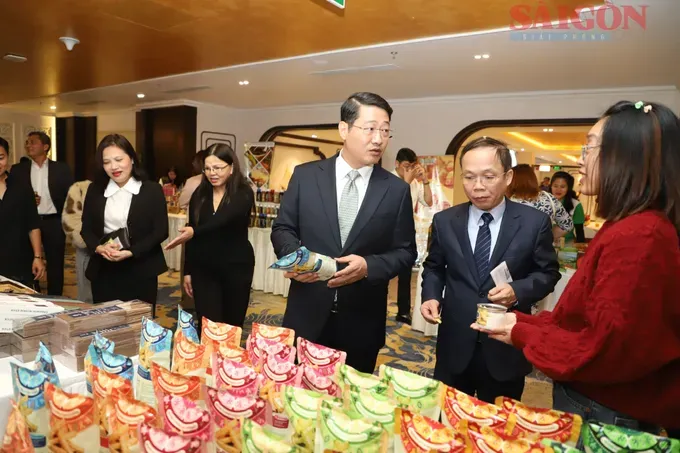
Enterprises must work toward offering products that meet market standards, backed by verifiable data, robust management systems, and the ability to demonstrate compliance to partners, Nghia stressed. This serves as a vital foundation for businesses in Lam Dong to secure orders, expand their market footprint, and participate in higher-tier global value chains.
For Lam Dong Province, these requirements are particularly significant given its ecosystem of more than 30,000 active enterprises across various sectors. Many of the province's key products—including coffee, agricultural produce, vegetables, processed foods, and textiles—possess strong potential for deeper integration into international markets.