A new wave of investment is opening up opportunities for Vietnam to improve its position in global value chains. The issue is not merely attracting more capital, but enhancing absorption capacity and enabling Vietnamese enterprises and technology to participate more deeply in supply chains, thereby transforming foreign capital flows into long-term growth capabilities.
Foreign direct investment (FDI) into Vietnam surged in the first 8 months of 2026, with total registered capital reaching US$40.63 billion, an increase of 55.4 percent over the same period last year. This reality underscores the need to shorten project implementation times and make synchronized preparations in infrastructure and human resources to welcome high-value manufacturing and technology projects.
High-value manufacturing sectors attract foreign capital
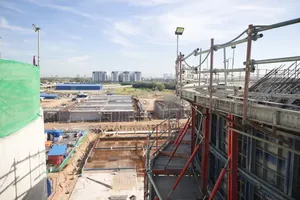
Foreign capital flows are accelerating into high-value manufacturing sectors. At the end of July 2026, Hai Phong City issued an investment registration certificate for LG Innotek Vietnam's semiconductor packaging substrate and circuit board manufacturing project with a total capital of US$1 billion. Samsung also plans to invest about US$1.5 billion in a semiconductor testing facility in Thai Nguyen. Around the same time, DHL Supply Chain broke ground on a logistics center worth VND1,900 billion in Hung Yen.
According to Associate Professor Nguyen Thuong Lang, an economic and international trade expert at the National Economics University, the current attraction of FDI is the result of years of preparation, along with market, labor, and international integration advantages. Vietnam has established an FDI ecosystem across various industries such as electronics, computers, mechanics, and processing-manufacturing.
As major corporations build production facilities, expanding capacity and bringing additional suppliers into Vietnam becomes more convenient. This trend is clearly reflected in the scale of new capital flows.
The General Statistics Office of Vietnam announced that as of August 31, total registered foreign investment reached US$40.63 billion, an increase of 55.4 percent year on year. Of this total, 2,771 projects were newly licensed, up 9.4 percent over the same period in 2025; total registered capital reached US$21.72 billion, up by 96.8 percent, showing a significant increase in the scale of new projects. The processing and manufacturing industry led with US$12.15 billion in newly registered capital, accounting for 55.9 percent.
Another notable point is the sizable gap between registered capital growth and implemented capital growth. While total registered capital increased by 55.4 percent, implemented capital reached US$17.25 billion, up 12 percent. This partly reflects the lag between investment decisions and project execution, while highlighting the need to boost capital absorption capacity and shorten the process from investment registration until new factories, technologies, and production capabilities actually enter the economy.
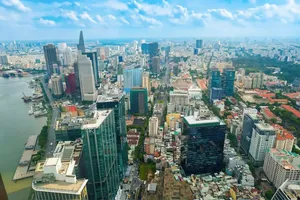
In Ho Chi Minh City, the trend of capital growth is also clearly evident.
Director Hoang Vu Thanh of the Ho Chi Minh City Department of Finance informed that in the first 8 months of the year, the city attracted more than US$10.06 billion in FDI capital, up 167.3 percent over the same period. Among these, 1,364 projects were newly licensed with total capital exceeding US$3.73 billion (the science and technology sector alone attracted 467 new projects, with registered capital over US$599 million).
Ho Chi Minh City is prioritizing investment attraction in high technology, semiconductors, artificial intelligence (AI), data centers, research and development (R&D), logistics, international finance, and the green economy. The rapidly growing capital scale alongside the shift into manufacturing, technology, and new links in supply chains indicates that Vietnam stands at an advantageous moment to elevate the quality of foreign capital flows.
FDI competition shifts toward infrastructure readiness
As capital flows lean further toward semiconductors, AI, data centers, R&D, and advanced manufacturing, the criteria for selecting investment locations are also changing. Alongside land and labor costs, investors increasingly demand high standards regarding power supply capabilities, logistics, digital infrastructure, policy environment, intellectual property protection, and technology security. Therefore, FDI competition is gradually shifting from incentives to the readiness level of the destination.
According to Mr. Phan Huu Thang, former Director General of the Foreign Investment Agency, to attract high-quality FDI, Vietnam should focus on developing national technology infrastructure, preparing human resources for emerging technology sectors, and utilizing the existing FDI manufacturing base to deploy new technologies and raise productivity.
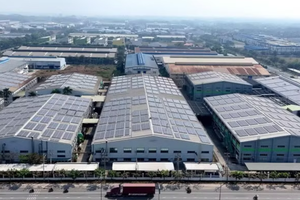
Infrastructure requirements have consequently expanded beyond industrial park land funds. Semiconductor, AI, data center, or R&D projects require stable power supplies, digital infrastructure, computing capacity, logistics, and a highly skilled engineering workforce, and these conditions must be prepared in advance to shorten the time frame from investment decision to project operation.
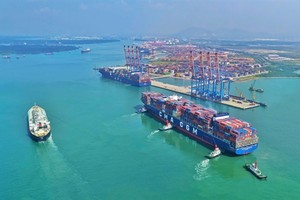
Ho Chi Minh City represents a case illustrating this need for synchronized preparation as capital flows concentrate heavily. New development space creates complementary capabilities between the manufacturing base and industrial land fund of former Binh Duong, the Cai Mep - Thi Vai deep-water port cluster, and Ho Chi Minh City's advantages in finance, services, innovation, and high technology.
Head Bui Minh Tri of the Ho Chi Minh City Export Processing and Industrial Zones Authority (HEPZA) said that new industrial parks are oriented toward a "green urban service industrial zone" model, reserving land funds to attract high-tech sectors, semiconductors, and innovative startups. Preparations also extend into specialized infrastructure.
At the Ho Chi Minh City Hi-Tech Park (SHTP), approximately 52.92 hectares are reserved for the Strategic Technology Development Center, focusing on AI, data centers, semiconductor integrated circuits, and R&D. Nguyen Ky Phung, Head of the SHTP Management Board, stated that the center is designed as an ecosystem for corporations and core technology developers, featuring an independent power station of about 63MW and direct connections to 15 international fiber-optic cable lines.
New FDI wave raises pressure on infrastructure upgrades
Regional destination readiness, particularly in logistics and green infrastructure, is becoming a key factor influencing investors' decisions as competition for high-tech FDI projects intensifies.
At the regional level, destination readiness, particularly in logistics and green infrastructure, will have varying degrees of influence on investors' decisions.
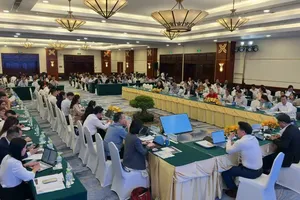
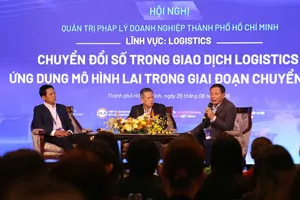
Speaking at the third Ho Chi Minh City Friendship Dialogue 2026, Grant Smith, Mayor of Palmerston North City, New Zealand, introduced the Te Utanganui project, which aims to develop a large-scale multimodal distribution hub connecting transportation modes and supply chains.
Meanwhile, Vice Governor Tomohide Sato of the Tokyo Metropolitan Government, Japan, said Tokyo is deploying hydrogen fuel cells for cargo-handling equipment, rooftop solar power systems on warehouses, and shore power for ocean-going vessels to reduce emissions from the port system.
These projects highlight that opportunities arising from the new wave of FDI are not easy to capture if localities do not proactively upgrade their resources and technical infrastructure. As more localities compete to attract high-tech projects, the ability to provide reliable electricity, digital infrastructure, logistics services, clean energy, skilled labor, and supply chain connectivity will determine where capital flows and how quickly projects can be implemented.