The Urban Development Law provides a framework for financial resources and products at the Vietnam International Financial Center (VIFC) to be more directly linked to projects, businesses, and value chains in Ho Chi Minh City, while ensuring financial and foreign-exchange security and preventing money laundering.
Meeting real capital needs
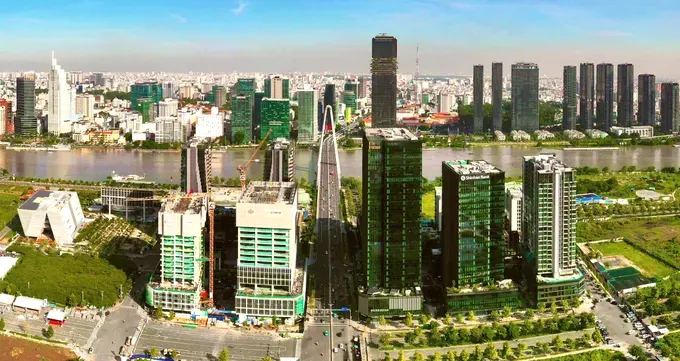
According to economist Dr. Ly Hoang Vu, Ho Chi Minh City has an economy worth approximately US$123 billion and a population of more than 14 million, supported by a large ecosystem spanning industry, seaports, logistics, and finance. The city faces substantial capital needs for infrastructure development and its growth model transformation. The Urban Development Law creates conditions for the Vietnam International Financial Center (VIFC) to serve as a bridge between international capital and projects in the city.
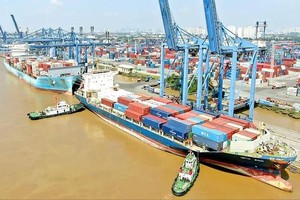
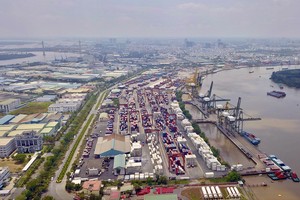
Specifically, Article 24 authorizes the municipal People’s Council to set regulations governing the issuance of municipal bonds and project bonds to mobilize capital for the city’s key projects. Notably, Point c, Clause 1, Article 24 allows for mechanisms to connect VIFC with the free trade zone, integrated logistics zone, open port area, innovation hub, and urban development projects and models based on transit-oriented development (TOD). This provision provides clearer channels for directing capital flows toward priority sectors.
Dr. Ly Hoang Vu said that allowing the establishment of banks engaged in investment banking activities and the issuance of international financial products at VIFC is among the most groundbreaking provisions of Article 24. The move could help establish financial institutions capable of providing advisory services, structuring transactions, and arranging capital for large-scale deals. At the same time, a mechanism for issuing international financial products would open up opportunities to diversify funding sources.
In the same vein, Assoc. Prof. Dr. Nguyen Huu Huan, Vice Chairman of the Executive Board of the Vietnam International Financial Center in Ho Chi Minh City (VIFC-HCMC), said the Urban Development Law would enable VIFC-HCMC to shift from a model focused on “concentrating financial institutions” to one serving as the city’s “capital infrastructure.”
In addition to providing a direct channel for mobilizing capital for key projects through municipal and project bonds, the regulation allows for a more comprehensive financial intermediation chain to support a transaction—from capital structure advisory, credit ratings, auditing, and legal services to underwriting and syndicated loan arrangement.
Notably, the provision allowing VIFC members to provide financial and support services to domestic organizations for transactions and international capital mobilization serves as a crucial bridge between the financial center and the real economy. Without such a bridge, VIFC risks becoming a closed ecosystem.
Expanding banks’ business opportunities
Vo Hoang Hai, Deputy CEO of Nam A Bank, said that under Article 24 of the Urban Development Law, VIFC-HCMC will serve as a venue where international capital is mobilized, structured, and allocated to projects, businesses, and development needs in Ho Chi Minh City in particular and Vietnam as a whole.
For banks that are members of VIFC-HCMC, business opportunities will extend well beyond traditional lending activities. Crucially, VIFC-HCMC can serve as a bridge between two sides: on one side, the substantial capital needs of projects; and on the other, international banks, investment funds, pension funds, insurance companies, and institutional investors in global markets.
Rather than relying solely on traditional borrowing, a project could receive support from a VIFC-HCMC member bank to standardize its documentation, design a financial structure, obtain a credit rating, arrange syndicated loans, or issue bonds or investment products to international investors.
VIFC-HCMC will help shift the mindset from simply bringing international capital into Vietnam to taking a more proactive approach. This also provides a basis for gradually reducing the economy’s heavy reliance on domestic bank credit, Mr. Vo Hoang Hai said.
However, for the new mechanism to work effectively, the Deputy CEO of Nam A Bank said the provisions of Article 24 should be specified as soon as possible to ensure clarity, transparency, and predictability. The first priority should be a licensing framework and procedures for registering additional banking services for VIFC member banks, covering capital requirements, personnel, scope of operations, conflict-of-interest management, risk segregation, prudential limits, and reporting requirements.
In addition, there should be a fast and transparent mechanism for licensing or registering international financial products, with clearly defined processing timelines. Regulations should also clarify the opening and use of foreign-currency accounts, cross-border payments, inbound and outbound capital transfers, profit repatriation, foreign-exchange management, and transactions between VIFC members and domestic customers and foreign institutions.
Nguyen Viet Anh, Deputy CEO of TPBank, said the Urban Development Law presents an opportunity for VIFC-HCMC to gradually become modern financial infrastructure capable of attracting and efficiently allocating domestic and international capital. However, to unlock capital flows and enhance VIFC-HCMC’s role, further work is needed to specify special mechanisms, particularly greater autonomy in capital mobilization and the development of instruments such as municipal and project bonds.
Nam A Bank is currently working with the International Finance Corporation (IFC), the State Secretariat for Economic Affairs of Switzerland (SECO), FiinGroup Vietnam, and the Global Green Growth Institute (GGGI) to develop a Green Supply Chain Finance (G-SCF) model in line with international standards. Designing the model according to these standards from the outset is intended to minimize the need for adjustments once it becomes operational.
Since the beginning of 2026, Nam A Bank has mobilized nearly US$350 million from international financial institutions. The bank has also expanded cooperation with foreign financial institutions, preparing funding and a partner network for co-financing activities as the solution is transferred and scaled up across the VIFC-HCMC ecosystem.