Vietnam, Israel seek to expand technology cooperation
SGGPO
Vietnam and Israel are looking to deepen cooperation in technology, innovation, agriculture, biotechnology, and cybersecurity by leveraging their complementary strengths and expanding technology deployment in Vietnam and across ASEAN.
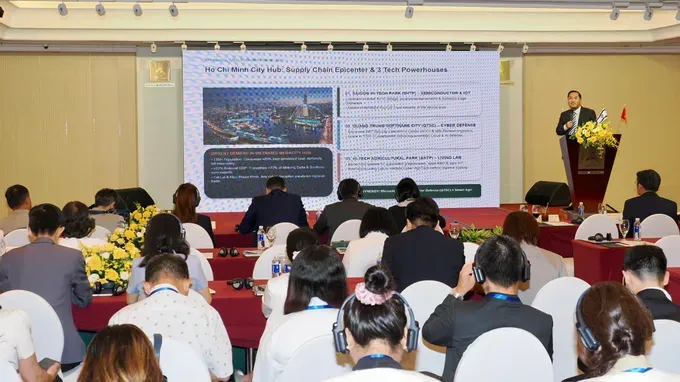
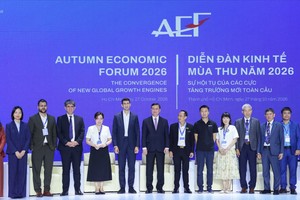
On the afternoon of October 29, as part of the 2026 Autumn Economic Forum in Ho Chi Minh City, the Ho Chi Minh City Investment and Trade Promotion Center (ITPC) and the Ho Chi Minh City Center for the Fourth Industrial Revolution (HCMC C4IR), in coordination with the Embassy of Israel and the Israel Economic and Trade Office, organized Vietnam-Israel Innovation Day 2026.
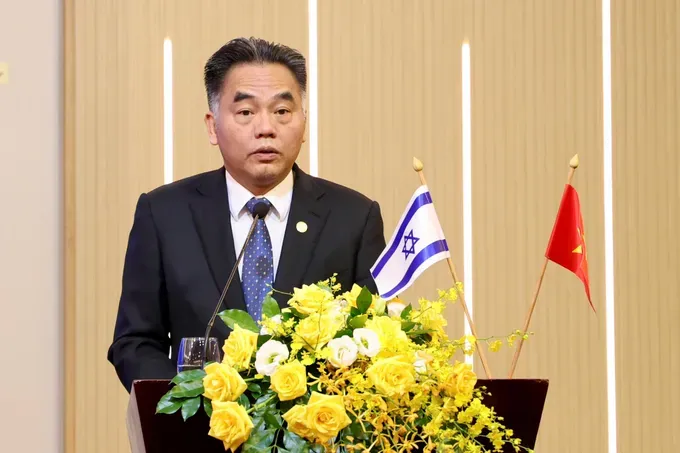
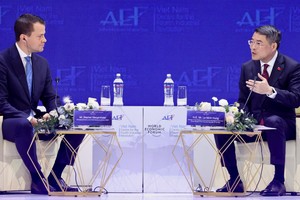
Israeli Ambassador to Vietnam Irit Savion Waidergorn (left) and Head Chen Peretz of the Israeli Economic and Trade Office in Vietnam attend the Vietnam-Israel Innovation Day 2026. Photo:
Head Chen Peretz of the Israel Economic and Trade Office in Vietnam said Israel currently has more than 7,000 startups and technology companies, 517 venture capital funds, and a well-developed research and innovation network.
In 2023, Israel allocated 6.35 percent of its GDP to research and development (R&D), more than double the average level of the Organisation for Economic Co-operation and Development (OECD). Notably, the private sector contributed about 91 percent of total R&D investment.
Israel’s technological advantages have been built on a combination of government risk-sharing policies, universities’ research capabilities, venture capital funding, and the participation of global corporations. Scientific research is consistently linked to market demand, helping drive product commercialization and business expansion.
Assessing cooperation opportunities, Tomer Shpilman, Asia-Pacific partner at Aurelius Capital, said Vietnam has the potential to become the first market in the Asia-Pacific region for many Israeli technology solutions.
While Israeli companies need partners with market knowledge, pilot customers, and product deployment capabilities, Vietnam offers a market of more than 100 million people, a technology engineering workforce, and extensive manufacturing and distribution systems.
Based on these advantages, Tomer Shpilman said, Aurelius Capital proposed a cooperation model that includes co-investing in technology companies, testing solutions in Vietnam, localizing products, and expanding into ASEAN markets. Vietnamese businesses could participate as investors, commercial partners, or first customers, rather than merely importing technology.
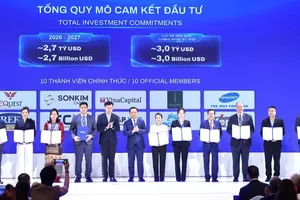
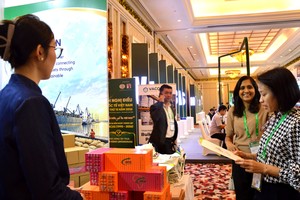
Participants at the event. Photo: SGGP
Nguyen Quoc Binh, a representative of the Ho Chi Minh City Biotechnology Center, said Israel has strengths in water-saving irrigation technology, water management, crop varieties, and automation. Vietnam, meanwhile, has abundant agricultural resources, particularly seafood, rice, and tropical fruits, along with strong demand for processing and post-harvest preservation.
This complementarity creates opportunities for technology transfer cooperation, higher productivity, resource conservation, and greater value for agricultural products. Nguyen Quoc Binh proposed expanding cooperation into biotechnology, agriculture, pharmaceuticals, and nutritional products research, helping Vietnamese companies gradually master advanced technologies.
In addition, cybersecurity was identified as a highly promising area for cooperation as Vietnam accelerates digital transformation. Israel’s advanced security solutions could help meet growing demand for the protection of data, information infrastructure, and digital supply chains.
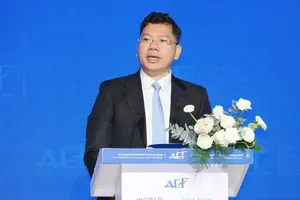
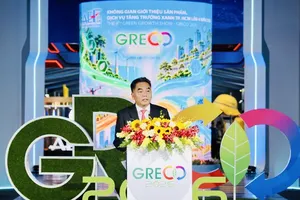
Speaking at the event, Nguyen Loc Ha, Permanent Vice Chairman of the Ho Chi Minh City People’s Committee, said the city views science and technology, innovation, and digital transformation as key drivers of growth, with businesses at the center of these efforts.
Nguyen Loc Ha, Permanent Vice Chairman of the Ho Chi Minh City People’s Committee, speaks at the event. Photo: SGGP
He outlined three priority areas for cooperation with Israel including cybersecurity and specialized workforce development; climate-resilient smart agriculture; and partnerships among businesses, research institutes, and universities to pilot and commercialize new technologies.
The city also seeks to promote joint ventures and other forms of collaboration, while creating favorable conditions for technological solutions to be implemented and scaled up.
 "Israeli Ambassador to Vietnam Irit Savion Waidergorn (left) and Head Chen Peretz of the Israeli Economic and Trade Office in Vietnam attend the Vietnam-Israel Innovation Day 2026. Photo:")