High technology costs, market fragmentation, and data security requirements are hindering small and medium-sized enterprises (SMEs) from participating in the digital economy. Developing shared platforms, simplifying regulations, and standardizing cross-border payments have been proposed as solutions to overcome these barriers.
 "Speakers voice their opinions at the session. Photo: SGGP")
On October 27, at the discussion session “Building a trusted and interconnected ASEAN digital economy policy framework” within the Autumn Economic Forum 2026, speakers analyzed the challenges facing SMEs in joining the regional digital market.
Chairwoman Nguyen Thuy Duong of EY Vietnam Consulting Company said the growing use of QR payments is expanding opportunities for cross-border transactions. However, limitations in capital, human resources, and data management capabilities force many businesses to choose between maintaining current operations and making long-term technology investments.

Nguyen Van Thuat, Deputy Director General of the Department of Economy and Digital Society under the Ministry of Science and Technology, emphasized a shift in focus from policymaking to implementation, with efforts to reduce administrative procedures and compliance costs. Proposed measures include expanding regulatory sandbox mechanisms, developing shared digital platforms, and providing low-cost trusted services to support SMEs in digital transformation.
According to her, small businesses face difficulties in independently building comprehensive technology, data, and security systems. Therefore, it is necessary to develop shared infrastructure, simplify regulations, and ensure connectivity with international markets. As Vietnam develops its National Data Center, the country also needs mechanisms to protect business data when providing cross-border services at reasonable costs.

Felix Sharief, Vice President of DANA Indonesia, said the main obstacle lies not only in legal regulations but also in market fragmentation. When each bank and financial platform uses its own standards, businesses must spend significant time and money integrating their systems.
According to him, adopting common standards for Open APIs has reduced the time required to connect businesses with banks and financial platforms from about two years to just one month. Standardizing QR payments and fast payment systems has also helped lower infrastructure costs when businesses expand operations across the region.
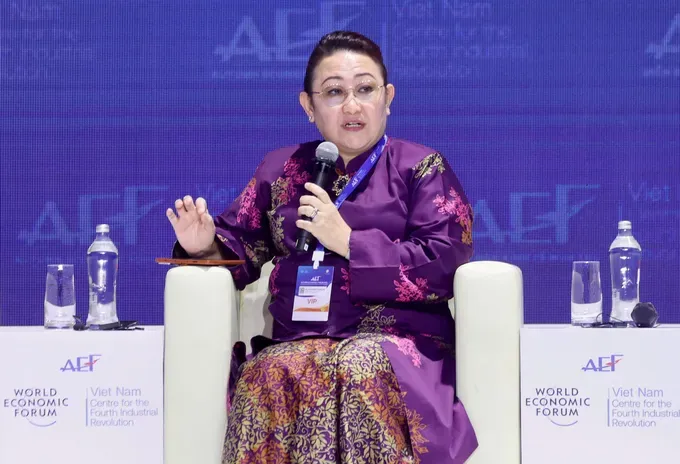
Ellina Roslan, Senior Director of MyDIGITAL Malaysia, shared Malaysia’s experience in establishing the National Digital Economy Council, chaired directly by the Prime Minister. The mechanism aims to strengthen interagency coordination and address obstacles related to trade, payments, and data security.
Participants at the discussion stressed that support policies should focus on reducing connectivity costs, simplifying procedures, protecting data, and developing shared infrastructure. These conditions would help SMEs capitalize on opportunities arising from the ASEAN Digital Economy Framework Agreement (DEFA), enabling deeper participation in digital trade and regional supply chains.