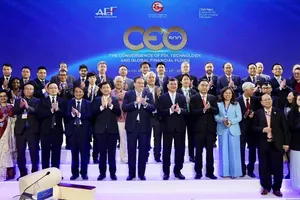
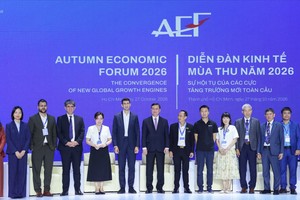
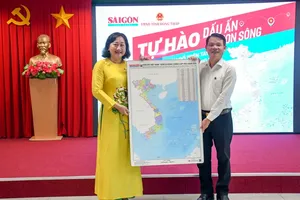
On October 29, as part of the Autumn Economic Forum 2026, the Vietnam-China seminar themed “Connecting Manufacturing, Logistics and Global Value Chains” focused on tapping cooperation potential in industry, seaports and technology transfer, with the goal of enhancing production capacity and increasing value creation within international supply chains.
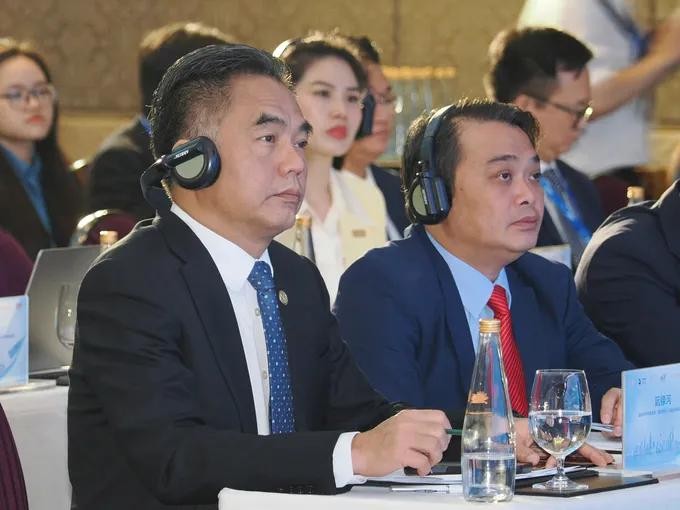
Yang Wen Bin, Acting Chairman of the Chinese Business Association in Vietnam, said bilateral trade turnover reached US$253.1 billion in the first nine months of 2026. The scale of trade and the complementary advantages of the two economies have created opportunities for cooperation in manufacturing, technology and logistics.
He said businesses need to shift from expanding scale to improving quality, efficiency and added value, while also digitalizing supply chains, improving customs clearance and reducing logistics costs.
According to Yang, Ho Chi Minh City benefits from a new development space following the merger, linking financial and commercial centers with industrial parks, high-tech manufacturing facilities and deep-water seaports. Connectivity among manufacturing, transportation, warehousing and markets creates favorable conditions for forming relatively complete value chains, attracting investment and expanding international production networks.
However, to fully capitalize on these advantages, infrastructure connectivity must be strengthened, delivery times shortened and logistics costs reduced.
Tu Zhou, Acting Consul General of China in Ho Chi Minh City, said business cooperation between the two countries is shifting from goods trade to supply chain coordination, technology exchange and knowledge sharing. He noted that smart manufacturing, process management, quality control and workforce training offer significant room for cooperation.
In addition, multimodal transportation, smart border gates, cold storage systems and cross-border finance could help remove transportation bottlenecks and improve market connectivity.
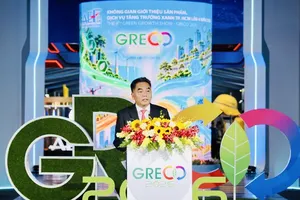
Alongside infrastructure, the ability to absorb technology is a key condition for raising supply chain value. Director Le Truong Duy of the Ho Chi Minh City Center for the Fourth Industrial Revolution (HCMC C4IR), said cooperation must be based on the practical needs of businesses, with clear identification of technologies, technical standards, partners and implementation resources.
He said priority should be given to applying artificial intelligence, automation, smart logistics and green logistics to optimize costs across the entire supply chain.
In particular, technology transfer should be linked to the capacity of domestic enterprises to absorb and operate new technologies. Director Le Truong Duy proposed strengthening cooperation among government agencies, businesses, research institutes and universities, while identifying coordinating bodies capable of turning cooperation opportunities into concrete projects.
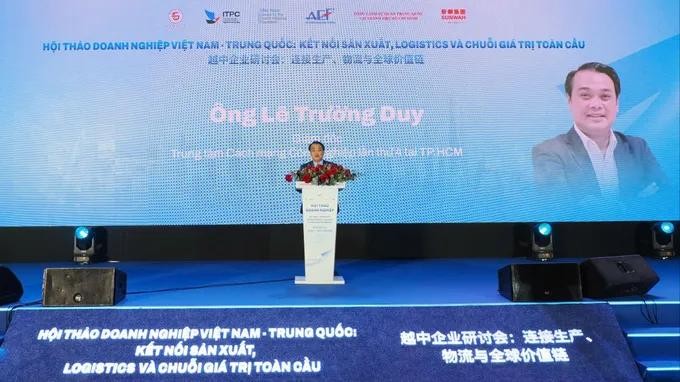
Director Le Truong Duy of the Ho Chi Minh City Center for the Fourth Industrial Revolution speaks at the event. Photo: SGGP
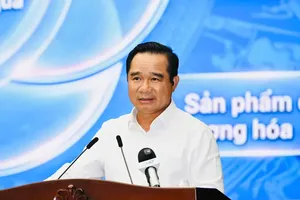
Addressing the event, Permanent Vice Chairman Nguyen Loc Ha of the Ho Chi Minh City People's Committee said stronger production linkages, supporting industry development, enhanced supplier capabilities and greater technology adoption are needed to help Vietnamese businesses participate more deeply in higher value-added segments of global supply chains.
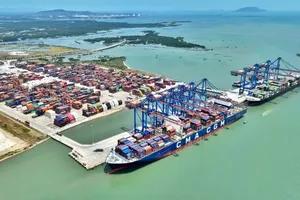
He said Ho Chi Minh City seeks cooperation in infrastructure development, smart logistics and green logistics, while making effective use of the seaport system, particularly the Cai Mep-Thi Vai port complex, to reduce transportation costs.
The city also encourages technology transfer, workforce training and stronger collaboration among businesses, research institutes and universities.
Mr. Nguyen Loc Ha emphasized that the effectiveness of cooperation should be measured by business opportunities created, partnerships established and initiatives capable of practical implementation. Ho Chi Minh City will continue to foster a favorable investment and business environment to help enterprises from both countries turn potential into concrete cooperation programs and projects.