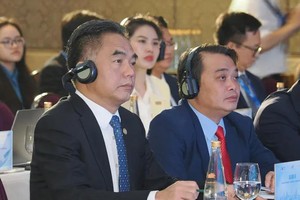
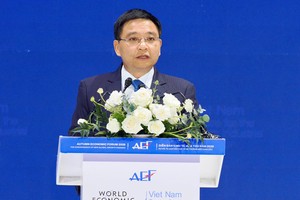
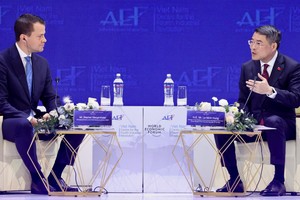
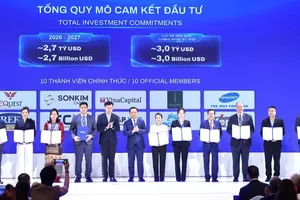
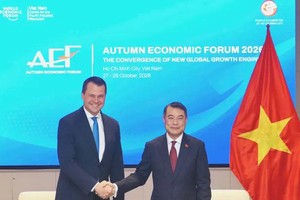
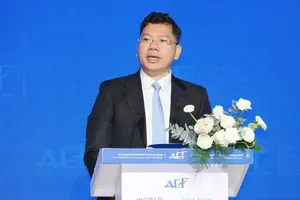
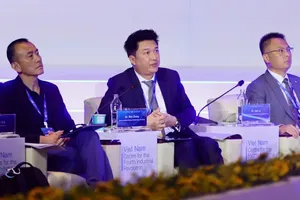
During a working session on the afternoon of October 28 with representatives of the Vietnam International Financial Center in Ho Chi Minh City (VIFC - HCMC), Deputy Prime Minister Nguyen Van Thang urged the entity to transition into substantive operations, targeting its first actual transaction and founding member bank in November 2026.
Proposals submitted to clear bottlenecks and attract foreign capital
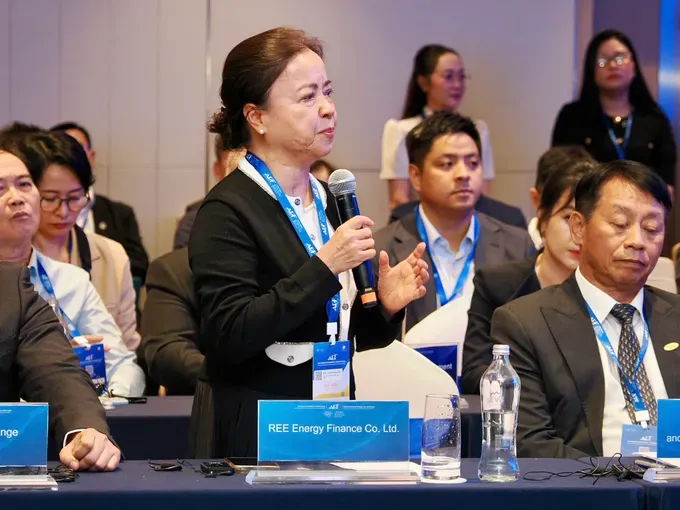
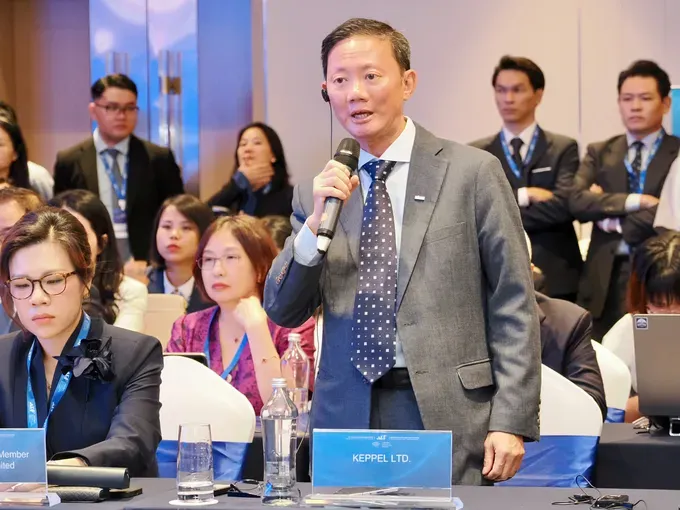
During the working session, representatives from banks, investment funds, and enterprises raised several obstacles hindering transaction execution and international capital attraction. A pressing issue is that the center currently lacks member banks, while businesses require accounts to receive, transfer, and settle funds. One enterprise proposed being allowed to use Direct Investment Capital Accounts (DICA) at banks outside the center during the transition period to complete pending transactions in the fourth quarter of 2026.
A representative from United Overseas Bank (Vietnam) Limited (UOB Vietnam) suggested reconsidering credit growth limits for foreign bank branches based on the financial capacity of their parent banks. Meanwhile, a representative from Military Commercial Joint Stock Bank (MB) urged the prompt completion of licensing regulations and the expansion of investment banking services, including capital arrangement advisory, bond underwriting, custody, and asset servicing.
Investment funds and corporate leaders also proposed refining regulations concerning investment funds, asset transfers, and tax policies. A representative from Sovico Group proposed developing aviation finance to attract aircraft leasing and financing transactions. Additionally, a representative from Gemadept Holdings Maritime Investment and Development Co., Ltd. recommended building an interconnected data system linking seaports, logistics, customs, and banks to serve as a foundation for maritime financial services.
Specific duties assigned with firm deadlines
Deputy Governor of the State Bank of Vietnam, Pham Thanh Ha, stated that the central bank is reviewing licensing conditions for member banks while considering options to allow businesses to transact through existing operating banks in Vietnam during the transition period, subject to cash flow segregation and control requirements. Regarding investment banking operations, activities carrying direct risks in the stock market must be separated to ensure capital safety.
Ms. Nguyen Thi Bich Ngoc, Deputy Minister of Finance, emphasized the need to maintain management and supervisory standards aligned with international practices. In the immediate future, eligible financial products should be selected for deployment, with policies continuously refined based on practical implementation.
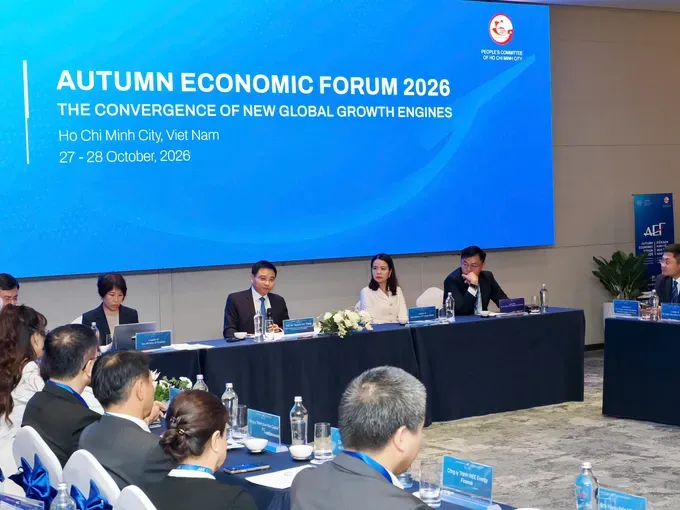
After hearing the proposals, Deputy Prime Minister Nguyen Van Thang requested that all recommendations be categorized by authority. Issues with an established legal basis must be handled immediately; matters requiring guidance must carry clearly assigned responsibilities and deadlines; and cases requiring legal amendments must feature concrete action plans without creating unnecessary administrative procedures. Immediate priority will be given to clearing bottlenecks in account mechanisms, foreign exchange, capital transfers, payments, and operating conditions for banks, investment funds, and asset management companies. New financial products must undergo controlled testing to ensure systemic safety.
Deputy Prime Minister Nguyen Van Thang instructed VIFC - HCMC to shift from organizational setup to substantive operation, from attracting members to market development, and from investment commitments to actual transactions. The executive agency, in coordination with member institutions, will select feasible transactions for execution in November 2026, prioritizing energy, infrastructure, logistics, asset management, and financial services. Each transaction must clearly identify partners, capital plans, legal requirements, existing obstacles, and responsible authorities. Licensing procedures must also be expedited to ensure at least one member bank is operational in November.
The Deputy Prime Minister assigned the State Bank of Vietnam to lead the resolution of issues related to member banks, accounts, foreign exchange, capital transfers, and settlements, prioritizing roadblocks that directly impact November 2026 transactions.
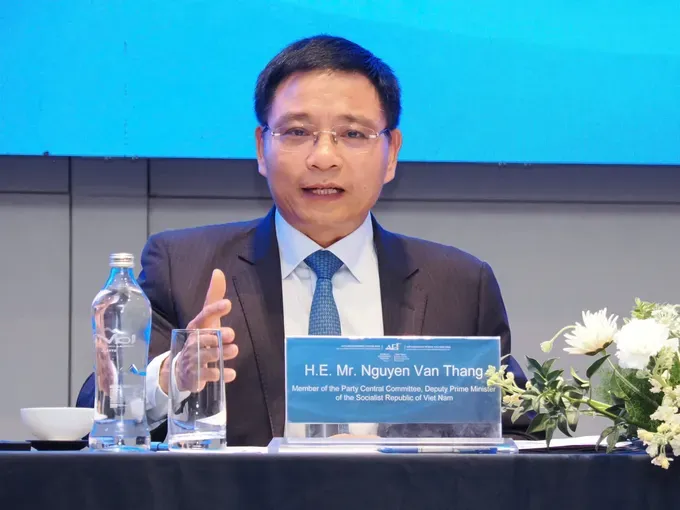
The Ministry of Finance was tasked with leading efforts on investment funds, asset management, capital markets, and taxation. It will coordinate with the State Bank of Vietnam, the Ministry of Justice, and relevant agencies to review draft amendments to decrees concerning VIFC within 15 days, explicitly detailing contents, jurisdiction, and implementation roadmaps.
The Ho Chi Minh City People's Committee will ensure operating conditions for the executive agency, develop supporting infrastructure and services, and assist in resolving operational difficulties. Meanwhile, enterprises and financial institutions must finalize their dossiers and turn proposals into feasible projects and transactions.
The Deputy Prime Minister also called for the development of specialized financial markets and products, expanding long-term fundraising channels with competitive costs. Priority will be placed on capital markets, asset management, project finance, green finance, infrastructure, logistics, and supply chains.
Additionally, the International Financial Centers in Ho Chi Minh City and Da Nang must develop complementary roles to avoid resource fragmentation. The operational effectiveness of the Center will be measured by real transactions, international capital raised and disbursed, services delivered, procedural efficiency, and market safety and transparency—rather than merely the number of licenses issued or the scale of hosted events.