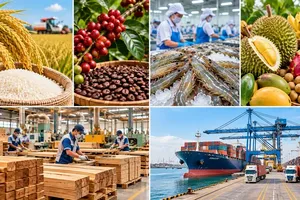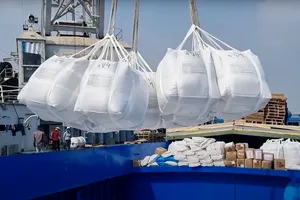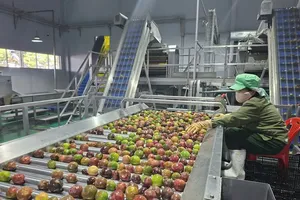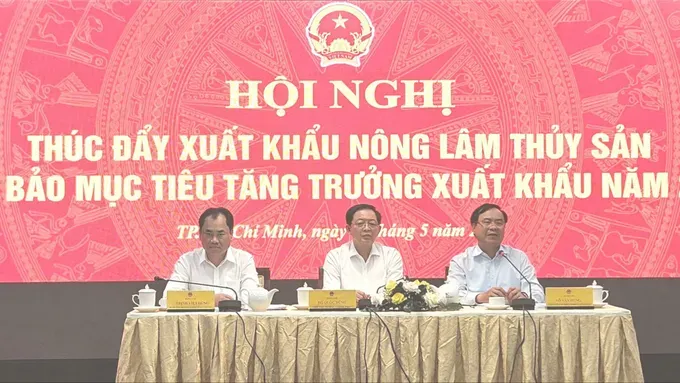
The Ministry of Agriculture and Environment today coordinated with the Ministry of Industry and Trade, the Ministry of Finance, along with localities and industry associations to organize the “Conference to promote agro-forestry-fishery exports and ensure the 2026 export growth target" in Ho Chi Minh City.
In attendance were Deputy Prime Minister Ho Quoc Dung, Minister of Agriculture and Environment Trinh Viet Hung; along with leaders of relevant ministries and agencies, leaders of the Ho Chi Minh City People's Committee, and southern localities.
At the conference, associations, industry groups, and leaders of several southern localities focused on assessing difficulties and obstacles in production, processing, logistics, and agro-forestry-fishery exports. Some opinions pointed out a major paradox in Vietnam’s rice industry, where exports rank among the top in the world, yet farmers still enjoy disproportionate benefits. Along with that, the pressure of falling rice prices, increasing logistics costs, and the risk of El Nino returning are causing rice exports in 2026 to face many challenges.
Chairman Do Ha Nam of the Vietnam Food Association said that in 2025, the rice industry reached a remarkable milestone by exporting about 8.06 million tons of rice, making Vietnam the second-largest rice exporter in the world. Vietnam’s rice industry has gradually shifted from low-price competition to competition based on quality and added value. However, entering 2026, the world rice market has seen many fluctuations, causing export prices to plunge.
The average export price was only about US$468 per ton, a decrease of about 10 percent compared to the average of US$508 per ton in 2025. This is also the lowest level in about the last 5 years. At times, the price of fresh paddy at the field dropped to only about VND5,000 per kg, while the export rice price was only about VND10,000 per kg. This directly affects the profits of farmers and businesses.
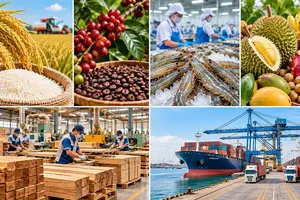
At the conference, Minister of Agriculture and Environment Trinh Viet Hung said that in the first 4 months of 2026, the country's total agro-forestry-fishery export turnover reached US$23.04 billion, an increase of 5.4 percent over the same period in 2025; imports reached US$17.65 billion an increase of 12 percent over the same period; the trade balance continued to maintain a surplus.
Regarding the market, Asia continues to be the largest export region (accounting for 44.1 percent), followed by the Americas (20.9 percent) and Europe (15.8 percent). Considering specific markets, China with 21.1 percent, the United States with 18.5 percent, and Japan with 7 percent are the 3 largest export markets for Vietnam's agro-forestry-fishery products in the first 4 months of 2026. Compared to the same period last year, exports to China increased by 28.8 percent, Japan increased by 1.3 percent, while the United States decreased by 4.8 percent.
In his guiding speech at the conference, Deputy Prime Minister Ho Quoc Dung requested the leadership of the Government Office to monitor the issues raised by the Vietnam Food Association to report to Government leaders; at the same time, he directed the Ministry of Agriculture and Environment to have solutions for purchasing rice for farmers in the Mekong Delta, especially supporting farmers to store rice through cooperatives or the warehouse systems of export enterprises to avoid sell-offs when prices drop low.
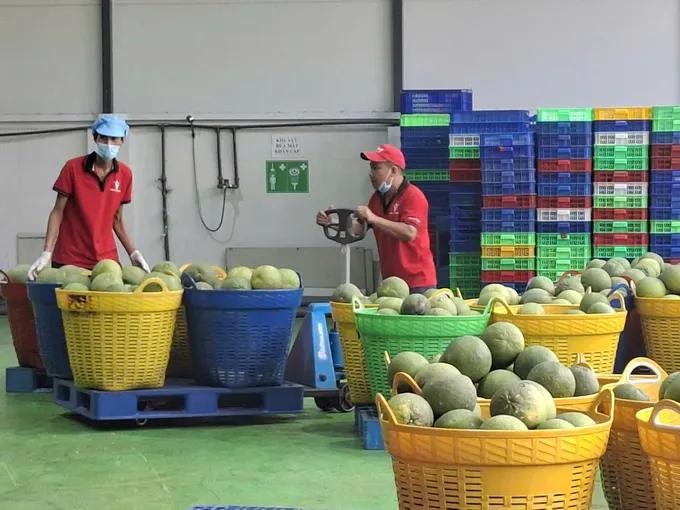
The Deputy Prime Minister requested the Ministry of Agriculture and Environment and relevant ministries and agencies to strengthen forecasting, closely monitor market developments, international trade, natural disasters, climate change, and factors affecting the agro-forestry-fishery supply chain; promptly advise the Government on flexible and effective management solutions to minimize the risk of supply chain disruptions and stagnation of agricultural products.
Relevant ministries and agencies need to review and perfect mechanisms and policies to support businesses; simplify administrative procedures; increase decentralization and delegation of power associated with inspection and supervision; and promote digital transformation in industry management and agricultural trade activities.
The Deputy Prime Minister also suggested that the Ministry of Industry and Trade effectively implement trade promotion and market development programs, take maximum advantage of Free Trade Agreements (FTAs), promote market opening for key products and items with high growth potential as well as to ensure the goal of agro-forestry-fishery exports reaching a value of US$74 billion this year.