As a result, eco-certified industrial parks are gaining a clear competitive edge in attracting investment, particularly high-quality foreign direct investment (FDI).
Striving for US$4.5 billion in investment
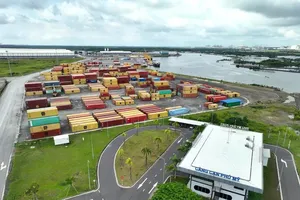
The eastern area of Ho Chi Minh City currently hosts 13 operating industrial parks (IPs) with a total area of more than 9,000 hectares, achieving an occupancy rate of over 70 percent. Among them, Phu My 3 Specialized Industrial Park in Tan Phuoc Ward stands out as a model of a green industrial park attracting investment, hosting numerous high-tech projects from Japan, the Republic of Korea, the United States and other countries.
According to Mr. Kazama Toshio, Deputy General Director of Thanh Binh Phu My Joint Stock Company, the developer of Phu My 3 Specialized Industrial Park, the park has attracted around US$6 billion in investment so far and is expected to exceed US$7 billion by 2027 when ongoing projects complete their licensing process.
This success stems from a long-term strategy to transition into an eco-industrial park. Over the past decade, the developer has transformed a low-value mangrove area into a modern industrial park with synchronized and advanced infrastructure.
The park features international-standard infrastructure, a modern centralized wastewater treatment system, and underground utilities for electricity, water, telecommunications, natural gas and industrial gases, all delivered directly to the factory gates of investors.
Also in the eastern region of Ho Chi Minh City, Sonadezi Chau Duc Industrial Park is actively advancing its green transformation toward an eco-industrial and sustainable model. Its strategy focuses on synchronized infrastructure investment, attracting green investment, centralized wastewater treatment and integrated environmental solutions.
Currently, Sonadezi Chau Duc hosts more than 100 domestic and foreign enterprises with total investment capital reaching billions dollar. Notably, despite a slowdown in global investment flows, the park continues to maintain strong attractiveness, drawing many investors seeking industrial land leases.
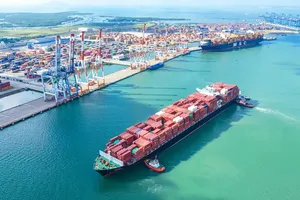
Overall, Ho Chi Minh City currently has 66 export processing zones and industrial parks, of which 58 are operational, covering more than 22,410 hectares with an occupancy rate of about 80 percent.
According to the management board of the Ho Chi Minh City Export Processing and Industrial Zones Authority (HEPZA), total investment is expected to reach US$4.25 billion in 2026, with a target of US$4.5 billion. HEPZA is also promoting a shift toward high-tech, green and digital industrial park development.
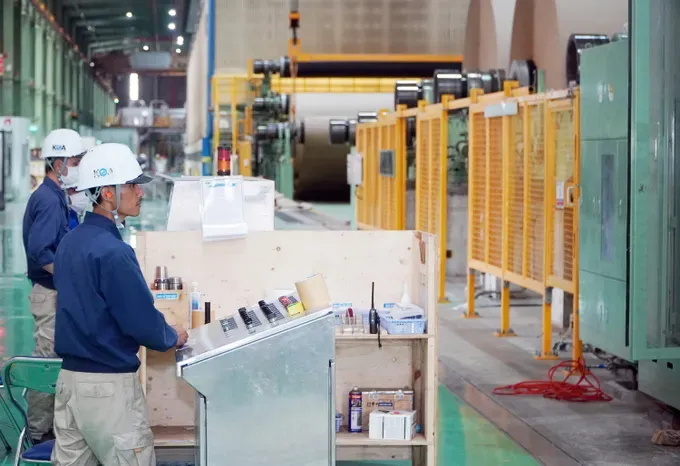
Within the framework of a JICA-funded technical assistance project on developing model eco-industrial parks and smart industrial parks in Ba Ria–Vung Tau formerly, Phu My 3 Specialized Industrial Park has completed its documentation, and HEPZA is proposing certification of the park as an eco-industrial park in the near future.
Challenges in transformation
Sharing with Sai Gon Giai Phong (SGGP) Newspaper reporters, Deputy Head of HEPZA Le Viet Phuc said that various solutions have been implemented to promote green, clean, and sustainable production transformation among infrastructure investors and enterprises in industrial zones.
HEPZA has also coordinated with organizations such as JICA, UNIDO and the World Bank to research, assess, and select suitable directions for converting existing industrial parks into eco-industrial and smart industrial parks in the city.
However, this transition remains a necessary but challenging process.
Sharing the experience of Hiep Phuoc Industrial Park, Deputy General Director of Hiep Phuoc Industrial Park Joint Stock Company Giang Ngoc Phuong said that in 2020, the park joined a project on implementing eco-industrial parks in Vietnam under the Global Eco-Industrial Parks Program, jointly carried out by UNIDO and the former Ministry of Planning and Investment, funded by the Swiss State Secretariat for Economic Affairs.
Beyond the positive outcomes achieved, such as improved industrial environmental conditions and the emergence of industrial symbiosis models, challenges remain significant.
One key issue is the requirement to allocate 25 percent of land area for green and shared infrastructure in eco-industrial park conversion, compared to the previous minimum requirement of 10 percent for green space. This adjustment reduces commercial land area, affecting investment recovery for developers.
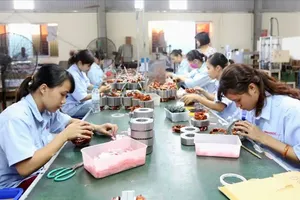
Secondary enterprises, especially small and medium-sized businesses operating within industrial parks, are also affected due to high initial costs for clean technology, resource recycling systems and operational management systems.
In terms of solutions, industrial park developers note that Vietnam has already issued Decree 35/2022 and Circular 05/2025, establishing a national policy framework for eco-industrial parks. However, they stress that stronger policy instruments are still needed to fully develop a green industrial ecosystem, including expanded access to green credit, tax incentives, and more specific land-use support policies from state management agencies.