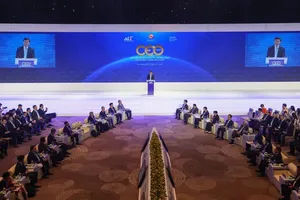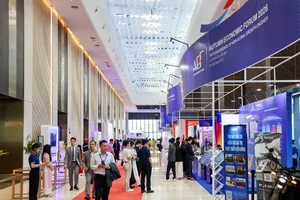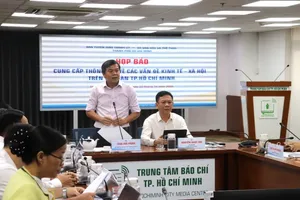
Within the framework of the Autumn Economic Forum 2026 on October 26, the CEO 500 program, themed "The Convergence of FDI, Technology, and Global Financial Flows," focused discussions on developing infrastructure and new growth spaces for Ho Chi Minh City.
Participants emphasized that the city needs to integrate its transport, industrial, technological, and financial infrastructure into a synchronized ecosystem to welcome high-quality investment flows.
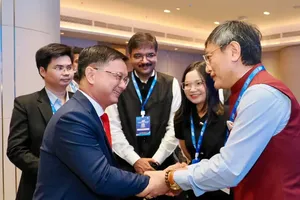
The event drew the attendance of Standing Vice Chairman of the Ho Chi Minh City People's Committee Nguyen Loc Ha and Vice Chairman of the Ho Chi Minh City People's Committee Nguyen Cong Vinh, alongside leaders from ministries, international organizations, financial institutions, and over 500 business executives.
Infrastructure must align with project execution capabilities
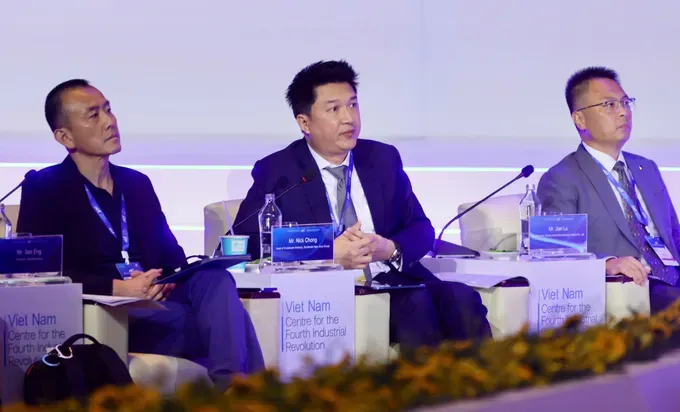
Speaking at the panel discussion on Infrastructure and New Development Space, Nick Chong, Head of Investment Advisory for Southeast Asia at Arup Group, noted that international investors are seeking not merely isolated projects but integrated growth platforms such as transport corridors, logistics networks, innovation districts, and Transit-Oriented Development (TOD) urban models.
According to Mr. Chong, while global capital remains abundant, it will prioritize projects with investment readiness, feasible implementation plans, and clear risk-allocation mechanisms. Therefore, infrastructure, land-use planning, industry, and finance must be developed in an interconnected manner.
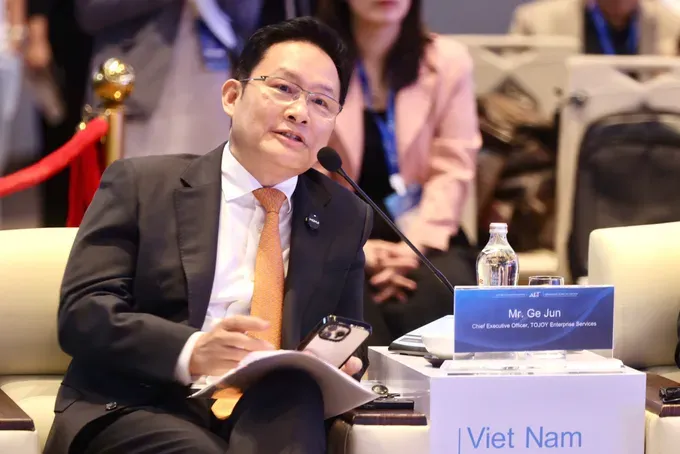
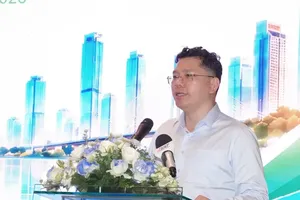
Echoing this approach, Vice Chairman of the Board of Directors and Deputy General Director of Becamex Group, Nguyen The Duy, stated that the corporation is transitioning its industrial park system toward smart, eco-friendly, and sustainable models.
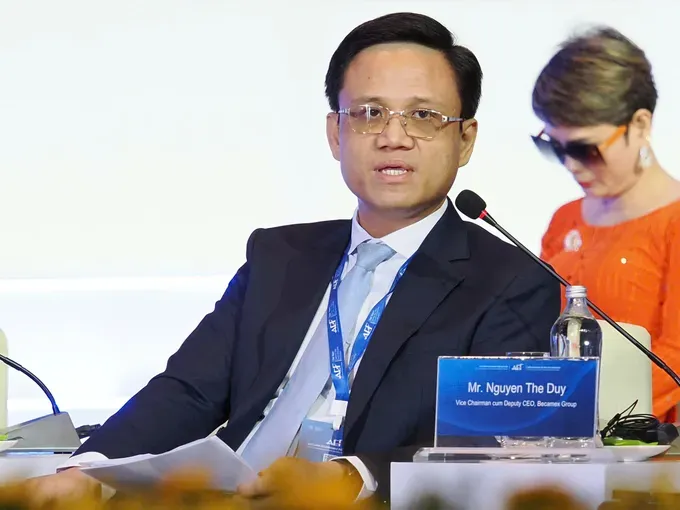
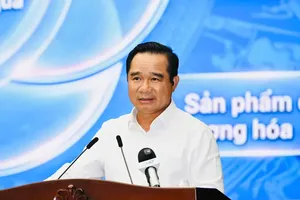
Vice Chairman of the Board of Directors and Deputy General Director of Becamex Group, Nguyen The Duy (Photo: SGGP)
Becamex has partnered with international entities to establish the Vietnam Advanced Manufacturing Center, supporting businesses in automation, technology transfer, and workforce training. The group is also orienting the development of a Science and Technology Urban Area in northern Ho Chi Minh City linked with interconnected transport infrastructure while expressing its desire for the city to drive breakthrough mechanisms to attract high-tech FDI.
Enterprises propose concrete projects
Offering practical avenues for cooperation, Ge Jun, CEO of TOJOY Enterprise Services, stated that the group is pushing forward a portfolio of five new infrastructure and technology projects in Ho Chi Minh City. The initiatives focus on artificial intelligence (AI), clean energy, construction robotics, and the low-altitude economy, including drone applications and electric vertical takeoff and landing (eVTOL) aircraft.
TOJOY proposed establishing a collaborative mechanism with the Global Sharing Office (GSO) within the next 60 to 90 days to turn discussions at the CEO 500 program into feasible investment projects.
Meanwhile, Peter James Opdahl, Chairman of ITO Group Holdings, shared that Vietnam has served as the group's strategic manufacturing hub for industrial automation since 2012. ITO has received project approval under the "Green Lane" mechanism to deploy a new 12,000-square-meter facility serving high-tech manufacturing sectors.
The Chairman of ITO Group Holdings recommended that Vietnam further develop its supporting supply chains, assist small and medium-sized enterprises (SMEs) in joining global networks, and step up training and technology transfer so domestic engineers can master research, design, and production operations.
In the aviation sector, To Viet Thang, Standing Vice President of Vietjet, highlighted opportunities to develop new economic spaces surrounding Long Thanh International Airport. Vietjet and Sovico Group are advancing partnerships with major players such as Airbus and Rolls-Royce, aiming to build an aviation industrial park, enhance inter-regional transport connectivity, and leverage AI and big data in operations.
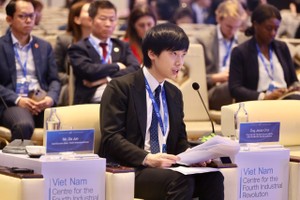
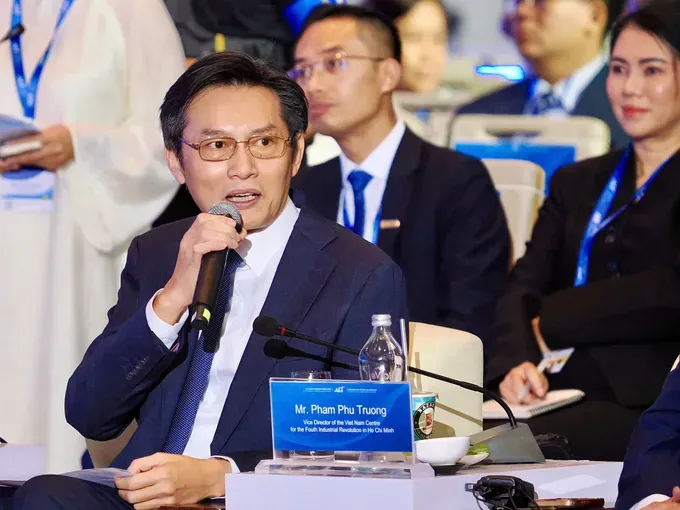
Pham Phu Truong, Deputy Director of the Center for the Fourth Industrial Revolution in Ho Chi Minh City (HCMC C4IR), noted that opinions shared during the panel show that to attract high-tech FDI, Ho Chi Minh City must not only expand its infrastructure but also ensure connectivity, stability, and project execution capabilities, thereby turning its advantages in scale and location into new growth engines.
HCMC needs to unlock international capital flows
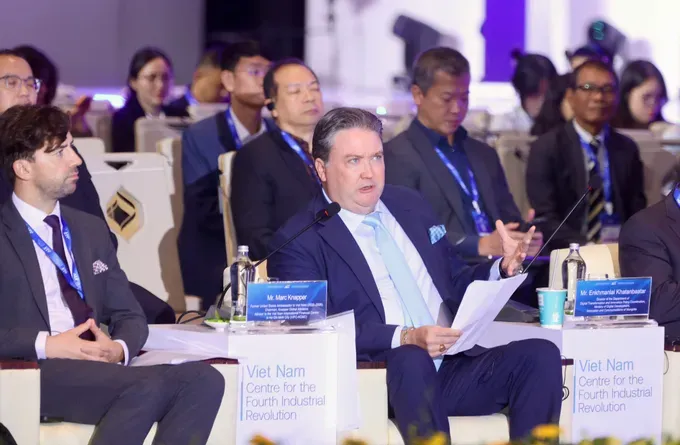
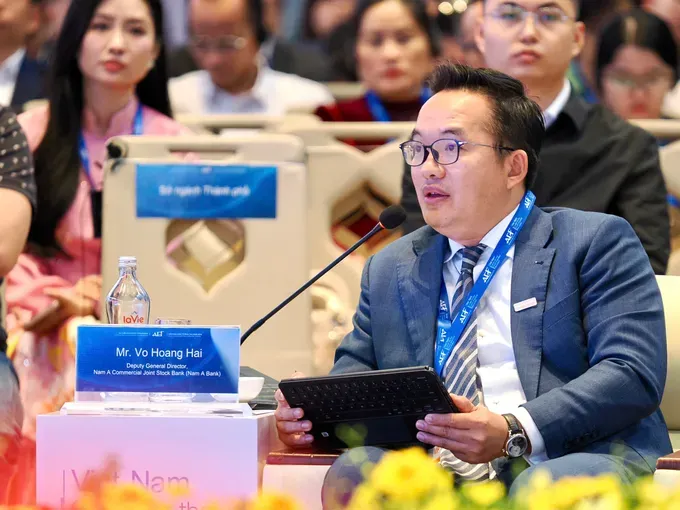
Discussing within the finance panel, Vo Hoang Hai, Deputy General Director of Nam A Bank, noted that international capital is not scarce; however, many logistics, energy, and green transition projects in Vietnam remain small-scale, difficult to evaluate, or carry high transaction costs. Financial institutions could pool similar projects into sufficiently large portfolios, thereby diversifying risk and lowering capital costs.
He proposed issuing green bonds aligned with international standards, supporting the city in arranging municipal bonds for infrastructure development, and organizing an annual Green Finance Conference to connect projects with investors. Priority sectors include seaports, logistics, free trade zones, energy, and green buildings.
According to Marc Knapper, Chairman of Knapper Global Advisors and Advisor to VIFC-HCMC, investors are shifting from asking whether to invest in Vietnam to seeking ways to execute faster and more efficiently.
To capture capital flows into manufacturing, semiconductors, clean energy, and infrastructure, he proposed that Ho Chi Minh City develop international financial services such as trade finance, hedging, and cross-border payments. He also suggested early publication of a prioritized green infrastructure project list and encouraging infrastructure bond issuances through VIFC-HCMC. Furthermore, the city needs a fast-responding single-window mechanism, consistent licensing procedures, and special policy frameworks to attract talent and investors. Knapper Global Advisors is committed to connecting U.S., Japanese, and South Korean financial institutions with the city.
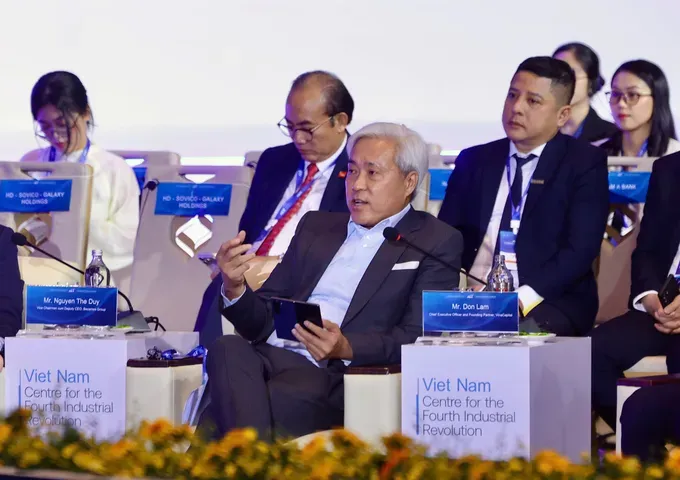
Don Lam, CEO and Founding Shareholder of VinaCapital, emphasized that technology is the core growth engine for Ho Chi Minh City to emerge as an international financial and commercial hub. In addition to connecting global investors and contributing to policy refinement, VinaCapital serves as a founding investor and manager of the Ho Chi Minh City Venture Capital Fund, aimed at supporting domestic tech enterprises.
San Eng, Chairman of WorkOptional.ai of Singapore, proposed that Vietnam invest not only in data center infrastructure but also in developing an operational platform for the AI Agent Economy, including payment systems, digital identity, and trust verification. He recommended that Ho Chi Minh City collaborate with VIFC-HCMC and international AI investors to convene a working session before Q1 2027 to standardize Vietnamese assets into globally accessible products.
The consensus centered on the imperative to make VIFC-HCMC a strategic hub connecting capital, financial services, and technology. The city's ability to attract investment will depend on converting opportunities into feasible project portfolios, transparent mechanisms, and concrete financing transactions.