Green credit is expected to become a key source of funding for businesses seeking to shift toward sustainable production and business models. However, at a recent banking conference on unlocking financial resources for growth in the newly expanded Southeast region, many companies said gaining access to such funding remains challenging.
Local firms face growing headwinds in securing credit
Chairman Tran Van Dung of the Board and General Director of Ba Ria-Vung Tau Seafood Processing and Import-Export Joint Stock Company (Baseafood) said the company is seeking to accelerate its green development efforts, with annual export revenue of about US$60 million.
Baseafood has invested around VND20 billion (US$774,000) in installing green energy systems at its factories, but when seeking bank loans, the company has yet to receive preferential interest rates.
According to Chairman Tran Van Dung, interest rates for solar energy investment loans currently stand at 11 percent per year. After the first year, rates increase by an additional 3 percentage points, putting further cost pressure on businesses.
Similarly, Nguyen Thi Phuong Thao, Deputy General Director of Thanh Thanh Cong-Bien Hoa Joint Stock Company, said that despite numerous bank programs supporting green agriculture, the company is still borrowing at interest rates of 10 percent-11 percent per year.
Meanwhile, according to Director Vo Quan Huy of Huy Long An Company, the company is developing an integrated crop cultivation and livestock farming model across thousands of hectares. However, securing medium-term credit with preferential rates to invest in infrastructure and support the transition to high-tech agriculture remains very difficult.
Although many businesses, particularly small and medium-sized enterprises, have struggled to access preferential funding for green investments, several companies have successfully obtained green credit at lower rates thanks to thorough preparation.
MIZA Joint Stock Company is currently receiving green loans from BIDV and UOB at interest rates 2-3 percentage points lower than conventional loans. Company deputy director Nguyen Huu Tu said that gaining access to such financing requires not only environmental investment needs but also careful preparation of infrastructure and development strategies.
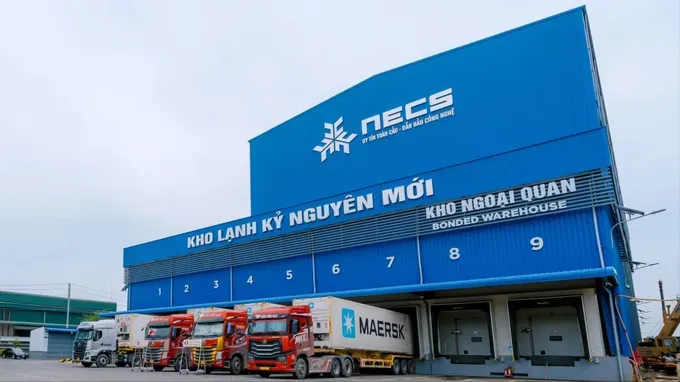
A representative of New Era Cold Storage Company said preferential green financing has helped the business transition from traditional cold storage facilities to an automated model, boosting productivity.
However, to qualify for loans, companies must meet stringent requirements related to environmental protection, emissions, energy use, labor conditions, and governance transparency. They must also provide data and reports as required by banks.
Lack of data and green project lists
According to the State Bank of Vietnam, outstanding green credit loans exceeded VND856 trillion by the end of June 2026, up 9.87 percent from the end of 2025. Lending is concentrated mainly in agriculture, forestry, fisheries, and biodiversity conservation, accounting for more than 31 percent, while green energy accounts for nearly 28 percent.
The State Bank of Vietnam's Credit Department of Economic Sectors said that 82 credit institutions have so far implemented green lending programs. The outstanding balance has increased 4.6 times compared with the start of implementation in 2017. These figures show that green capital flows are expanding, but green credit still accounts for only about 4.2 percent of total outstanding loans in the economy.
The gap between the scale of green credit and the capital needed for the green transition highlights the need to address bottlenecks in project appraisal, lending approval, and post-loan monitoring.
"One of the biggest bottlenecks is data. Credit institutions continue to face difficulties in accessing information on planning, green project lists by sector and industry, as well as businesses' compliance with environmental regulations. The lack of data means banks spend more time verifying information and face challenges in consistently assessing and quantifying risks, while green credit requires simultaneous evaluation of a project's financial and environmental effectiveness," a representative of the Credit Department of Economic Sectors said.
Despite being the bank with the largest outstanding green credit balance in the system, reaching nearly VND30 trillion by the end of March 2026, Agribank said it still faces difficulties in assessing green loan applications.
According to Nguyen Quang Ngoc, Deputy Head of Agribank's Credit Policy Division, Vietnam currently lacks a national green industry classification system and a standardized green project list publicly available on an electronic portal as a basis for data collection and ESG (environmental, social, and governance) project assessments. Many businesses have also not fully prepared environmental documentation and lack the capacity to produce ESG reports.