On March 17, 2026, the Secretariat issued Directive 04-CT/TW regarding the enhancement of Party leadership over publishing activities in the new era. A key requirement includes the Ministry of Education and Training implementing reading sessions as an elective subject in general education schools. This mandate has received strong support from teachers and students, highlighting the need for more methodical and effective reading organizations.
Equipping students with reading skills
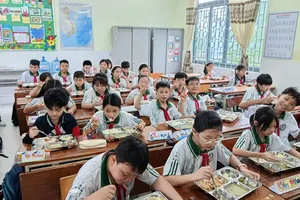
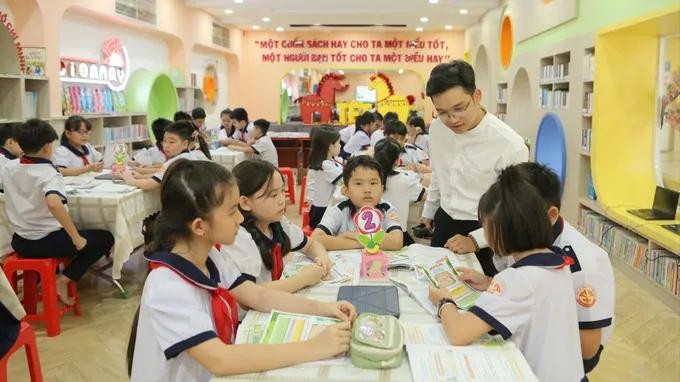
In Class 2/2 at Dong Da Elementary School in Tan Hoa Ward, HCMC, during an expanded reading session for the Vietnamese subject themed "Stories about Uncle Ho," teacher Nguyen Thu Quynh organized the activity with a clear structure. Starting with guided questions about the life of President Ho Chi Minh, students were introduced to seven stories and allowed to choose the content that impressed them most.
Pham Nguyen Tram Anh, a second-grade student, shared: "I read it twice. The first time was a quick read to understand the plot, and the second time was slower to remember details and grasp the meaning. Afterward, the teacher gave us reading logs to record the words and actions of characters we admired." Many students expressed that reading beyond textbooks not only expands their knowledge but also hones information-gathering skills and emotional development.
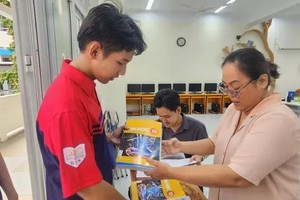
Taking a similar approach at Nguyen Binh Khiem Elementary School in Saigon Ward, HCMC, Class 4/2 engaged in a reading activity under the theme "The World Around Us." Students were tasked with finding materials on architectural works or scenic landscapes and recording key information in personal reading logs. The classroom atmosphere became lively as students took turns sharing their findings with peers.
Mr. Ho Linh Trung, the homeroom teacher of Class 4/2, noted that sharing content with peers helps students refine their reading comprehension, knowledge retention, teamwork, and presentation skills. Consequently, reading is no longer confined to the Vietnamese subject but serves to supplement knowledge across various disciplines.
Developing an effective reading culture
Vice Principal Ngo Thi My Linh of Dong Da Elementary School stated that under the current primary education curriculum framework, each class has at least two reading sessions per semester, one expanded reading session in the Vietnamese subject and one integrated into other subjects. Additionally, teachers collaborate with library staff to organize extra sessions according to separate timetables; students can also read during recess or from classroom bookshelves.
Because it is implemented through various formats, reading activities remain flexible and largely dependent on individual teacher organization, usually concluding with verbal feedback and encouragement. This has led many teachers to support the transition of reading into a formal elective subject. The goal is not merely to increase duration but to build a systematic program with clear objectives for each grade level and specific assessment methods linked to student progress and output.
Teacher Nguyen Thu Quynh suggested that if reading becomes an elective, the Ministry of Education and Training should establish a specific framework with interconnected themes across grades and levels, alongside guidelines for appropriate reading materials. For instance, students in grades 1 and 2 should focus on short texts with simple vocabulary, while students in grades 4, 5, and higher levels should engage with longer materials and academic terminology.
Teacher Nguyen Thanh Tin of Nguyen Binh Khiem Elementary School proposed flexible assessment guidelines. Evaluations could be diversified through group sharing, reading logs, illustrations, or using technology to create video projects. He emphasized that the most important thing is whether students maintain a regular habit and what thoughts are sparked after reading. Therefore, he said, reading should not be viewed as an isolated activity but integrated into various educational programs to help students improve awareness, reading skills, and effective expression.