In recent years, Vietnam’s higher education system, including universities, research institutes and colleges, along with local governments, has intensified policies to attract high-quality human resources to achieve breakthrough goals in education, science, technology, innovation and digital transformation. Despite some positive results, the policy has also faced considerable challenges.
Vietnam ramps up scientist recruitment with VNU-350 program
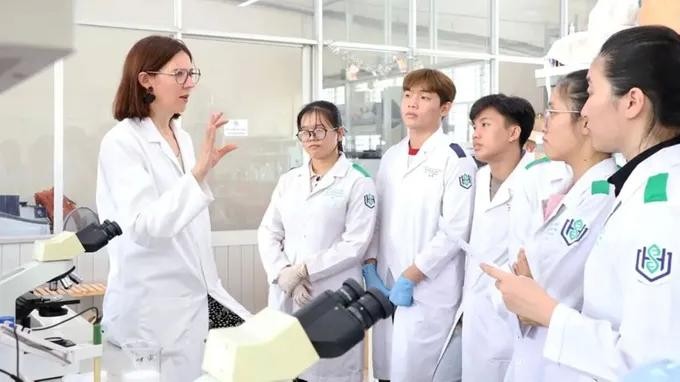
Under Resolution 45-NQ/TW on continuing to build and promote the role of intellectuals to meet the country’s rapid and sustainable development goals in the new period, Vietnam National University Ho Chi Minh City (VNU-HCM) launched the VNU-350 program in 2024 alongside its visiting professor initiative.
The program aims by 2030 to attract, retain and develop 350 outstanding young scientists and leading researchers. To date, the program has recruited nearly 200 outstanding scientists, experts and professors from some of the world’s leading universities to work in Vietnam. After the Politburo issued Resolution 57-NQ/TW on breakthroughs in science, technology, innovation and national digital transformation, and Resolution 71-NQ/TW on breakthroughs in education and training development, VNU-HCM further accelerated its high-quality talent recruitment efforts.
Principal of Ho Chi Minh City University of Industry and Trade, Associate Professor Nguyen Xuan Hoan said the institution had early on “rolled out the red carpet” to attract professors, associate professors and doctoral holders to strengthen its pool of high-quality scientific personnel.
The university’s key objective is to recruit scientists capable of leading strong research groups, implementing key projects and expanding international cooperation. In 2025, the university recruited three associate professors and 23 doctoral holders, most of whom were trained overseas.
After nine years of implementation, the quality of the university’s academic staff has improved markedly. From an initial workforce of just four associate professors and 12 doctoral holders, the university now has three professors, 39 associate professors and 310 doctoral holders. More than 52 percent of lecturers now hold doctoral degrees, helping ensure teaching quality.
Meanwhile, Deputy Director Pham Thanh Nhan of the Ho Chi Minh City Department of Home Affairs said that during the 2018-2024 period, the city attracted 10 experts and scientists to work at the Ho Chi Minh City High-Tech Park and the High-Tech Agricultural Park.
The recruits included experts in semiconductor microchips, nanomaterials and biotechnology.
Vietnam’s talent drive faces policy hurdles
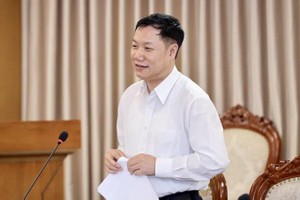
Drawing from the VNU-350 program’s experience in attracting and retaining outstanding young scientists and leading researchers, Professor Nguyen Thi Thanh Mai, director of VNU-HCM, said Vietnam is entering a new development phase in which science, technology, innovation and digital transformation have been identified as key drivers of rapid and sustainable growth.
However, she said the efforts of individual higher education institutions would not be enough to create breakthroughs without a flexible, transparent and internationally competitive national policy framework.
With an open talent visa policy, a strong academic environment, adequate facilities and suitable incentive mechanisms, Vietnam could completely become a new destination for talent in the region, she said.
Vice Rector Cheong Wei Yang of the Singapore Institute of Management said Singapore plans to invest US$37 billion during 2026-2030 to attract talent and develop science, technology, innovation and enterprises.
In addition to funding startup projects to attract international experts, Singapore also encourages scientists to return home and assigns them leadership positions. Notably, the country’s policies also encourage research personnel from businesses to work together with research institutes and universities on joint projects.
Singapore currently operates many major scholarship programs and national policies aimed at attracting talent, he added.
Representatives from universities said talent recruitment in Vietnam still faces multiple barriers. Alongside the need to build competitive academic and research environments, institutional bottlenecks remain, including administrative procedures, work permits, residency duration, benefits for accompanying family members and the lack of a dedicated legal framework for talent visas.
Amid intensifying global competition for highly skilled workers, these limitations could affect Vietnam’s ability to attract, utilize and maximize the effectiveness of high-level human resources.