Resolution 09-NQ/TW positions metro development at the center of Ho Chi Minh City’s long-term urban restructuring strategy, aiming to improve competitiveness, support green growth and enhance residents’ quality of life.
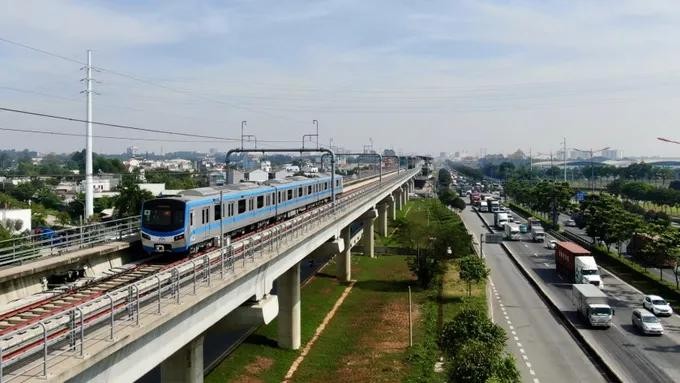
Resolution 09-NQ/TW not only sets the goal of turning Ho Chi Minh City into a regional economic, financial and innovation hub, but also opens the way for restructuring the city’s urban development model.
Under that vision, the metro system has become a strategic development axis and a foundation for reorganizing urban space, improving competitiveness and enhancing people’s quality of life.
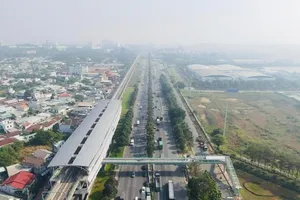
For many years, Ho Chi Minh City has mainly expanded urban space horizontally. Residents have moved to suburban areas while residential complexes, office towers and shopping centers in the inner city have grown faster than the development of public transportation infrastructure.
This imbalance has made the city increasingly dependent on private vehicles, leading to worsening traffic congestion, environmental pollution and overloaded technical infrastructure.
For a megacity with a large population, operating primarily on private vehicles means bearing enormous social costs, including longer travel times, declining labor productivity, rising psychological pressure, deteriorating environmental quality and reduced living standards.
As a result, this is not only a transportation issue but also a question of competitiveness and the sustainable development capacity of the entire urban area.
Ho Chi Minh City puts metro at core of urban restructuring drive
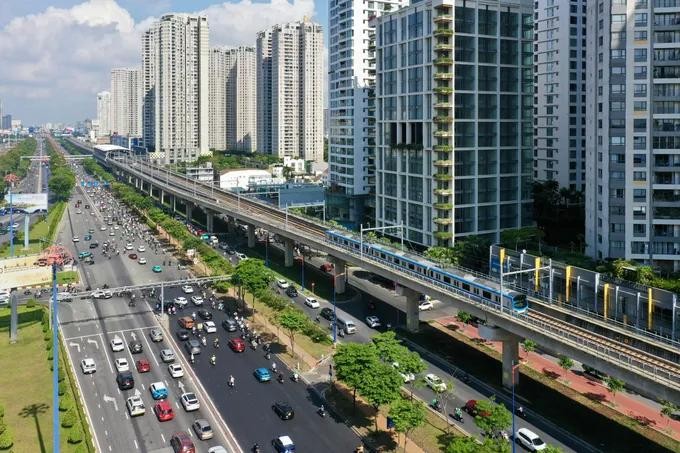
With Resolution 09, metro development has for the first time been placed within an overall strategy for restructuring urban space, developing a green economy, building smart cities and improving quality of life.
Specifically, the city is required to develop planning with a 100-year vision under a multi-polar and multi-center model with strong connectivity and transit-oriented development (TOD) linked to public transportation.
The resolution particularly emphasizes the need for breakthroughs in infrastructure and prioritizes completing the city’s urban railway network.
This shows that Ho Chi Minh City no longer views metro systems merely as a solution to traffic congestion, but as a tool to reshape urban space and development momentum.
International experience shows that highly competitive cities such as Tokyo, Seoul, Singapore and Shanghai have developed around large-scale public transportation systems in which metro networks serve as the backbone.
Metro systems not only transport people but also determine how cities operate, how populations are distributed and how urban economies develop.
As metro networks expand, urban structures also evolve. New growth hubs emerge around stations, while residents and businesses increasingly relocate along public transportation corridors, helping urban spaces become more concentrated and efficient.
As a result, social transportation costs decline, connectivity improves and new development opportunities are created for the city as a whole.
Ho Chi Minh City sees metro as catalyst for urban transformation
From that perspective, transit-oriented development has been viewed as the key to realizing the role of metro systems.
TOD is not simply about constructing high-rise buildings around metro stations. Its core principle is reorganizing urban life around public transportation so residents can access housing, workplaces, schools, hospitals, commercial centers and public services conveniently without relying excessively on private vehicles.
In other words, the metro system is essentially a tool for redesigning how a city functions.
For Ho Chi Minh City, investing in metro infrastructure is increasingly being viewed not only as a transportation solution, but as a long-term investment in the city’s competitiveness, urban transformation and future development model.
From a long-term development perspective, investment in metro systems is essentially an investment in the competitiveness of Ho Chi Minh City.
A city aspiring to become an international financial center or an innovation hub cannot allow residents to spend several hours each day commuting.
Likewise, a city seeking to attract high-quality human resources cannot continue relying on a fragmented, overloaded development model that depends almost entirely on private vehicles.
It can be said that the greatest value of the metro story does not lie in the number of kilometers of railways or stations constructed, but in Ho Chi Minh City’s determination to change its urban development model.
More importantly, it reflects how the city is redesigning its own development future for decades to come.











)




