Creating mechanisms for the city to fulfill its locomotive role
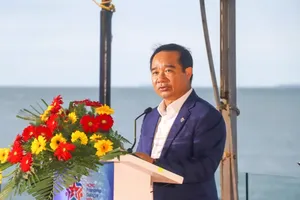
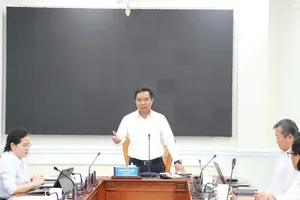
In an interview with SGGP Newspaper, Chairman Nguyen Van Duoc of the HCMC People’s Committee mentioned the significance of submitting the draft Resolution amending and supplementing No.98/2023/QH15 regarding the pilot implementation of specific mechanisms and policies for the development of HCMC (Resolution 98) via a shortened procedure for HCMC in this new development phase.
The discussion of the National Assembly on the draft Resolution amending Resolution 98 in the hall today, moving toward consideration and approval by the end of the session affirms the Central Government’s deep, decisive attention to urgent tasks aimed at creating conditions for the city to continue fulfilling its pioneering role.
For HCMC, proposing adjustments and amendments to Resolution 98 is a specific task to deploy the city’s key breakthrough programs, as identified in the Resolution of the First HCMC Party Congress (2025-2030 tenure). It aims to continue focusing on resolving and definitively handling projects, works, and land issues that have been stuck for years.
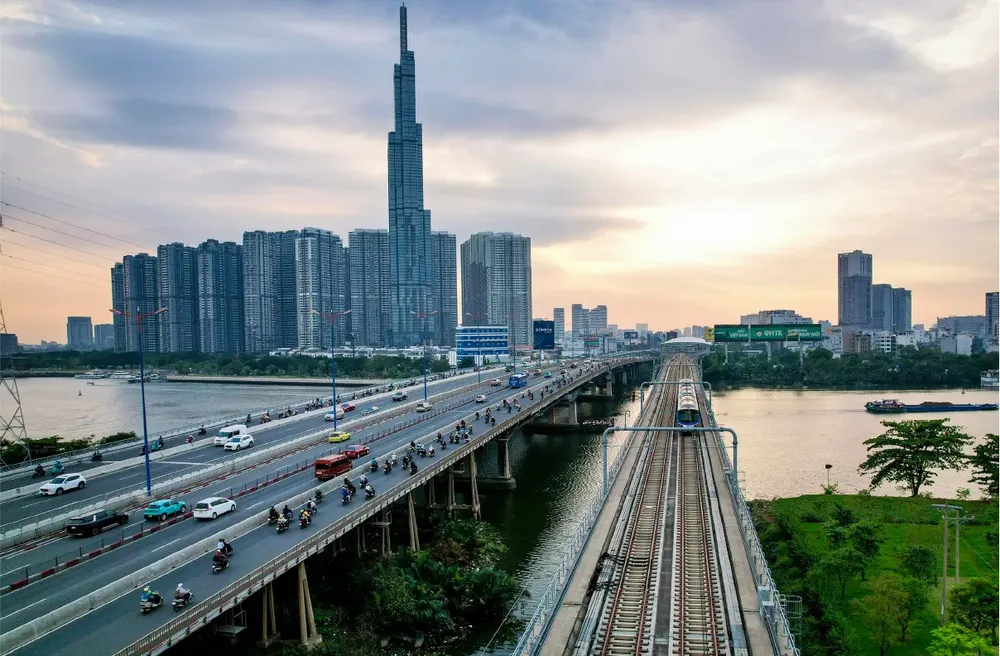
Adjusting and upgrading Resolution 98 stems from the requirement to complete planning and restructure the development space based on a “multi-polar, integrated, hyper-connected” mindset, following the orientation of “3 Regions – 1 Special Zone – 3 Corridors – 5 Drivers” after the city expanded its development space to nearly 6,800km² with a population of about 14 million. This is the foundation for HCMC to become a modern and sustainable metropolis.
HCMC is not asking for more money but for new, sufficiently strong mechanisms to self-resolve bottlenecks, mobilize resources, and create new development momentum. Therefore, considering the draft via a shortened procedure is precisely to facilitate the city’s integration and development in the new space, with residents and businesses as the center and subjects of every policy decision.
If a superior legal framework is obtained, this is a huge opportunity for the city to unlock resources, attract strategic investors, and realize the goal of double-digit growth starting from 2026, and thereby improving the quality of life for residents while elevating the city’s international position, worthy of the trust and expectations placed in HCMC by the Politburo, National Assembly, Government, and citizens nationwide.
“The draft Resolution amending Resolution 98 contains completely new mechanisms, opening up a new amplitude of action, much wider and stronger than the current framework. This aligns with the requirements directed by General Secretary To Lam at the First HCMC Party Congress, including perfecting planning, restructuring development space, and handling urgent issues regarding traffic, environment, and quality of life.”
Chairman of the HCMC People’s Committee Nguyen Van Duoc
The Chairman then focused on the most innovative mechanism for the city to successfully realize the development goals of the First HCMC Party Congress.
The supplementary draft Resolution introduces a single City Master Plan to integrate planning levels, shortening investment timelines by 1-2 years. Parallel breakthroughs include Transit-Oriented Development (TOD), strategic investor attraction, and the establishment of a Free Trade Zone (FTZ).
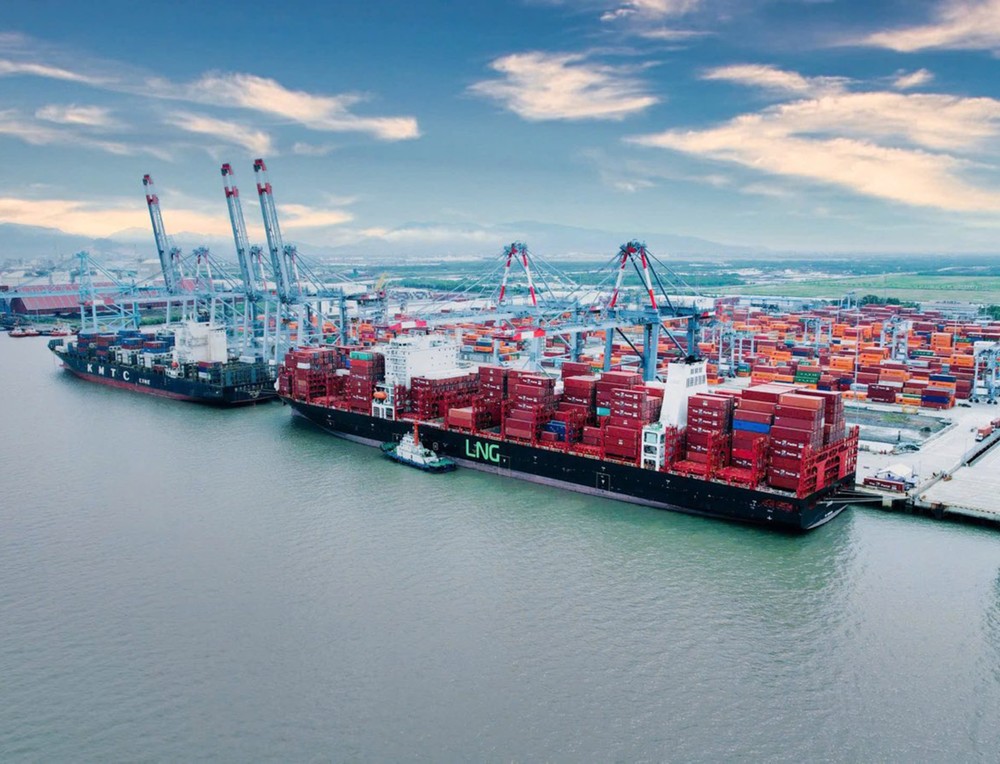
Considered the most “path-breaking” mechanism, the FTZ functions as a complete institutional special zone linked to the Cai Mep Ha seaport and managed by Ho Chi Minh City Exporting Processing and Industrial Zones Authority (HEPZA). Offering superior incentives such as a 10-percent corporate tax rate for 20 years and significant personal income tax reductions for experts of up to 50 percent, the FTZ aims to attract high-quality investment. Ultimately, this mechanism will reposition HCMC on the international trade map, driving innovation and growth across the Southern Key Economic Region.
Huge opportunity to enhance management efficiency
Chairman Nguyen Van Duoc also introduced HCMC’s expectations regarding the strategic investor attraction mechanisms, which are designed very tightly, linking incentives to disbursement responsibilities.
Shifting from a breadth-based growth model to depth-based development, HCMC seeks leading investors to drive innovation in semiconductors, AI, and green energy. To attract these partners, proposed mechanisms offer simplified procedures and inspection exemptions for massive projects, potentially reaching VND75 trillion (US$2.85 billion).
However, access requires strict commitment. Investors in projects exceeding VND100 trillion ($3.8 billion) must disburse at least half of that amount within the first decade. This rigorous screening ensures HCMC attracts only capable entities dedicated to high-value economic restructuring and modern urban infrastructure.
Regarding the effective operation of the two-tier local government model, especially in resolving livelihood issues after intensifying decentralization, the Chairman stressed that the draft Resolution emphasizes deep decentralization to enhance HCMC’s proactivity. Specifically, it authorizes a single City Master Plan managed by local bodies, accelerating spatial restructuring.
HCMC commits to transparent implementation, viewing this as an opportunity to refine the two-tier local government model. Furthermore, tasks are assigned using the “clear person, clear job” principle to ensure accountability and swiftly resolve urgent issues like traffic and pollution.
Finally, Chairman Nguyen Van Duoc shared that immediately after the National Assembly approves the draft Resolution, HCMC is going to spare no waiting time. Instead, right when cooperating with the Finance Ministry to prepare this legal document, the city has simultaneously formed implementation plans.
Particularly, HCMC has preemptively assigned departments to integrate the TOD model, draft the Free Trade Zone scheme, and list strategic investors. Concurrently, the city is preparing specific mechanisms for the immediate approval by the HCMCPeople's Council, strictly adhering to the “5-clear” operational spirit (person in charge, tasks, timeline, outcomes and responsibility, authority).
Recognizing that success depends on execution, HCMC commits to fierce deployment with the highest responsibility. The ultimate goal is to unlock the city’s full potential, achieving regional stature and pioneering sustainable prosperity for the nation.
Proposed amendments and supplements
Establish HCMC Free Trade Zone
- Grant authority to HCMC People’s Committee to decide on establishment, expansion, and boundary adjustment.
- HCMC People’s Council regulates procedures.
- Allocate/lease land without auction/bidding (except for commercial housing projects).
- Tax Incentives: 10 percent corporate income tax for 20 years (exempt for 4 years, 50 percent reduction for 9 years); 50 percent personal income tax reduction for 10 years for experts/high-quality labor.
TOD Model:
- Use TOD revenue invested by the city to reinvest directly in local railway and TOD traffic projects.
- Expand land funds to pay for BT contracts.
Planning Decentralization:
- Decentralize authority to HCMC People's Committee in establishing and adjusting general city planning.
Strategic Investors:
- Add 11 project groups prioritizing strategic investors (large-scale, leading infrastructure, tourism, urban, logistics, environmental protection).
- Simplify planning processes and investor selection procedures.
Source: Draft Resolution amending Resolution 98