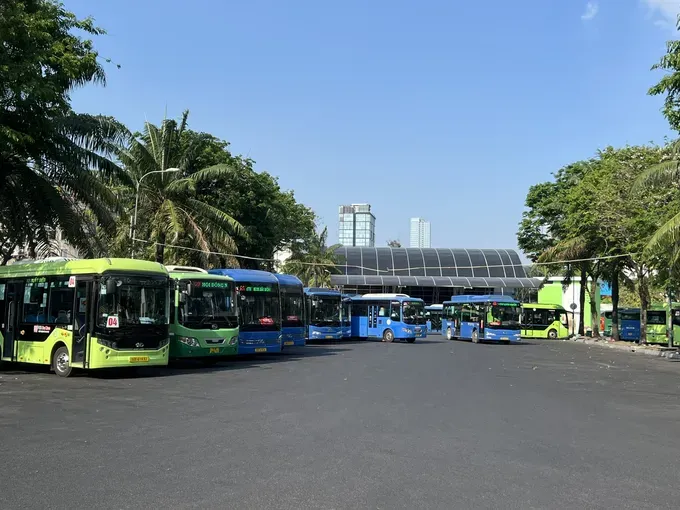
Recently, the city has focused on developing its public passenger transport network. However, the share of residents using public transport remains low compared to actual demand.
On May 25, Deputy Director of the Department of Construction Bui Hoa An said that the department has submitted a draft proposal to the Ho Chi Minh City People’s Committee, recommending that the Government permit a three-year pilot implementation of a demand-responsive transport (DRT) model. The initiative aims to enhance connectivity within the public transport system and better meet the travel needs of residents.
According to the Department of Construction, the proportion of people using the public passenger transport network remains low compared to actual demand. One of the reasons is that access to transport services in dispersed residential areas, new urban developments, and locations with limited transport infrastructure remains inconvenient.
On that basis, the city has proposed the implementation of a Demand-Responsive Transport (DRT) model—a flexible form of public transport that has been adopted in many countries. The model is intended to complement fixed-route bus services, reduce first- and last-mile distances, and enhance convenience for passengers.
Under the proposal, the DRT model would work in specific areas and routes approved by the right authorities, with a publicly shared list of pick-up and drop-off spots that can be changed based on real demand using technology.
During peak hours, vehicles would operate along fixed routes and stops, similar to conventional bus services. During off-peak hours, services would run on an on-demand basis, stopping only at locations where passengers had registered for them.
The pilot is expected to be implemented in several areas with high travel demand and a need to strengthen public transport connectivity, such as the Vietnam National University – Ho Chi Minh City (VNU-HCM), the city center, and areas along Metro Line No. 1.





)