The HCMC Department of Construction is coordinating with relevant agencies and Dutch partners to finalize a long-term flood control and wastewater treatment strategy for the 2026-2060 period, alongside an implementation roadmap for 2026-2036.
Speaking on May 26, Deputy Director of the HCMC Department of Construction Le Ngoc Linh said the agency had submitted a report to the HCMC People’s Committee reviewing the implementation of the city’s flood control and wastewater treatment program for 2020-2045 under Decision 299, commonly known as Project 299.
The department also proposed a new master plan for 2026-2060 in line with directives from the HCMC Party Committee.
According to the report, after nearly five years of implementation, Project 299 has achieved notable progress in reducing urban flooding, controlling tidal inundation, and improving wastewater treatment capacity.
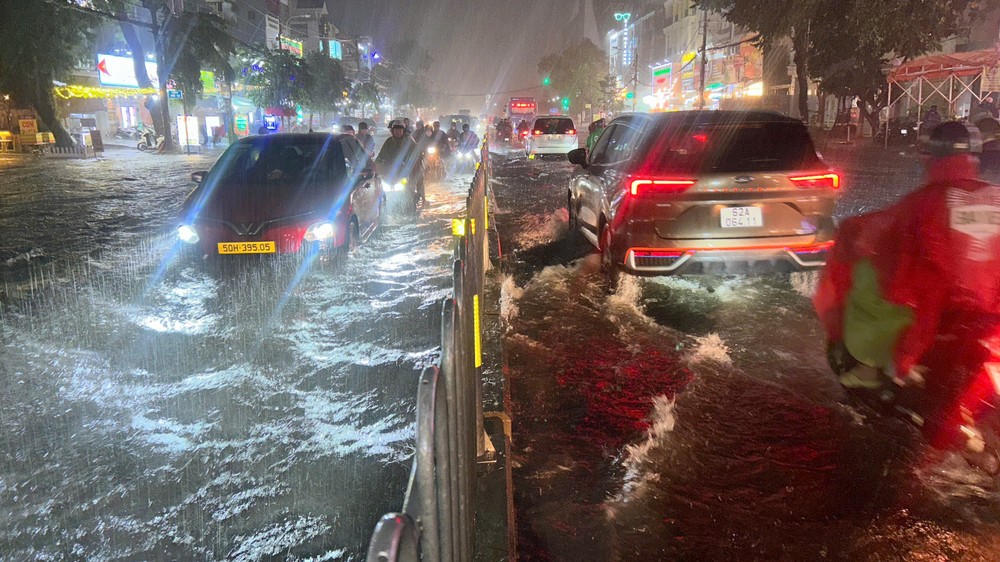
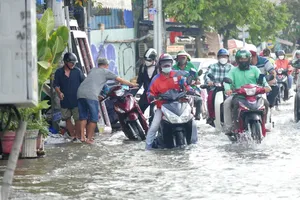
In terms of rain-related flooding, the city has continued to reduce the number of flood-prone roads. From 126 regularly inundated streets recorded in 2008, authorities resolved flooding on five additional roads during the 2021-2025 period, including Tan Quy, Truong Cong Dinh, Ba Van, Bau Cat, and Nguyen Huu Canh.
Regarding tidal flooding, the first phase of HCMC’s climate-resilient flood control project is now more than 93 percent complete. The project includes river embankments and six large tidal control gates at Ben Nghe, Tan Thuan, Phu Xuan, Muong Chuoi, Cay Kho, and Nha Be.
Once completed, the system is expected to fundamentally address tidal flooding along five of the seven major arterial roads in the southern and southwestern parts of the city.
Wastewater treatment infrastructure has also expanded significantly. The second phase of the Binh Hung Wastewater Treatment Plant has been completed, increasing daily treatment capacity from 141,000 cubic meters to 469,000 cubic meters. Meanwhile, construction of the second phase of the Nhieu Loc – Thi Nghe Wastewater Treatment Plant is being accelerated.
The city has also gradually incorporated digital technologies into flood management. The Flood Early Warning and Data System (FEDS), funded by the World Bank, is now operational, enabling real-time updates on rainfall, tides, and flooding conditions. In parallel, a GIS drainage management project funded by the British Consulate has begun establishing a spatial database to support drainage infrastructure management.
Despite these gains, officials acknowledged that Project 299 has faced mounting challenges, many of them linked to increasingly severe climate impacts. Extreme rainfall events now frequently exceed the design capacity of the city’s drainage system, while high tides continue to reach record levels. Severe land subsidence has also emerged across multiple areas.
Rapid urbanization has compounded the problem. Widespread concretization, the filling of ponds and lakes, and the narrowing of canals and waterways have reduced the city’s natural water retention and drainage capacity, increasing flood risks.
The challenge has become even more complex following HCMC’s merger with Binh Duong and Ba Ria – Vung Tau provinces, transforming flood control into an interregional issue involving diverse geographic and hydrological conditions. Officials said the expanded scope has rendered several objectives of Project 299 outdated.
The Department of Construction also acknowledged shortcomings in the city’s current approach, which has focused heavily on eliminating isolated flood hotspots rather than adopting integrated watershed risk management. Infrastructure investment has remained inconsistent between major projects and local collection systems, while green infrastructure, sponge city models, and flood adaptation measures have yet to receive adequate attention.
The department is now working urgently with Dutch experts and related agencies to complete the revised flood control and wastewater treatment master plan for 2026-2060. Authorities are also finalizing a separate anti-flooding action plan for 2026-2030, expected to be submitted to the HCMC People’s Committee later this month.










)