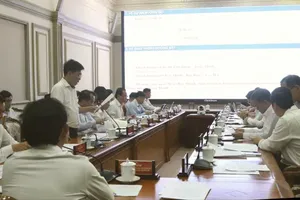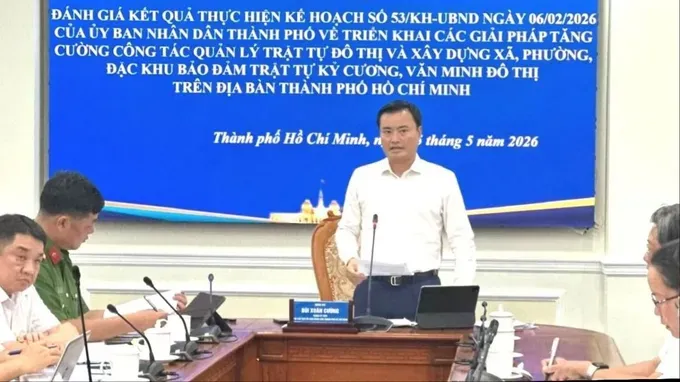
On May 25, the Ho Chi Minh City People’s Committee held a conference to review the implementation results of Plan No. 53, which focuses on strengthening measures for urban order management and building communes, wards, and special zones to ensure discipline, order, and a civilized urban environment across the city.
The meeting was chaired by Vice Chairman of the Ho Chi Minh City People’s Committee Bui Xuan Cuong.
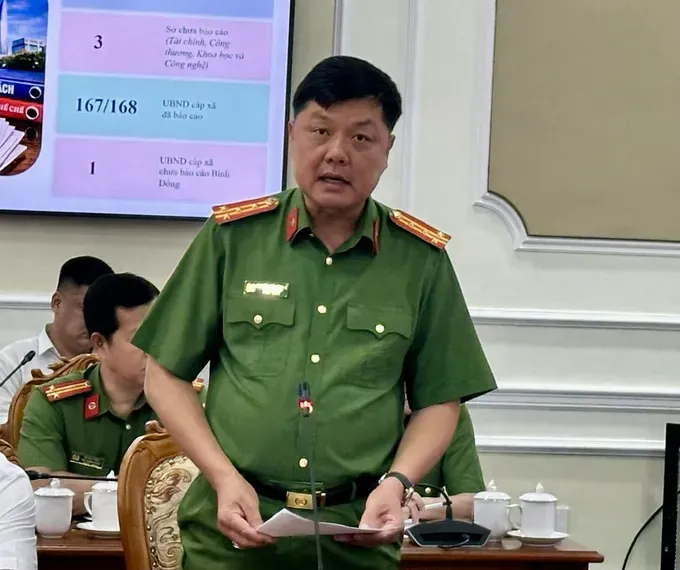
According to Colonel Nguyen Dinh Duong, Deputy Director of the Ho Chi Minh City Department of Public Security, after three months of implementing Plan No. 53, the police force has conducted patrols and imposed administrative fines on more than 3,000 cases of violations related to urban order and public order.
Based on initial investigations, the city currently has 1,742 complex hotspots concerning public order, including 687 streets, 93 hospitals, 422 schools, and 540 markets, of which 202 are informal or spontaneous markets.
At the conference, Nguyen Xuan Thanh, Vice Chairman of An Dong Ward People’s Committee, stated that An Dong Ward has been a pioneer in effectively applying information technology to urban order management.
The software for issuing permits and collecting fees for the use of roadways and sidewalks was piloted by the ward in April 2026 and officially implemented on May 15. After 10 days of implementation, the ward received registration applications from 58 cases, with a total amount collected exceeding VND900 million.
Mr. Nguyen Xuan Thanh also proposed that the city should soon establish appropriate policies and a legal framework allowing residents to register for sidewalk use for business and trading activities. This, he said, would better reflect the realities of urban development and help address challenges related to livelihoods.

In his concluding remarks at the conference, Bui Xuan Cuong emphasized that current regulations only permit the temporary use of roads and sidewalks for a limited number of purposes, such as organizing events, serving construction activities, transporting materials, and parking, as well as funerals and weddings.
He stressed that any use of such space must prioritize pedestrian access and ensure traffic safety. In practice, many localities have shown strong demand for sidewalk utilization, particularly for livelihood activities and parking services. However, implementation must be guided by clear and consistent regulations to avoid fragmented practices across different areas or excessive licensing that could negatively affect urban aesthetics and public order.
The Ho Chi Minh City People’s Committee has assigned the Department of Construction to coordinate with relevant agencies to finalize a software system for managing and registering temporary sidewalk use, moving toward full digitalization of the process. The system is expected to be operational in June.