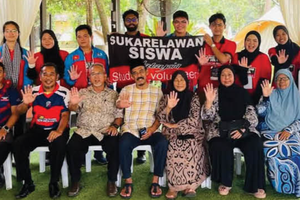
On a brisk weekend morning, the mobile advisory booth for social and health insurance policies situated in a residential area along Le Thi Rieng Street in Thoi An Ward of HCMC was bustling. Numerous freelance workers eagerly gathered to understand voluntary social and household health policies. This activity aims at spreading social policies within residential areas, responding directly to the Action Month for universal insurance.
For Mr. Nguyen Van Hoang, a 50-year-old motorbike taxi driver in Thoi An Ward, previous lack of information left him in the dark. He had been clueless about the system. “Because my job yields precarious income, I’ve prioritized immediate daily expenses; I haven’t thought about a pension,” he explained. After receiving thorough advice, Mr. Hoang reckoned that these policies are becoming highly practical for everyday life.
Alongside centralized advisory stations, numerous propaganda teams from grassroots social insurance agencies also ventured directly into boarding house zones. They engaged face-to-face with blue-collar workers and freelancers to directly untangle any lingering knots and answer their queries regarding these welfare policies.
For Nguyen Thi Ly, a resident at a boarding house in Ben Cat Ward, a lingering doubt remained even after being briefed on voluntary social insurance and household health insurance. She wondered whether a worker who participated in voluntary insurance would have their previous contribution period seamlessly accumulated if they later joined a corporate enterprise and switched to mandatory social insurance.
The grassroots specialist cited a specific scenario to clarify this. If a worker participates in voluntary insurance for five years, then enters a firm and continues paying mandatory insurance, their entire history is officially recorded and cumulatively added. This clear explanation reportedly put Mrs. Ly’s mind completely at ease.
Over in Nhieu Loc Ward, propaganda activities were seamlessly coupled with welfare care, as 50 social insurance books were handed out to poor and near-poor households, effectively creating an additional safety net for those still grappling with severe hardships.
Deputy Director Nguyen Thi Anh Dao of the Nhieu Loc Social Insurance Agency stated that her unit aggressively deploys social and health insurance advisory teams to residential areas, traditional markets, and crowded public spaces. Through these efforts, they help citizens thoroughly understand their rights and recognize the absolute necessity of voluntarily enrolling in these insurance programs.
The peak month campaign for deploying universal social insurance, themed “Social Insurance – A Lifelong Welfare Support” and orchestrated by HCMC Social Insurance, sets an ambitious goal. They aim to recruit an additional 7,000 voluntary social insurance participants and 104,000 household health insurance enrollees during May 2026.
According to HCMC Social Insurance, the informal labor sector still harbors a massive percentage of individuals who haven’t yet opted into social and health insurance programs. As a rule of thumb, this specific demographic remains highly vulnerable to sudden fluctuations in their health, income streams, and employment stability.
Therefore, delivering these policies directly to residential blocks, boarding houses, and local civilian markets isn’t merely a rudimentary propaganda exercise; rather, it’s a strategic solution engineered to aggressively expand the coverage of social security right from the grassroots level.
Through community engagement sessions, social insurance officials directly tackle questions pertaining to contribution rates, participation methods, retirement pension entitlements, survivor benefits, and the medical examination and treatment rights under health insurance. Reportedly, numerous citizens proactively stepped up to register for participation after having the intricate details clearly explained to them.
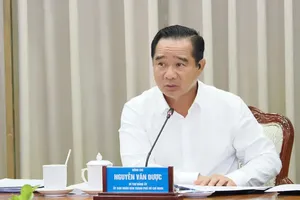
Deputy Director Tran Dung Ha of HCMC Social Insurance informed that the activities responding to the 2026 Action Month aim to broadly disseminate humane values of insurance policies, particularly targeting informal workers. Enrolling is the premier way individuals can proactively shield themselves while building a sustainable social security system.
HCMC Social Insurance has firmly pinpointed the objective of continuously expanding its participant base to fulfill the strict targets set by the Resolution of the 1st Congress of the HCMC Party Committee for the 2025-2030 term.
Specifically, in 2026, the percentage of citizens participating in health insurance must surpass 95 percent, steadily steering toward universal coverage by 2030; meanwhile, the proportion of working-age individuals enrolled in social insurance is targeted to hit 62 percent of the labor force.
Consequently, HCMC Social Insurance is relentlessly pushing forward with administrative procedure reforms to grease the wheels and simplify the process for citizens and enterprises, both during enrollment and when reaping the benefits of social and health insurance policies.
HCMC Social Insurance is also ramping up training for its support staff tasked with participant development; this initiative aims to drastically elevate the quality of public service, thereby contributing to the sustainable growth of social and health insurance enrollees.
HCMC Social Insurance and the HCMC Women’s Union have officially rolled out a coordinated master plan for the 2026-2030 period, focusing heavily on the propaganda and rigorous execution of social and health insurance policies and laws.
The core focal point is aggressively promoting voluntary social insurance and household health insurance through tailored formats suitable for distinct groups of women; concurrently, they are mobilizing societal resources to donate social insurance books and health insurance cards to disadvantaged female members, single mothers raising young children, and elderly women aged between 60 and 64.