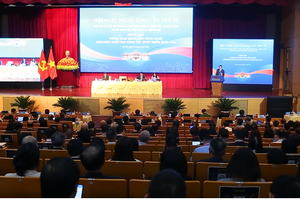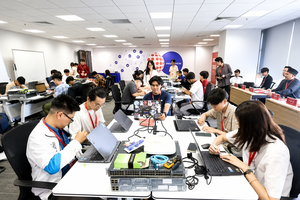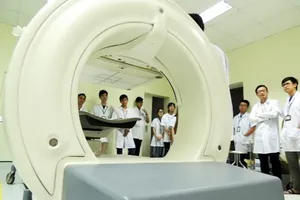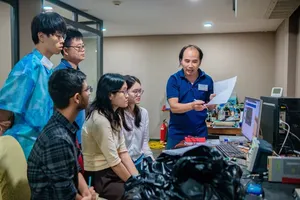
Ho Chi Minh City is currently ranked 110th among the world’s most dynamic startup ecosystems and is among Southeast Asia’s top five innovation-driven startup hubs. The city is steadily expanding its innovation and startup landscape while continuing to build on its existing strengths.
Ho Chi Minh City has developed an innovation startup ecosystem with nearly 30,000 ICT (information and communications technology) enterprises, accounting for around 40 percent of the national total and providing a foundation for the growth of the digital economy.
Within this ecosystem, Quang Trung Software City (QTSC) has emerged as one of the city’s key information technology infrastructures, serving as a hub for developing and supplying solutions with more than 650 products and services. QTSC has generated nearly US$6 billion in cumulative revenue and more than US$4.35 billion in export turnover. Meanwhile, the Saigon Hi-Tech Park currently hosts 112 operational projects and has built research and innovation infrastructure, including an R&D Center and a high-tech business incubator, helping accelerate the commercialization of “Make in Vietnam” products.
According to the Ho Chi Minh City Department of Science and Technology, the city attracts around 50 percent of the country’s startups, 40 percent of incubators, and 44 percent of total investment capital and ecosystem value, estimated at US$7.5 billion. Ho Chi Minh City is accelerating the restructuring of its startup ecosystem with the ambition of breaking into StartupBlink’s top 100 global startup cities ranking.
“The goal of entering the global top 100 is not only about rankings, but also a measure of long-term competitiveness. The city aims to double the number of innovation-driven enterprises, raise the proportion of businesses engaged in innovation activities to more than 40 percent, and increase annual patent growth by 16 percent-18 percent,” said Director Lam Dinh Thang of the Ho Chi Minh City Department of Science and Technology.
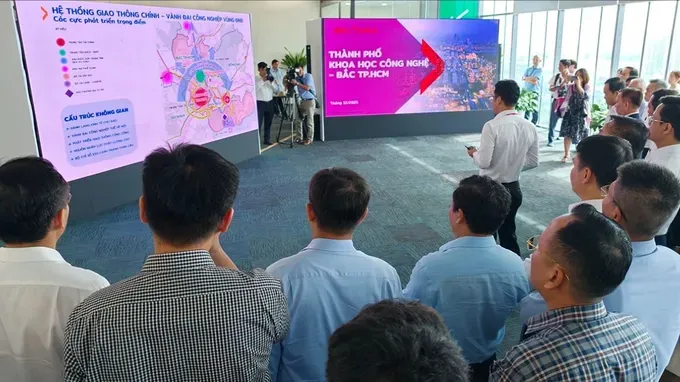
Following the expansion of administrative boundaries, Ho Chi Minh City’s innovation and startup space has also gained new growth zones. The city recently unveiled a science and technology urban area in Binh Duong Ward, envisioned as a large-scale hub for science, technology, innovation, and high-tech manufacturing linked to the industrial and high-quality services corridor of the Southeast region. The science and technology urban area is also expected to serve as a sandbox for testing new technologies, governance models, and policy frameworks before wider implementation across the city and nationwide.
New fund aims to ease capital bottlenecks
As part of efforts to remove funding bottlenecks and turn research into market-ready products, Ho Chi Minh City has launched the Ho Chi Minh City Venture Capital Fund, a dedicated financial vehicle designed to support and accompany innovative startups.
The fund operates as a joint-stock company under the Law on Enterprises, ensuring transparency and autonomy in governance and investment decisions. It has an initial charter capital of VND500 billion, with the city budget contributing 40 percent (VND200 billion), while the remainder is mobilized from private investors, businesses, and financial institutions.
Director Hoang Duc Trung of VinaCapital Ventures and the executive in charge of operating the Ho Chi Minh City Venture Capital Fund, said: “With an initial scale of VND500 billion and expectations of reaching VND5 trillion within 10 years, we aim for every Vietnamese dong from the fund to attract an additional three to five Vietnamese dong from private and international investment funds".
Over the past decade, venture capital investment in Vietnam has grown, though its scale remains modest compared with regional peers. After peaking in 2021 with total funding of about US$1.4 billion, investment levels in recent years have remained at around US$500 million-US$600 million annually, becoming one of the constraints facing the innovation startup ecosystem.
Against that backdrop, the establishment of the Ho Chi Minh City Venture Capital Fund is expected to create greater room for the growth of the startup ecosystem. At the same time, the city is rolling out tax incentive policies aimed at supporting startups and investors.
Experts said the participation of the government and major domestic financial institutions would help strengthen investor confidence and encourage international funds to channel more capital into companies headquartered in Vietnam.