On May 2, the statment was announced by Professor Partha Pratim Pande, Dean of the School of Computer Science and Engineering at Washington State University (WSU), United States.
In the United States scientific system, the NSF Career Award is one of the most prestigious honors for early-career scientists. It not only recognizes outstanding research achievements but also represents a long-term commitment to invest in researchers who are expected to lead emerging directions in their fields. The funding level of approximately US$600,000 reflects both the scale of support and the confidence that the NSF places in the award recipients.
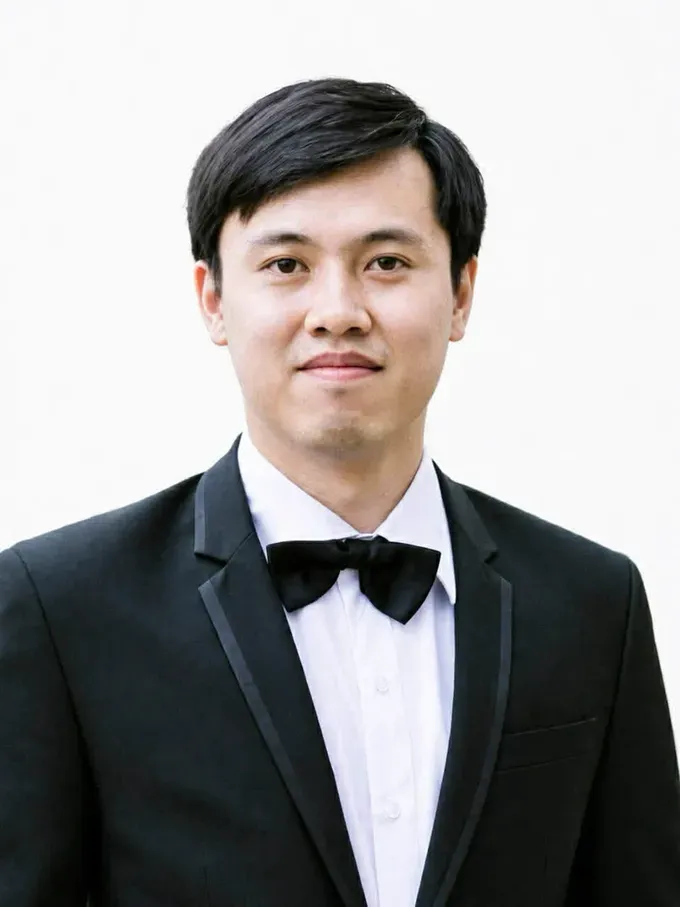
Hoang Trong Nghia, 39, is a former student of the High School for the Gifted, Ho Chi Minh City. He graduated with honors from the Advanced Program in Information Technology at the University of Science, Vietnam National University-Ho Chi Minh City (VNUHCM), in 2009 and later served as a lecturer at the University of Information Technology, VNUHCM.
In 2014, he successfully defended his PhD in Computer Science at the National University of Singapore (NUS), a leading artificial intelligence (AI) research hub in Asia.
He subsequently continued his research career at major global scientific institutions, including a postdoctoral position at the Massachusetts Institute of Technology, as a principal research scientist at the MIT–IBM Watson AI Lab, and at the Amazon Web Services AI Labs.
Since 2023, he has been building an AI research group at Washington State University (WSU).
A key highlight of Dr. Hoang Trong Nghia’s research lies in his focus on the fundamental foundations of modern machine learning, rather than following short-term “hot” application trends.
One of his important research directions is the development of AI models capable of assessing the level of confidence in their predictions (uncertainty-aware machine learning).
In many AI systems, especially in healthcare or autonomous systems, what matters is not only making correct predictions but also recognizing when the system may be wrong. Such research contributes to making AI more reliable in complex environments and under imperfect or uncertain data conditions.
Another research area of Dr. Hoang Trong Nghia is Federated Learning, a method that enables training AI models on decentralized data without the need to aggregate all data into a central location.
This approach is particularly important in fields such as healthcare data, personal data, and Internet-connected smart devices.
His research has proposed a range of novel methods that enable machine learning systems to operate effectively even when data is distributed, heterogeneous, or incomplete, while also improving the optimization of complex systems.
Dr. Hoang Trong Nghia has also made significant contributions to the field of Black-box Optimization, an important research direction for optimizing systems that are too complex to be fully described by explicit mathematical models.
These algorithms can be applied in a wide range of domains, including the design of new materials, optimization of microchips and electronic systems, large-scale AI systems, artificial intelligence for biomedical sciences, prediction of adverse drug interactions, and the analysis of complex biological data.
In an era where artificial intelligence is transforming the world, Dr. Hoang Trong Nghia’s receipt of this prestigious AI award further underscores that Vietnamese intellect continues to actively contribute to major global scientific advancements.