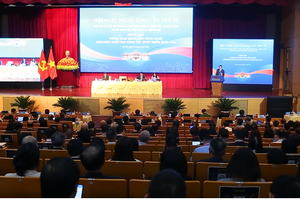
At the Vietnam–Korea Copyright Forum 2026 held on May 7 in Hanoi, experts discussed how artificial intelligence and digital technologies are transforming copyright protection and enforcement.
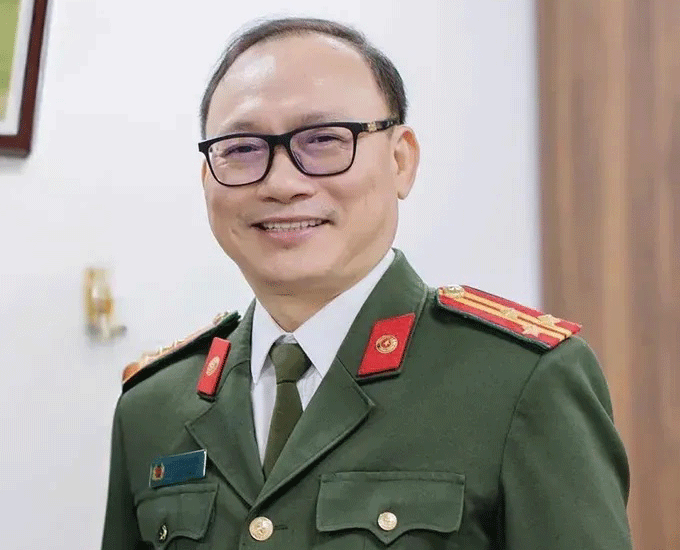
Mr. Tran Hoang, Director General of the Copyright Office of Vietnam under the Ministry of Culture, Sports and Tourism, said that digital technology and AI are reshaping the global content ecosystem. In the new era, copyright is no longer merely a legal instrument but has become an essential infrastructure of the creative economy.
As digital content can now be created, copied and distributed almost instantly, copyright protection must become more transparent, efficient, and adaptable to technological change, he said. He also emphasized that copyright issues in the digital environment have gone beyond national borders, making international cooperation crucial for improving enforcement effectiveness.
Sharing the Republic of Korea’s experience, Mr. Chung Seung Pil, Head of the Information Technology Division at the Korea Copyright Protection Agency, said that the country has developed an AI- and big data-based monitoring system capable of automatically detecting infringing content on the internet.
Previously, monitoring activities mainly focused on file-sharing websites, but illegal distribution has now expanded to platforms for comics, films, music and online novels, he noted.
According to him, the AI system can automatically search for suspicious websites through keywords, analyze the severity of violations, identify copied content and trace the original source of illegal distribution. The technology can also examine connections among websites through IP addresses, emails and advertising banners to identify infringement networks.
In an era when content can spread in less than an hour, fragmented responses are no longer sufficient, Mr. Chung Seung Pil said.
Alongside technological solutions, Vietnam is also continuing to improve its legal framework to adapt to AI development and the digital environment.
Ms. Pham Thi Kim Oanh, Deputy Director General of the Copyright Office of Vietnam, said that Vietnam amended its Intellectual Property Law in 2025 and introduced several guiding decrees to add regulations related to AI, digital platforms and copyright protection responsibilities on the internet.
Under the new regulations, AI users are responsible for the legality and content of products generated using AI technology. The rules aim to limit the misuse of AI for copying or modifying copyrighted works without authorization.
Regarding the use of data for AI training, Ms. Pham Thi Kim Oanh said Vietnamese law now includes provisions limiting copyright exceptions for scientific research, experimentation, and AI training activities. However, data exploitation must not unreasonably affect the legitimate interests of copyright holders or replace normal commercial exploitation.
 "The illegal sports streaming website Xoi Lac TV was recently dismantled by police. (Photo: Thu Ha)")
Vietnam has also strengthened penalties for copyright violations in the digital environment. Online platforms are required to remove infringing content upon requests from authorities or rights holders. Compensation for material damages caused by copyright infringement has been increased to up to VND1 billion (US$38,011).
In addition, Vietnam has introduced penalties for abusing notice-and-takedown mechanisms by providing false information.
Director General of the Copyright Office of Vietnam Tran Hoang said countries with effective institutions and strong international cooperation will have greater advantages in the creative era. Better protection of creative values and more effective use of technology will help build a more sustainable environment for cultural industries.
At the forum, experts also noted that the RoK’s AI system can analyze user access sources to infringing websites through direct searches, keywords, or referral links from other platforms. This data helps authorities identify illegal content distribution routes and speed up enforcement actions.
According to Mr. Chung Seung Pil, such solutions are increasingly necessary as infringing websites frequently change domains and expand operations across multiple countries. The monitoring system is also being developed to estimate the proportion of infringing content appearing on each website, helping authorities assess the risk level of individual platforms.