By incorporating traditional medicine into regular health assessments, certain health facilities in Ho Chi Minh City are slowly establishing themselves as reliable places for the local elderly population. This development is also an encouraging indication as Ho Chi Minh City seeks to advance the area of elderly care associated with traditional medicine and rehabilitation.
Eastern and Western medicines are combined for better treatment
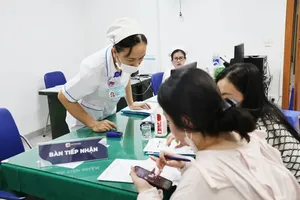
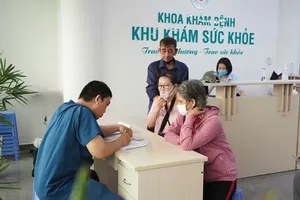
Every Tuesday morning is the scheduled routine health check-up for the elderly at the Tan Nhon Phu Ward Health Center. Mrs. Truong Thi Luong and Mrs. Nguyen Thi Luu, both 80 years old on Street No. 7, Tan Nhon Phu Ward, hobble to their appointment with the doctor.
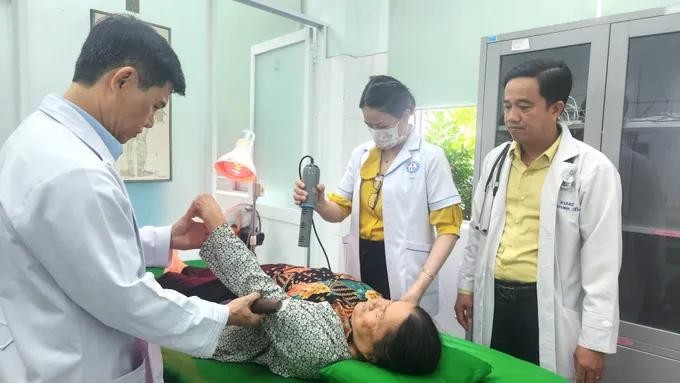
The two women are neighbors, and because they didn't want to bother their children with transportation, they decided to travel independently. “Before, going to a large hospital for check-ups meant long waits and long journeys. Now, I have difficulty speaking, and I'm weak on one side of my body due to a stroke, so I'm reluctant to go”, said Mrs. Luu. After undergoing clinical tests, including blood tests, Mrs. Luu was transferred to the massage and acupressure room for about 20 minutes.
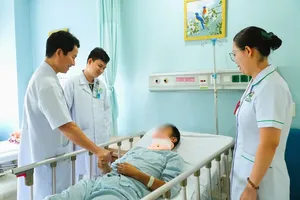
Examining the patient's condition, Dr. Pham Quang Khai, from the Traditional Medicine and Rehabilitation Department, analyzed that Mrs. Luu suffered from weakness on the right side of her body due to the aftereffects of a stroke, high blood pressure, and joint pain. Therefore, treatments such as acupressure, physical therapy, and light therapy would help her gradually regain mobility and reduce pain.
In the bed next to her, 74 year old Le Thai Binh was undergoing acupressure treatment on his lower back – the region that had been troubling him with pain for the past week. Due to his long-standing diabetes, he was reluctant to take additional painkillers, concerned about potential damage to his liver and kidneys. "Fortunately, after the doctor assessed my condition, he provided me with a massage. I feel significantly improved; my entire body feels much lighter!" Mr. Binh remarked with a smile.
According to Dr. Cao Hoang Thanh Liem, Head of the Traditional Medicine and Rehabilitation Department at the Tan Nhon Phu Ward Health Station, there are approximately 10,000 elderly people in the ward. Each month, the medical team conducts health checkups for at least 800 elderly people, spread across four health station locations. Since traditional medicine was integrated into routine checkups, many elderly people regularly return to the health station for acupressure and light therapy, hoping to treat chronic diseases at their root.
Dr. Cao Hoang Thanh Liem explained that after three months of implementation, community feedback has been overwhelmingly positive. As a result, the program will be expanded to additional health station locations. He emphasized that the ultimate objective is to make healthcare services more accessible at the local level, while steadily improving quality and reshaping public perception of health stations as comprehensive care facilities rather than places limited to vaccinations or minor treatments.
Strengthened oversight of traditional medicine to protect patients
Currently, the network of traditional medicine clinics in Ho Chi Minh City is widespread, ranging from specialized hospitals, general hospitals, grassroots health stations, and private clinics. 75 percent of commune health stations in the city have implemented traditional medicine treatment. However, this field has not yet developed to its full potential, and the rate of traditional medicine treatment remains low.
Furthermore, numerous private establishments either lack the necessary expertise or provide traditional medicine services without proper licensing, leading clients to find themselves in a situation where they seek massage therapy only to later require hospital treatment. Alarmingly, a significant number of elderly individuals are susceptible to the allure of substandard traditional medicine that is heavily promoted on social media.
Recently, officials in Thanh Hoa Province dismantled a fraudulent operation that deceived patients by promoting the "Hoang Minh Duong herbal poultice for bone and joint issues," masquerading as a traditional medicine clinic. Numerous victims experienced edema, necrosis, and severe complications following the use of this treatment.
To ensure people have access to traditional medicine in an official and safe manner, the city's health sector is strengthening communication through health collaborators and social media. The commune health stations in An Nhon, Phu Thuan, Thong Tay Hoi, and Linh Xuan wards regularly post information about traditional medicine on Facebook and promptly respond to questions from residents. The assurance of expertise, qualifications, and dedication from the doctors and medical staff is gradually attracting elderly people.
Doctors note that elderly patients often live with multiple chronic conditions that gradually diminish their quality of life. Integrating traditional medicine with modern treatments has proven effective in managing these illnesses, offering a safe and sustainable approach that restores balance to the body. Patients report tangible benefits, including reduced pain, less muscle stiffness, improved mobility, better sleep, and enhanced overall well-being.