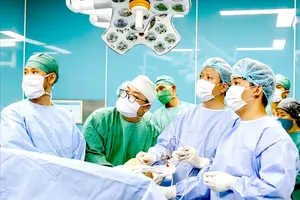
As she gently changes her four-month-old son’s clothes, 20-year-old Le Ngoc Phuong still can’t quite believe the happiness she now holds. This profound peace is the culmination of four surgeries and “nerve-wracking” efforts by the medical staff at Binh Duong General Hospital in HCMC. At various junctures, they reportedly faced grave doubts regarding the potential for success.
Six months ago, a catastrophic workplace accident left Ms. Phuong’s hand severed and crushed. An emergency consultation to save the mother, then carrying 24-week-old twins, was incredibly tense. Every decision carried the weight of the future for all three individuals.
MD Vo Thai Trung and his colleagues made a courageous call: perform a debridement but delay the reattachment, temporarily grafting the hand onto her leg. It’s a sophisticated microsurgery technique requiring absolute precision to keep the tissue viable. “An immediate reattachment would’ve taken six hours, and prolonged anesthesia poses inherent risks to fetuses,” he explained.
Two months later, Phuong underwent a 13-hour “cerebral race” to return her hand to its rightful place. After thorough consultation with top-tier HCMC facilities, the team detached the limb from her leg, utilized a 15cm posterior tibial artery section, and stabilized the bones with plates. They meticulously connected one artery and three veins to re-establish circulation, successfully grafting missing tendons and nerves to restore functionality.
“It takes only a few lines to tell, but back then, it was a tug-of-war against immense challenges. The most precious thing we had was collective strength. The team executed the surgery within our control and according to a long-term plan,” MD Vo Thai Trung recalled.
A perfect ending arrived when two boys, named Di and An, were born safely at the end of 2025. The mother, Le Ngoc Phuong, was overwhelmed with joy, while the doctors’ eyes sparkled with happiness. They didn’t just save a hand; they preserved the most sacred bond of motherhood.
The medical facility that wrote this fairy tale for Ms. Phuong is currently being oriented by HCMC leaders to become a specialized medical center with 1,500 beds, serving as a nuclear medical hub for the city.
HCMC’s specialized medical development strategy is built on foundations laid by previous generations. Among them, Binh Dan Hospital is considered the cradle of surgery. Before 1975, surgical masters here established a center based on the modern institute-university model. From this place, these “leading lights” continued to build many specialized centers in HCMC for orthopedics, pediatric surgery, and oncology.
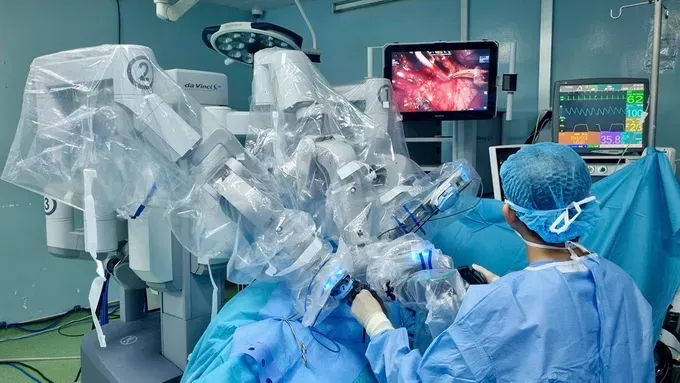
In 2016, Binh Dan Hospital pioneered the first robotic surgery for adults, a revolutionary technique in the surgical field. To date, Binh Dan Hospital has performed over 3,500 robotic surgeries, bringing this “luxury” technique closer to patients. Each surgery costs VND120-150 million (US$4,700-5,900), whereas in the Republic of Korea or Singapore, patients must pay $15,000-$50,000.
Furthermore, Vietnamese doctors are now transferring techniques to international colleagues. Binh Dan Hospital established a Robot Surgery and Training Center, attracting foreign doctors to Vietnam to study. “The Vietnamese mark is now visible on the world map of robotic surgery,” Assoc Prof Tran Vinh Hung, MD PhD, Director of Binh Dan Hospital, stated proudly.
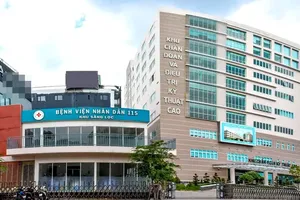
In March 2026, a delegation of 14 doctors from the Philippines specifically chose the Stroke Center at People’s Hospital 115 as an internship site to learn about re-perfusion treatment techniques for ischemic strokes.
According to Assoc Prof Nguyen Huy Thang, MD, Chairman of the HCMC Stroke Association and Head of the Cerebrovascular Disease Department at People’s Hospital 115, besides treatment efficacy, the cost factor in Vietnam’s medical sector is a standout advantage. While a mechanical thrombectomy costs about VND400 million ($15,700) in the Philippines, at People’s Hospital 115, it’s only VND40-80 million ($1,570-$3,140).
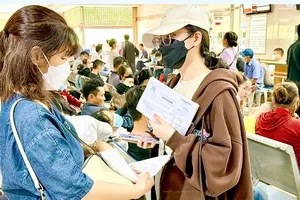
For certain specialized techniques, patients who previously had to go abroad for treatment can now be cured locally at reasonable costs. Conversely, more foreign patients and overseas Vietnamese are seeking treatment at HCMC’s top-tier hospitals.
In 2025, a Singaporean pregnant woman came to HCMC as her final hope, seeking help from Tu Du Hospital and Children’s Hospital 1 to treat a fetal heart defect, an extremely difficult fetal intervention. When blood flowed smoothly through the fetus’s aorta, it once again proved that the skills of Vietnamese doctors can fully handle the most advanced medical techniques.
Additionally, many hospitals in HCMC are increasingly applying prestigious international standards to integrate with the region, such as the ACHSi standard at Hung Vuong Hospital or the JCI standard at HCMC Blood Transfusion and Hematology Hospital. It’s the result of professional operations, quality benchmarks, and patient safety.
The city is also working toward completing a model of three specialized medical clusters: the Central Medical Cluster, the Tan Kien Specialized Medical Cluster, and the Thu Duc Specialized Medical Cluster. The core is the connection between hospitals, universities, and research centers, creating a modern and closed medical ecosystem.