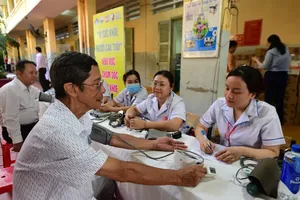
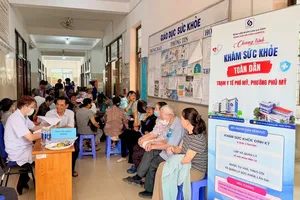
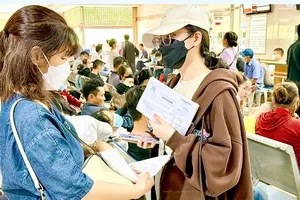
The Ho Chi Minh City Department of Health, in coordination with the municipal Department of Science and Technology, the City Digital Transformation Center and the municipal Department of Public Security, has agreed on a plan to deploy electronic health records (EHRs) for all residents through the city’s Digital Citizen App.
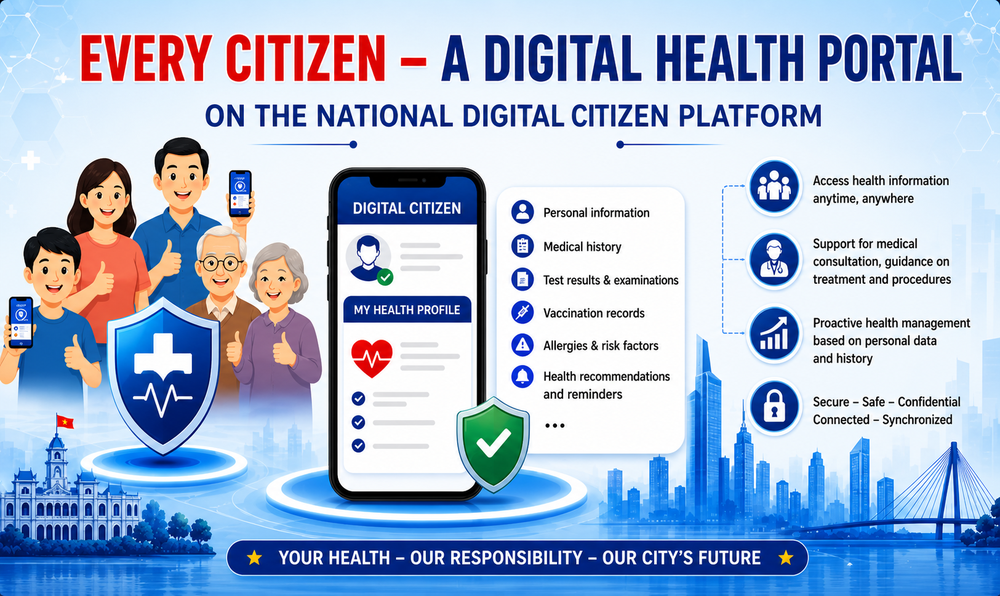
Under the plan, each resident will have a unique digital health record linked to their personal identification number, ensuring “the right person, the right data” while minimizing duplication and inaccuracies. Health data will be continuously updated from medical facilities, health check-up programs, and screening initiatives, then integrated and centrally displayed on the app.
By leveraging the existing Digital Citizen platform, residents can easily access services without installing additional applications, while benefiting from the city’s established digital infrastructure. Users will be able to review their medical history, monitor health indicators and manage personal information conveniently.
Beyond individual use, the system also lays the foundation for data connectivity and sharing among healthcare providers, gradually forming a unified citywide health database. This will support a shift toward data-driven healthcare management, enhancing operational efficiency and improving service quality, according to the Ho Chi Minh City Department of Health.
Notably, identity verification will be conducted via the VNeID digital identification system to ensure data security and privacy. The city is also developing solutions to create health records for dependents, such as children, students and individuals requiring legal representation.
The rollout of EHRs is expected to mark a transition from disease treatment to comprehensive healthcare, from reactive to proactive and preventive care, ensuring continuous health monitoring throughout a person’s life and improving overall public health outcomes.
Implementation process:
Step 1: Create administrative information
Step 2: Update health data
Step 3: Synchronize and display data
Step 4: Utilize data for public services and management
Local authorities will monitor implementation progress through a centralized dashboard, linked to population-based health management.