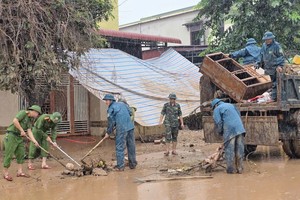
In mid-September 2026, Ho Chi Minh City combined multi-trillion Vietnamese dong investment with a "sponge city" strategy to transition from rigid flood defenses toward adaptive and data-driven water management.
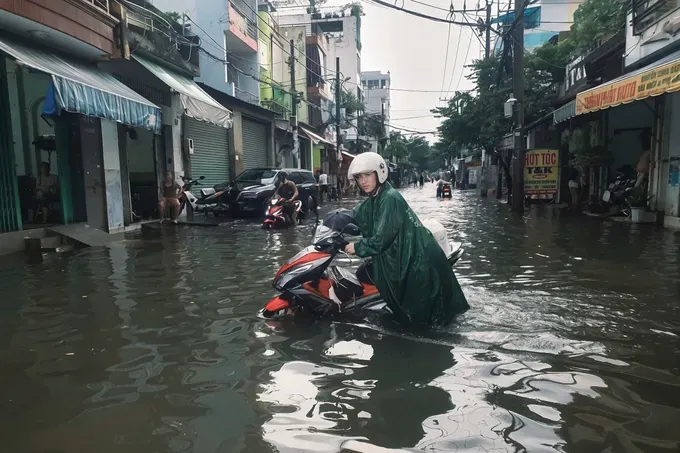
In mid-September 2026, coinciding with heavy rainfall during a high tide peak, the Ho Chi Minh City Department of Construction, in coordination with the Consulate General of the Netherlands in Ho Chi Minh City, organized the workshop "Drainage and Flood Control in Urban Development: Solutions for Urban Wastewater Collection and Treatment in Ho Chi Minh City."
At the event, Dutch Consul General in Ho Chi Minh City Raissa Marteaux emphasized that infrastructure is only part of the solution. The core lies in creating flows, expanding space for rivers, canals, and streams, and storing water before it causes flooding.
The Netherlands has followed that path. The "Room for the River" program expands river floodplains instead of endlessly raising dikes, while Rotterdam features public squares that serve as playgrounds on sunny days and retention basins on rainy days.
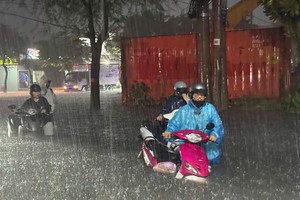
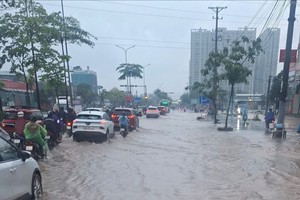
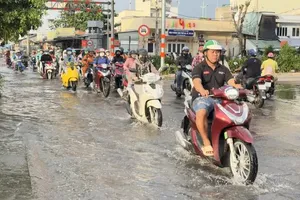
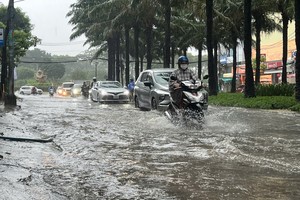
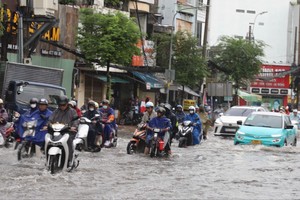
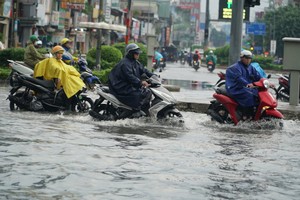
Practices in Ho Chi Minh City over recent times show that a single rainstorm is not the sole cause of flooding. Inundation forms when multiple factors compound: extreme rain exceeding sewer system capacity, high tides and sea level rise blocking discharge paths, and land subsidence (reaching up to 2cm per year in some areas), while urbanization narrows canals—the city's natural drainage paths.
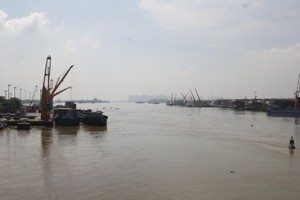
After merger, Ho Chi Minh City spans 6,778 square meters with vastly different topography and hydrological regimes; old drainage master plans are no longer suitable, while canals, discharge gates, and pumping stations lack synchronization. In the master plan with a long-term vision, flood control is placed as an infrastructure breakthrough, aiming toward an integrated, climate-resilient flood prevention system.
The "sponge city" model—an urban planning philosophy that enables a city to function like a natural sponge to absorb, retain, clean, and reuse rainwater instead of attempting to expel or block water with concrete—was selected as the primary orientation, linked with green corridors and interconnected ecological spaces. More importantly, it marks a mindset shift from "flood prevention through standalone works" to "living with water and basin-based risk management."
The city must not only flush water away quickly, but also know how to retain water, allow it to infiltrate, and reserve space for it. The principle of "delay - store - drain" proposed by experts for Thu Duc follows that same spirit.
This mindset is beginning to be incorporated into a concrete investment program. According to the flood resolution plan for the 2026-2030 period recently issued by the Ho Chi Minh City People's Committee, the city plans to deploy 87 projects with a total investment of over VND142 trillion ( US$5.46 billion) to resolve flooding at 50 locations.
The figure of over VND142,000 billion demonstrates the immense scale of the flood control challenge. However, the decisive factor is whether the projects are connected into a unified system: sewers with canals, discharge gates with pumping stations, tide control structures with retention lakes, and technical infrastructure with green spaces.
The plan also requires reviewing sewer systems, canals, and discharge gates to address bottlenecks, while accelerating key flood control works.
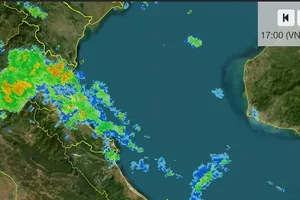
However, a "sponge city" only operates effectively with an additional digital "brain" equipped with sensors, data, and smart operations. Ho Chi Minh City is steering toward building a smart drainage management system using real-time data on rain, tides, water levels, sewers, valves, and pumping stations to forecast, simulate flooding scenarios, and support proactive operations.
The city is also researching the interconnection of drainage and irrigation data, applying artificial intelligence, and adding retention lakes and underground storage tanks in public spaces. That is the true distinction of an urban area that knows how to coexist with water—not treating water as something to be expelled from the city at all costs, but reorganizing space so water has "paths to flow," "places to stay," and time to recede.
More than VND142,000 billion can build additional sewers, canals, retention lakes, and tide control structures. The greater challenge is ensuring that each project does not stand alone, but operates together within a unified system based on river basins and data.
For a low-lying megacity with numerous rivers and canals, simultaneously facing pressure from extreme rain, high tides, land subsidence, and urbanization, the goal is not merely reducing flooded spots, but building a city that knows how to make room for water and is smart enough to live with water.
)