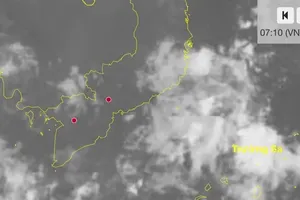
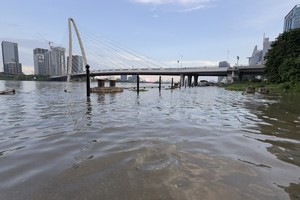
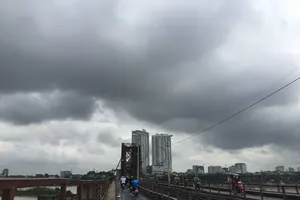
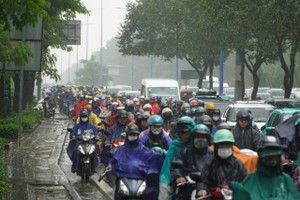
Meanwhile, southern Vietnam is expected to remain mostly sunny on November 10, although high tides in Ho Chi Minh City could rise above the third-warning level.
Southern Vietnam experienced relatively stable weather on the afternoon of November 9, with abundant sunshine and little rainfall.
The Southern Regional Hydrometeorological Center said the strengthening cold air mass moving south from the north was weakening atmospheric disturbances that had previously triggered thunderstorms across the region.
Similar conditions are forecast for November 10, with widespread sunshine and increasingly hot, humid conditions around midday and in the afternoon. Isolated showers and thunderstorms may develop in the evening, particularly along the western border, while most other areas are expected to remain dry.
However, the center warned that water levels in rivers and canals across Ho Chi Minh City and the Mekong Delta provinces are rising with the early tenth lunar month high-tide cycle.
In Ho Chi Minh City, tides are forecast to peak on November 9-11, potentially exceeding the third-warning threshold and increasing the risk of flooding in low-lying areas.
Northern temperatures plunge by more than 10 degrees
The National Center for Hydro-Meteorological Forecasting reported that by the afternoon of November 9, the cold air mass had affected most of northern Vietnam, the North Central Coast, and some places in the Central Coastal region.
At 1 p.m., temperatures across northern Vietnam generally ranged from 18 to 21 degrees Celsius, falling to 15-18 degrees in mountainous areas. Hanoi recorded 17 degrees, down 1 degree from early morning.
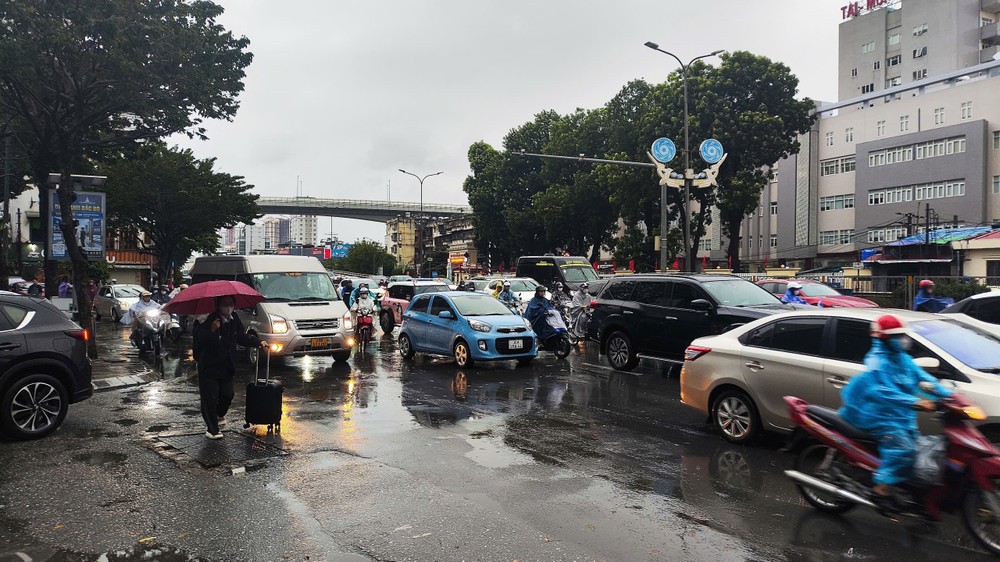
Temperatures in many northern localities had dropped by 9-10 degrees compared with the same time on November 8. Strong northeasterly winds were also sweeping across the region. Heavy rainfall in the north had subsided, although light showers persisted in some areas, including Hanoi and Phu Tho.
Strong northeasterly winds were reported along coastal areas. Bach Long Vi Special Zone recorded winds at force 8, with gusts reaching force 10, while Co To reported force 6 winds and gusts of force 8-9. Ly Son recorded force 6 winds.
The cold air mass is expected to extend into other parts of the Central Coastal region and South Central Coast on the evening and night of November 9.
Northern Vietnam and areas from Thanh Hoa to Quang Tri will experience cold conditions, with minimum temperatures of 15-18 degrees. Some high mountain areas in the north could fall below 12 degrees. Hue is forecast to turn cooler from the night of November 9.
Heavy rain raises flood and landslide risks in central Vietnam
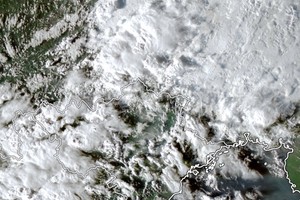
The national forecasting center has maintained warnings of widespread heavy rainfall across central Vietnam, particularly from Ha Tinh to Khanh Hoa on the afternoon and night of November 9. Temperatures across the Central Coastal region had yet to drop significantly by the afternoon of November 9, but winds were gradually strengthening. Rainfall is expected to intensify as northeasterly winds strengthen and temperatures begin to fall from the evening onward.
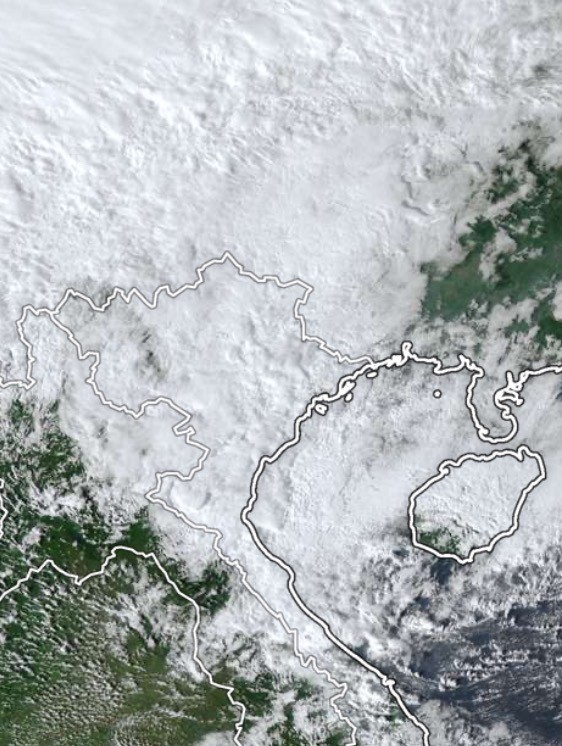
Between 7 a.m. and 3 p.m. on November 9, rainfall reached 222.2 millimeters at Ky Lac station in Ha Tinh and 151.6 millimeters at Dong Tam station in Quang Tri. Heavy rain is expected to persist across central Vietnam through November 11.
Authorities have warned of flash floods, landslides and land subsidence in eight provinces and cities: Son La, Phu Tho, Lao Cai, Thanh Hoa, Nghe An, Ha Tinh, Quang Tri and Hue.
In response, the National Civil Defense Steering Committee on November 9 urged Thanh Hoa authorities to take proactive measures to protect residents and property amid prolonged heavy rain and the heightened risks of flooding, flash floods and landslides.
The committee also called for safety inspections of hydropower and irrigation reservoirs, particularly small and vulnerable facilities, and urged authorities to regulate water releases proactively to protect dams and downstream communities.