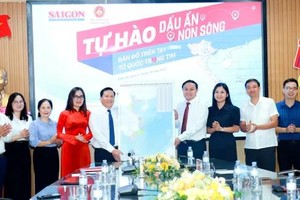
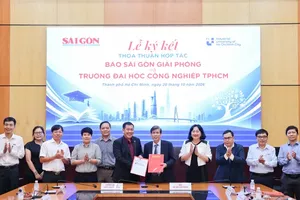
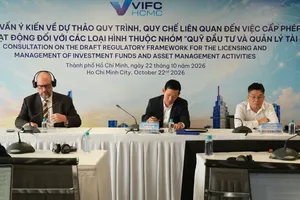
The event was organized by the Ho Chi Minh City People’s Committee, in coordination with Vietnam National University, Ho Chi Minh City (VNU-HCM),
The workshop was chaired by Vice Chairman of the Ho Chi Minh City People’s Committee Nguyen Manh Cuong; Associate Professor Dr. Tran Cao Vinh, Vice Director of VNU-HCM; and Associate Professor Dr. Hoang Cong Gia Khanh, Rector of the University of Economics and Law (VNU-HCM).
Ho Chi Minh City shifts from special mechanisms to breakthrough institutional frameworks
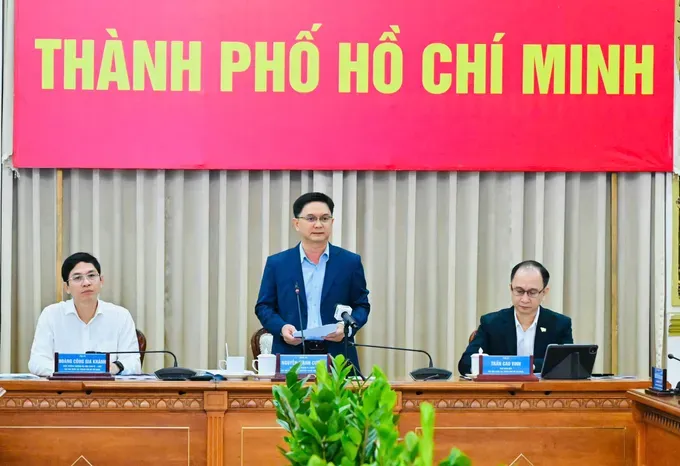
Speaking at the seminar, Vice Chairman of the Ho Chi Minh City People’s Committee Nguyen Manh Cuong said that the event was held in a particularly significant context. The Politburo recently issued a directive creating favorable conditions for Ho Chi Minh City to conduct a comprehensive review of Politburo Resolution No. 31 on the orientation and tasks for the city’s development through 2030, with a vision to 2045. In addition, the directive allows Ho Chi Minh City to draft a new resolution to replace Resolution No. 31 in guiding the city’s construction and development in the new era.
Accordingly, the workshop serves as an important foundation for the city to study, propose, and prepare the necessary dossiers and procedures to continue making recommendations to the Central Government and the Politburo for the draft Special Urban Law. This law is envisioned as a high-level legal instrument, aiming to grant Ho Chi Minh City stronger authority and decentralization, promote double-digit growth, and facilitate rapid and sustainable development of the city, thereby contributing to the country’s overall development.
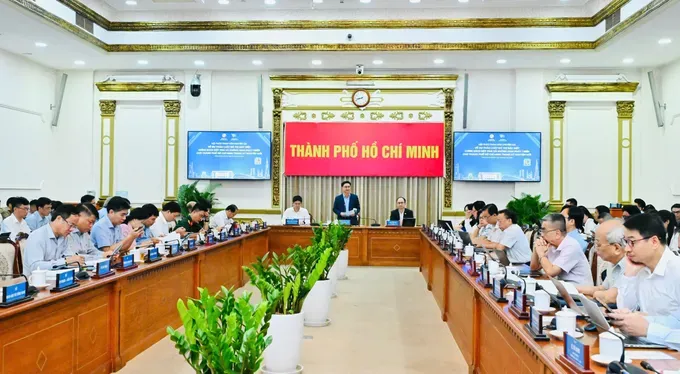
Ho Chi Minh City plays a leading role and holds a pivotal position for the entire country; however, the city also faces several bottlenecks. While the city’s economic scale continues to grow and its role in the national and regional economic structure becomes increasingly important, the governance frameworks and institutional conditions have not yet met the requirements for such development. Current management mechanisms were designed and implemented based on centralized administrative management, applied uniformly across most localities, and do not adequately reflect the specific characteristics, nature, and scale of a special megacity, particularly following the unification into the new Ho Chi Minh City.
Vice Chairman of the Ho Chi Minh City People’s Committee Nguyen Manh Cuong stated that Ho Chi Minh City is simultaneously undertaking three important tasks, including conducting a comprehensive review of Resolution No. 31; drafting a new Central Resolution to replace Resolution No. 31; and researching, proposing, and advising on the development of the Special Urban Law.
According to him, this is a highly integrated, interconnected, and concurrent process. Among these, drawing practical lessons from the grassroots level and providing political orientation serve as the guiding force, while the legal institutional framework represents the ultimate outcome in the formulation of the Special Urban Law.
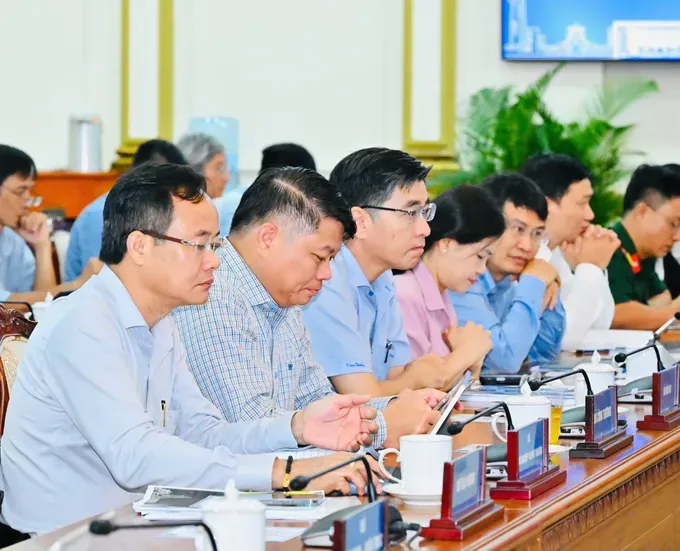
Ho Chi Minh City clearly recognizes that the objective is not merely to complete institutional frameworks or follow special mechanisms as outlined in previous resolutions granted by the Central Government and the National Assembly. Rather, the city must codify these resolutions, contents, and regulations at the highest legal level, sufficient to unlock development resources, create new development space, and establish new growth drivers for the city’s development, Vice Chairman of the Ho Chi Minh City People’s Committee Nguyen Manh Cuong emphasized.
The Vice Chairman of the Ho Chi Minh City People’s Committee analyzed that the Special Urban Law must be affirmed as a transition from a special mechanism to the establishment of superior institutions; from a proposal-and-recommendation mechanism to one granting authority and responsibility; and from administrative management to the governance of a modern, smart city.
Three principles for proposing issues related to the Special Urban Law
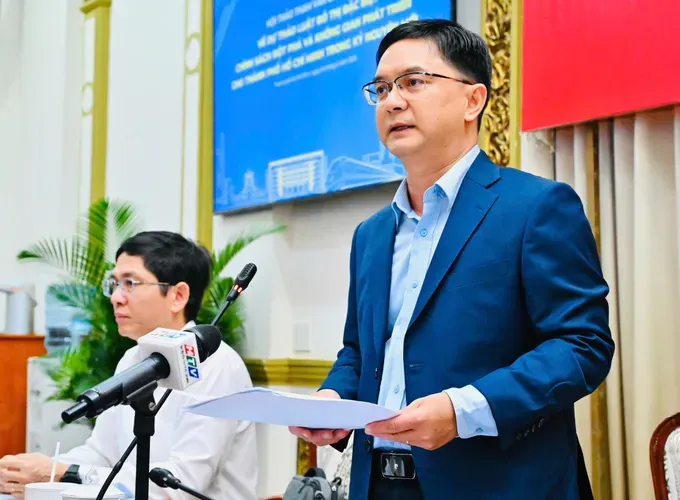
According to Vice Chairman of the Ho Chi Minh City People’s Committee Nguyen Manh Cuong, based on the practical management and administration experience of the city government, Ho Chi Minh City has identified three principles to guide the continued research and proposals related to the development of the Special Urban Law.
First, the Ho Chi Minh City People’s Council and People’s Committee should continue to be granted genuine and comprehensive autonomy across sectors to exercise the city’s governance rights, following the principle: the locality decides, the locality implements, and the locality assumes responsibility.
Second, it is necessary to continue codifying practical issues that require legal frameworks but currently lack them in order to be effectively implemented. Legal norms must originate from the real obstacles the city faces and addresses daily, such as bottlenecks in underground space management, public assets, and the execution and implementation of urban railway projects.
Third, the city should leverage its special sectors, mechanisms, and conditions.
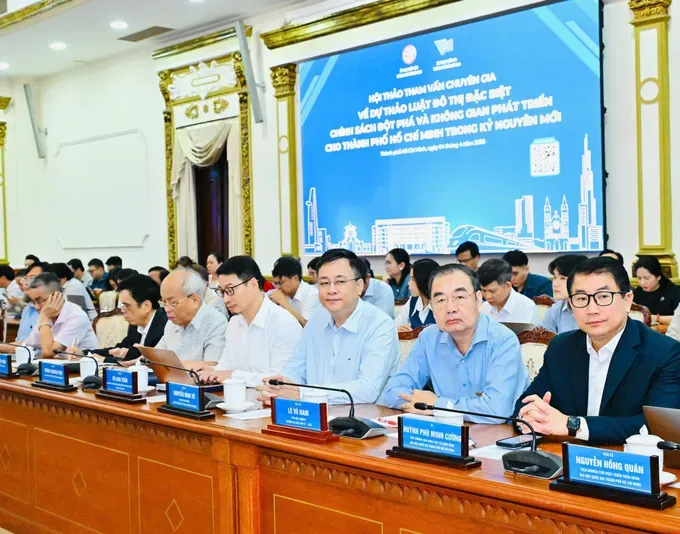
In line with these requirements, Vice Chairman of the Ho Chi Minh City People’s Committee Nguyen Manh Cuong expressed his hope to receive innovative and breakthrough contributions, particularly clarifying the model of a special urban institutional framework with genuine decentralization and delegation, closely linked to the accountability of the city government.
This includes proposals for an advanced fiscal and budgetary mechanism aligned with international regional practices under current urban governance conditions. It also encompasses expanding development space—including urban space, underground space, digital space, regional linkages, and low-rise areas—as well as establishing and designing policy experimentation mechanisms under a “sandbox” approach for new operational models and management practices.
The municipal authorities especially hope that the contributions will not merely focus on refining existing mechanisms but will propose new ideas and approaches capable of creating breakthroughs in the city’s urban development institutions, Mr. Nguyen Manh Cuong urged.



)