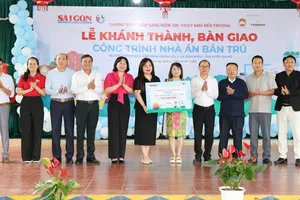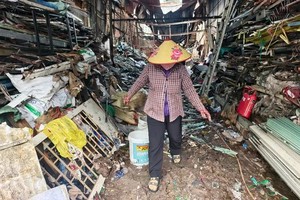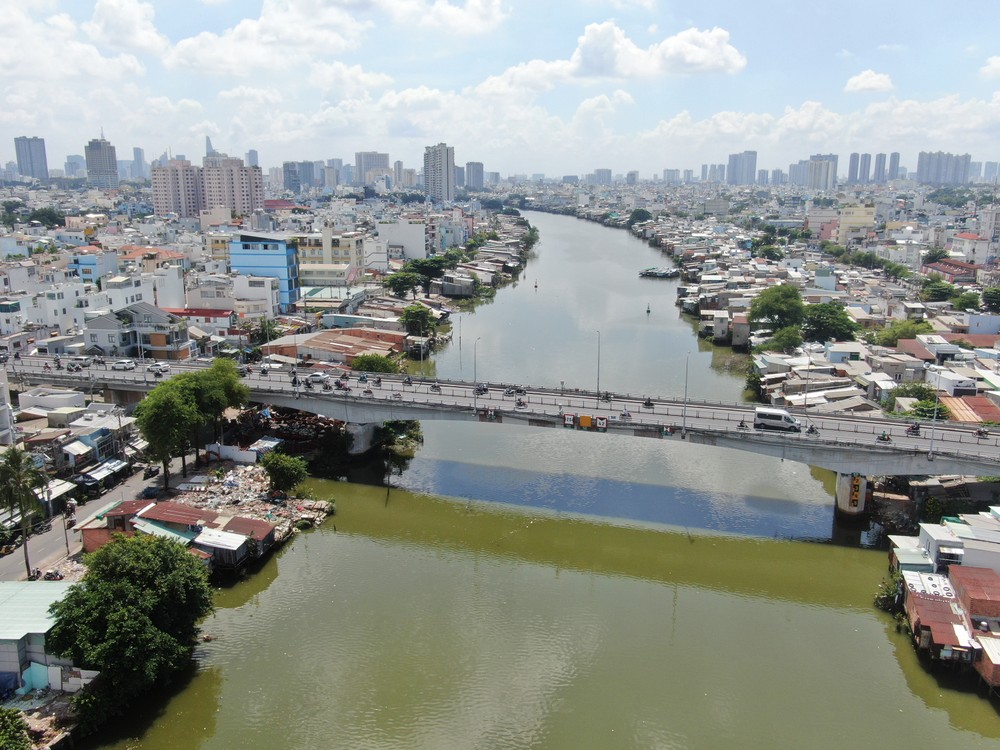
Once living in cramped and deteriorating homes along Ho Chi Minh City’s canals, thousands of families are now beginning a new life in spacious, modern apartments, marking a significant milestone in the city’s long-term effort to clean up waterways and improve urban living conditions. As part of two major environmental and infrastructure projects including the North Bank of the Doi Canal and the Xuyen Tam Canal, families are moving into new, spacious residences after decades in cramped, flood-prone conditions.
Families move into new and spacious houses
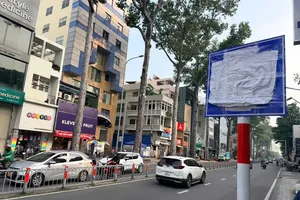
Along Nguyen Duy Street in Chanh Hung Ward, where the North Bank of the Doi Canal project is underway, around 80 percent of homes have been demolished and the land handed over. Most families accepted compensation, bought new houses, or opted for resettlement apartments close to their old neighborhoods. More than 200 households in Chanh Hung and Phu Dinh wards have registered for resettlement and were allocated apartments at 2225 Pham The Hien Street, 481 Ba Dinh Street, and 35 Ho Hoc Lam Street.
Among them is resident Nguyen Thi Kim Loan, who relocated to the 2225 Pham The Hien Street apartment building after her old home at 217 Nguyen Duy Street was cleared for the project. She revealed that her old house was over 30 years old and too rundown to repair. However, after receiving VND4.3 billion (US$163,587) in compensation, members of her family divided the funds, allowing each sibling to buy new homes. She added that after receiving the money, she bought this 60-square-meter apartment with two bedrooms for VND2.1 billion. It’s convenient, comfortable, and right on the main road.
Similarly, in the Xuyen Tam Canal project, 24 households have completed procedures for resettlement apartments at the Khang Gia apartment building in An Hoi Tay Ward. Longtime resident Truong Thanh in An Nhon Ward expressed his happiness upon moving into his new 70-square-meter apartment after nearly 30 years in a small, deteriorating alley home. “We received over VND2 billion in compensation and bought a resettlement apartment for VND1.4 billion. It’s quiet, spacious, and ideal for my family,” he said.
Compensation and land clearance progress accelerate
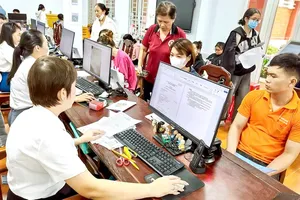
According to Hoang Ngoc Loan, Deputy Director of the Compensation and Land Clearance Board of District 8, the North Bank of the Doi Canal project affects over 1,600 cases in Chanh Hung and Phu Dinh wards. “The Department of Construction has helped resolve issues in signing contracts for resettlement apartments, ensuring families can stabilize their new lives quickly,” she said.
Concerning the Xuyen Tam Canal project in Go Vap, Nguyen Ngoc Anh, Chairman of the An Nhon Ward People’s Committee, reported that 138 households were affected and that land clearance is now complete. The city has assigned apartments for resettlement through the Go Vap Land Compensation and Clearance Board.
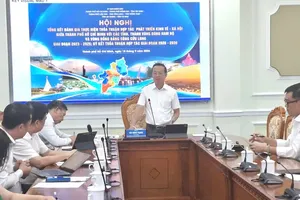
According to the Department of Construction, Ho Chi Minh City aims to relocate 20,000 canal-side households by 2030 to enhance living standards, reduce flooding, and restore the city’s waterways. Currently, five projects are under preparation, six are being implemented, and 26 have been completed with ongoing resettlement. Some projects, however, have faced delays of up to 20 years. To accelerate progress, the Department has urged the City People’s Committee to review and expand available resettlement housing and land resources for upcoming public investment projects.
Ho Chi Minh City currently has five projects in the investment preparation stage, six projects under implementation, and 26 projects completed and undergoing resettlement. However, several projects have experienced delays of up to 20 years. In light of this, the Department of Construction has recommended that the Chairman of the Ho Chi Minh City People’s Committee should instruct the Department of Agriculture and Environment to report on the implementation of directives concerning the review of available land and housing resources for resettlement, as well as the identification of suitable locations to support public investment projects.