Vietnam ranks among the top 10 nations with the highest marine economic share relative to its total national economy.
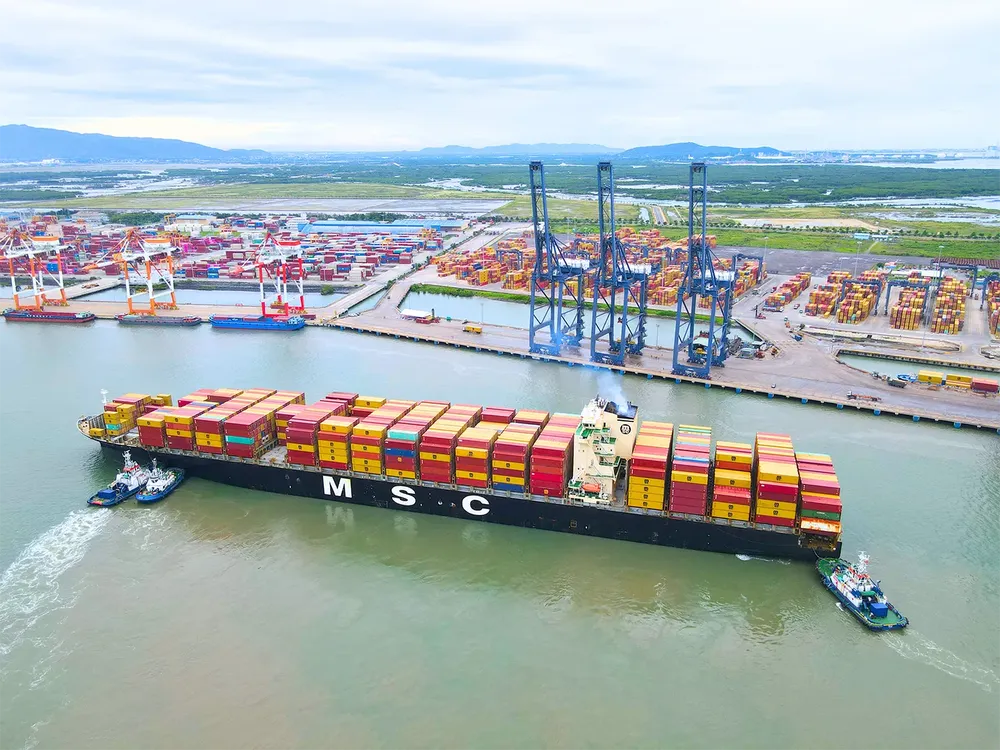
Being as the country’s and Southeast Asia’s logistics gateway, Ho Chi Minh City is leading the nation in export turnover. Following its merger, Ho Chi Minh City now encompasses a vast, unified land and sea territory that requires comprehensive restructuring.
With territorial waters spanning from Can Gio, Binh Khanh, and An Thoi Dong through Phu My, Chau Duc, Ba Ria, and Vung Tau to Long Hai and Xuan Son, alongside 177,000 hectares of mainland area, selecting a development approach grounded in ecological conservation, connectivity capacity, infrastructure networks, and functional allocation will allow the city to proactively open a sustainable growth pathway for this megacity.
Therefore, an essential objective involves the prompt development of a 1/5000 scale General Plan for the Ho Chi Minh City Marine Economic Zone (MEZ) upon approval of the 2025–2050 Master Plan. Concurrently, it is imperative to construct preliminary capital mobilization mechanisms that establish a comprehensive investment portfolio rather than a collection of discrete projects.
An assessment aligning development vision, growth capacity, and Ho Chi Minh City's current realities reveals that infrastructure planning remains inadequate, the utilization of coastlines and water surfaces is inefficient, and post-merger agricultural land allocation is suboptimal.
Therefore, the city can address this constraint by shifting its primary focus from physical expansion to raising productivity, capturing high-value segments, and building new-generation growth drivers.
The city’s marine economy strategy is set to advance through eight key pillars, reflecting a diversified and integrated development model. These include ports and logistics; maritime transport; and financial and legal services anchored in Thu Thiem. Maritime technology hubs will be developed in Can Gio and Vung Tau while Long Son and Thi Vai are earmarked for marine energy and environmental technologies, including offshore wind power, floating solar projects, and LNG infrastructure.
Tourism and marine services will be concentrated in Can Gio and Con Dao, alongside the expansion of seafood production and the marine bioeconomy in Can Gio. Supporting industries, together with oil and gas services, will be strengthened along the Phu My-Chau Duc-Vung Tau industrial corridor, positioning the sector as a key driver of the city’s long-term economic growth.
Based on an inter-regional development perspective, Ho Chi Minh City will play the leading role in deep-water ports, international transshipment, financial and legal services, corporate headquarters, maritime trade, and research and development (R&D). Neighboring localities will fulfill complementary roles according to their respective comparative advantages.
In infrastructure planning, priority will be given to directly connecting major traffic arteries to port clusters, with particular emphasis on addressing the imperative of segregating commercial freight movement from passenger and recreational transport networks.
Concurrently, the plan will increase the proportion of waterfront land allocated for industry and logistics, while supplementing marine spatial planning across specific functional groups, including shipping routes, wind power, sand exploitation, oil and gas, conservation, military uses, and carbon storage.
Within this framework, industrial manufacturing and services will be positioned near port clusters to reduce logistics costs, minimize water pollution risks, and boost international connectivity via seaports and Long Thanh International Airport.
By integrating power, gas, wind, and carbon infrastructure, Ho Chi Minh City aims to become a high-value clean energy hub. Leveraging oil, gas, and marine geological infrastructure will further enable the development of carbon capture and storage (CCS) projects.
To realize the vision for Ho Chi Minh City’s marine economy, implementation efforts will restructure marine tourism offerings along more than 400 kilometers of coastline into distinct segments such as yachting, yacht registration and maintenance, and water sports; large international cruise ships operating under a homeport model linked to Long Thanh International Airport; MICE tourism, golf, the night economy, pedestrian streets, and international music festivals; as well as mangrove ecotourism and scientific research tied to carbon credits and conservation.