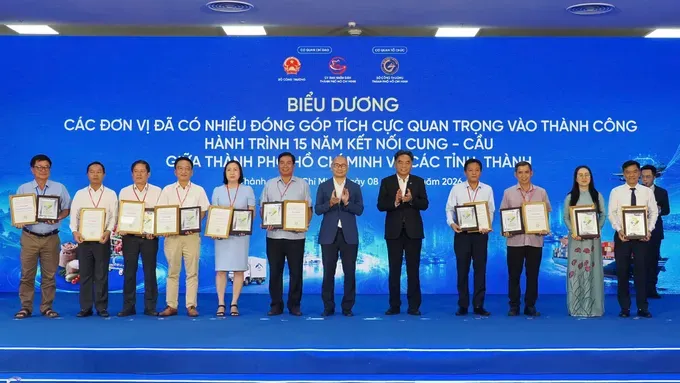
The program runs through October 11 at Phu Tho Indoor Stadium, featuring direct business-matching activities connecting enterprises and cooperatives with distribution networks, wholesale markets, and e-commerce platforms. It also includes multichannel sales, livestreaming, and the promotion of regional specialties.
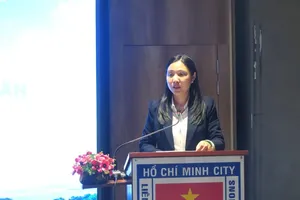
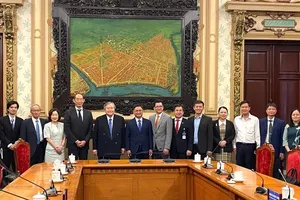
Speaking at the event, Director of the Ho Chi Minh City Department of Industry and Trade, Bui Ta Hoang Vu, said that after 15 years of implementation, the program had evolved beyond a conventional trade promotion activity. Initially focused on connecting buyers and sellers, it has gradually developed a network linking production areas, enterprises, and cooperatives with distribution systems. This has helped expand market access for agricultural produce, products under the One Commune One Product (OCOP) program, and local specialties while diversifying supplies for the Ho Chi Minh City market.
A key new feature this year is the emphasis on quality standards throughout the connection process. The “Responsible Green Tick” program continues to expand, linking suppliers’ accountability with monitoring and post-market inspections by distribution networks. Efforts are also being stepped up to improve traceability and product information transparency. Meanwhile, data and artificial intelligence (AI) are expected to be applied in verification, analysis, and early warning to support product quality control.
According to Mr. Bui Ta Hoang Vu, the program’s effectiveness should therefore be measured not only by the volume of goods sold but also by whether enterprises and cooperatives can strengthen their capabilities, standardize their products, and secure stable market outlets after the event.
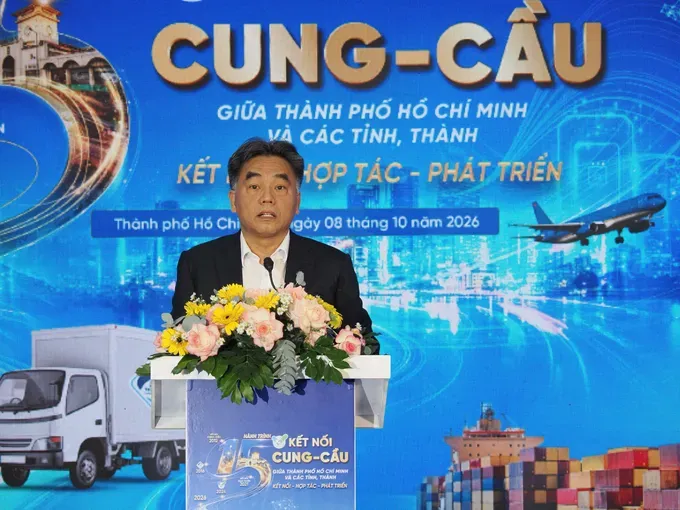
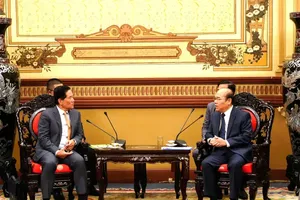
Addressing the opening ceremony, Standing Vice Chairman of the Ho Chi Minh City People’s Committee, Nguyen Loc Ha, stressed that amid the city’s new development landscape, supply-demand linkages between Ho Chi Minh City and other localities must be taken to a higher level. Ho Chi Minh City is a major consumer market and a key distribution hub, while the supply sources and raw-material production areas of other provinces and cities play an important role in meeting the city’s supply-demand needs. These linkages therefore need to be established on a more regular and coordinated basis.
The Standing Vice Chairman of the Ho Chi Minh City People’s Committee called for a number of key priorities. First, regional cooperation must be strengthened, shifting from event-based connections to regular collaboration by industry and crop season, while linking raw-material production areas with processing, logistics, distribution, and consumption.
He also called for the development of responsible supply chains, with the “Responsible Green Tick” program further promoted to ensure that producers, distribution networks, and management agencies jointly participate in product quality control.
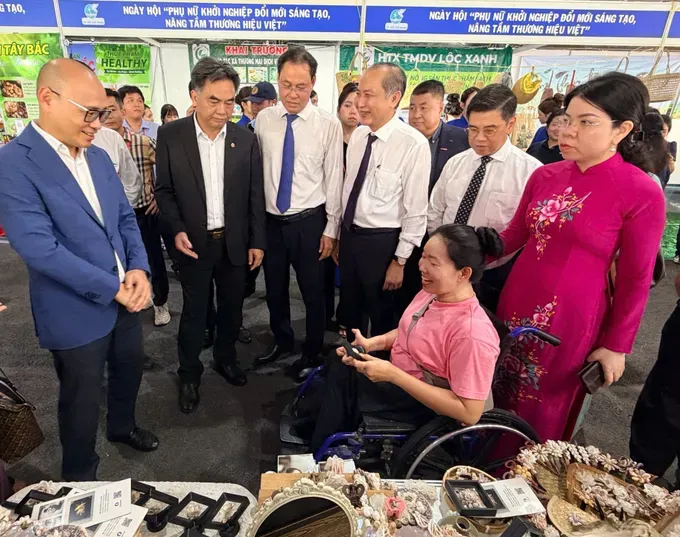
The city also aims to accelerate digital transformation by helping enterprises and cooperatives develop digital storefronts, adopt multichannel sales, apply AI, and participate in cross-border e-commerce. At the same time, businesses need to improve their capabilities in product quality, packaging, and traceability, as well as develop products suited to modern distribution systems and export markets.
Another key priority is the development of green supply chains that connect production with distribution and sustainable consumption, thereby enhancing the competitiveness of Vietnamese goods in response to evolving market requirements.
Mr. Nguyen Loc Ha assigned the Ho Chi Minh City Department of Industry and Trade to monitor cooperation agreements reached through the program, emphasizing that “sales results and supply-chain linkage effectiveness must serve as the benchmarks.” The aim is to ensure that business connections translate into tangible market opportunities for enterprises and cooperatives.




)