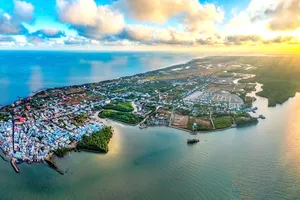
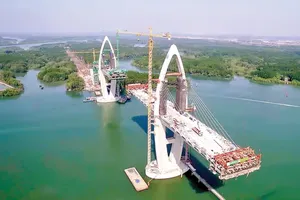
During the first nine months of 2026, HCMC attracted over US$17.2 billion in registered FDI capital, marking a staggering fourfold increase compared to the same period last year. Massive infrastructure ventures, such as Can Gio International Transshipment Port, the Artificial Intelligence Data Center situated in Tan Phu Trung Industrial Park of Cu Chi Commune, alongside the International University Urban Area in Xuan Thoi Son Commune, are currently underway. Each ambitious project inherently demands highly skilled chip engineers, AI experts, smart factory operators, plus astute financial managers, the exact same highly sought-after talents that Singapore, the Republic of Korea, as well as Taiwan (China) are fiercely courting.
In HCMC, the narrative of attracting top-tier experts is essentially akin to “searching for precious seeds.” This year, a brand-new season has unequivocally arrived, when capital is relentlessly pouring in and strategic mega-projects have officially broken ground, yet the municipality can’t merely go out to purchase seeds without meticulously preparing the soil.
Looking closely, it’s evident that the soil remains quite barren. While bureaucratic procedures for a foreign expert are theoretically mandated to take between 10 to 20 days, practical realities dictate that they frequently drag on for a grueling six months to a full year. For many returning scientists, the harsh reality only sets in when they arrive to find absolutely no laboratory, no assistants, plus no cohesive research team waiting for them.
The management apparatus is heavily slowed down by administrative red tape that controls every single expenditure, which isn’t any different from yanking a sapling up every few days just to see if its roots have sprouted. Resources originating from the Central Government, the municipality, universities, plus corporate enterprises are essentially pouring one meager scoop of water each, which barely permeates the surface.
The harvest season doesn’t wait for those dragging their feet. Devoid of human capital, that massive influx of funding will merely spawn low-level assembly plants, while the most lucrative fruits, including design, cutting-edge technology, plus elite governance, will inevitably ripen in someone else’s garden.
Currently, the city boasts more tools at its disposal than ever before. Resolution 57-NQ/TW firmly positions science-technology as the paramount breakthrough. Furthermore, the Law on Urban Development, effective as of October 1, 2026, grants the municipality unprecedented authority over its administrative apparatus, income brackets, recruitment processes, housing, and bureaucratic procedures.
The city is, therefore, advised to decisively funnel its vast resources into a few pivotal sectors inextricably linked to ongoing projects in the fields of semiconductors, artificial intelligence, big data, smart manufacturing, logistics, and finance. Within each designated sector, authorities must clearly pinpoint exactly how many individuals are required, for what specific positions, and by what precise deadline. In this optimized environment, each selected scientist will have a fully equipped laboratory, dedicated assistants, along with doctoral researchers readily available to firmly plant their roots cultivating a formidable team.
The “Three Partners” model connecting the Ministry of Science and Technology, HCMC, and Vietnam National University-HCM effectively expanding upon the VNU350 Program, serves as a pragmatic approach to “merge three scoops of water into a single root.” Under this framework, every individual receives a policy package alongside a comprehensive scheme committing to deliver tangible products after around ten years. Key laboratories dedicated to smart manufacturing, working in tandem with massive industrial conglomerates, should absolutely kick off this year to serve as an exemplary model field.
Annually, the municipality should proactively publish a comprehensive list of “massive dilemmas” to place direct orders for solutions tackling urban congestion, severe flooding, seaport logistics, healthcare, and urban data management. The city must vigorously open up its data vaults, establish designated testing grounds, and heavily prioritize public procurement for rigorously verified products. Leaders must boldly hire brilliant minds to spearhead public service units or state-owned enterprises, daring to entrust them with the overarching role of chief engineers.
Remuneration packages must closely approach prevailing market rates, strictly governed by contractual agreements plus tangible results. Authorities should rapidly deploy a Talent Card system alongside a one-stop service center capable of clearing complex dossiers within a mere 10 days. Furthermore, they must develop integrated urban zones in Thu Thiem and Saigon Hi-Tech Park featuring high-quality rental housing, international-standard schools, together with top-tier hospitals.
The city must persistently uphold mechanisms protecting those who dare to act; it should propose concrete liability exemptions for inherent research risks, grant long-term residence cards for foreign experts with their families, and offer lucrative personal income tax incentives.
Ultimately, success must be measured by the harvest. The definitive metric isn’t the sheer volume of seeds purchased, but rather how many formidable research teams, groundbreaking technologies, innovative products, and thriving enterprises are established, alongside how many of the city’s pressing problems are definitively solved.
These results must be evaluated independently and publicly on an annual basis. Thriving rows of crops will receive supplementary care, whereas underperforming ones must be completely replanted. HCMC already possesses the requisite capital, the visionary projects, as well as the decentralized authority. What remains is the sheer patience to cultivate the soil, the fierce determination to guard the garden, plus the impeccable farming practices required to finally reap a bumper crop.