Following years of planning and implementation, the Doi Canal environmental restoration and urban renewal project is steadily reshaping riverside communities. Backed by strong community consensus, the initiative is revitalizing a waterway long burdened by pollution, flooding, and informal settlements.
Residents support site clearance
Having lived near Doi Canal for nearly five decades, Tran Dinh Luyen, a resident of Chanh Hung Ward, said his family and many neighbors have endured frequent flooding caused by heavy rains and high tides. Aging homes, environmental pollution, mosquitoes and disease risks have been persistent concerns.
For that reason, when the city launched the canal rehabilitation project, his family promptly completed the necessary procedures and handed over the site.
Similarly, resident Tran Van Liem, also from Chanh Hung Ward, said relocating canal-side homes is necessary to address environmental degradation that has persisted for decades. Most local residents understand the significance of the project and have cooperated with authorities in site surveys, compensation procedures and land clearance.
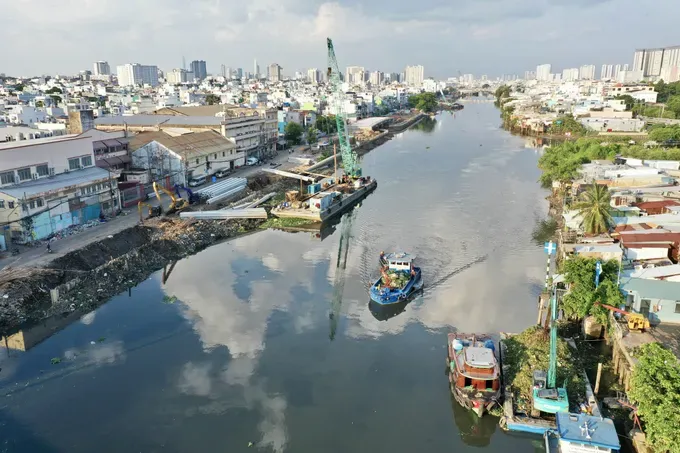
In Phu Dinh Ward, resident Ly Thanh Trung said decades of encroachment along both sides of the canal narrowed the waterway, while stagnant black water and accumulated waste severely polluted the environment. Residents are hopeful that the renovation project will transform the canal into a cleaner and more attractive public space.
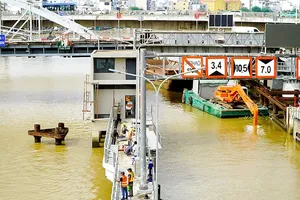
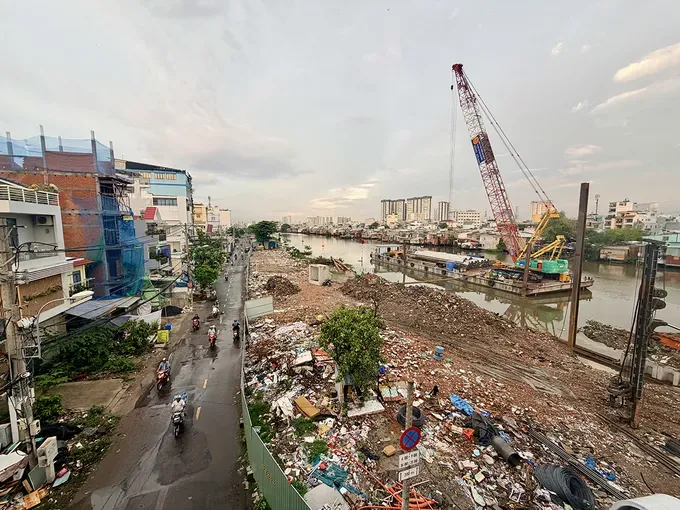
At locations where land has already been cleared, contractors have mobilized workers and equipment to construct embankments, carry out land filling and develop infrastructure. The demolition of old canal-side houses to make way for new facilities reflects residents' support for the city's urban development efforts.
Target of relocating 40,000 canal-side homes
At a recent working session reviewing progress on Ho Chi Minh City's urban renewal program for houses located on and along rivers, canals and streams for the 2025-2030 period, Chairman of the Ho Chi Minh City People's Council Vo Van Minh praised the proactive efforts of the municipal Department of Construction and relevant agencies in assessing current conditions, preparing project lists and proposing implementation solutions.
However, he noted that significant challenges remain, including unfinished investment procedures, funding constraints and limited resettlement housing resources.
Chairman of the Ho Chi Minh City People's Council Vo Van Minh urged relevant agencies to intensify efforts to achieve the city's goal of relocating 40,000 houses situated on and along rivers, canals and waterways between 2025 and 2030.
To meet this target, he called for the completion of legal procedures, investment preparations, compensation plans, support policies and resettlement arrangements. The Department of Finance was tasked with coordinating with relevant agencies to secure investment capital and ensure uninterrupted project implementation.
For major Group A projects, authorities were instructed to complete documentation for submission to the municipal People's Council at the earliest possible session. Smaller Group B and C projects may be decentralized to capable local authorities to shorten preparation time and improve implementation efficiency.
The HCMC Department of Construction has been assigned to work with relevant agencies and localities to update data on rivers, canals and waterways citywide, develop project portfolios and classify projects based on scale, characteristics and the potential for mobilizing social investment resources.
The city will also continue reviewing projects suitable for public-private partnership (PPP), build-transfer (BT) contracts and other social investment models to attract non-budget funding, ease fiscal pressure and enhance project feasibility.
Regarding resettlement, Chairman of the Ho Chi Minh City People's Council Vo Van Minh requested a comprehensive review of existing social housing and resettlement housing stock to ensure adequate accommodation for affected residents. He also called for social housing projects in the former Nha Be and Binh Chanh districts to begin construction in the early fourth quarter of 2026 to meet future resettlement demand.