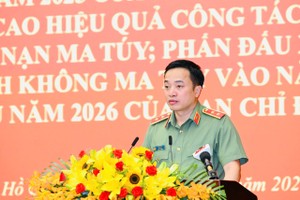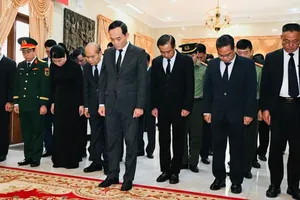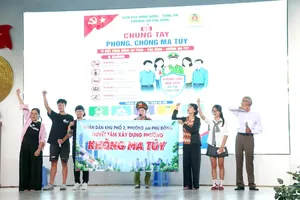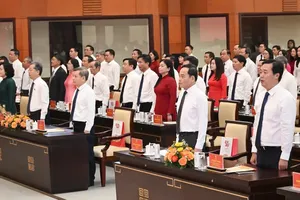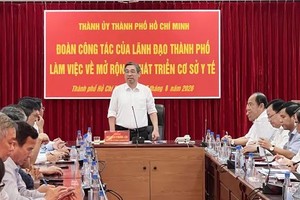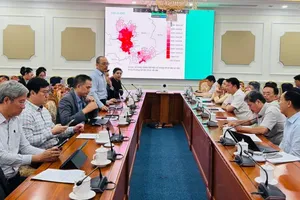
On the afternoon of August 10, Steering Committee 26 of Ho Chi Minh City held a conference to disseminate directive documents on the implementation of Resolution No. 02-NQ/TU of the Ho Chi Minh City Party Committee. The goal is to enhance the effectiveness of crime and drug abuse prevention, with a long-term vision of establishing Ho Chi Minh City as a drug-free city by 2030, while also reviewing the results of the first six months of 2026.
Ho Chi Minh City must execute this difficult task despite obstacles
Addressing the conference, Tran Luu Quang, Secretary of the City Party Committee, commended the progress made in drug prevention, particularly the aggressive efforts by the City Police. While noting that local authorities are increasingly aware of their mandate, he emphasized that the pace of certain tasks remains slow, necessitating greater commitment from all levels and sectors.
The Secretary of the City Party Committee stressed that building a drug-free Ho Chi Minh City is a difficult and heavy task, but it must be achieved. He underscored that drug-related crime is the root of many other criminal activities; without suppressing drugs, the city cannot guarantee peace or sustainable development.
The Secretary highlighted that while the police force plays a core role, success hinges on local administration. "The responsibility lies with the local government, not just the police," he asserted. Accordingly, Party Committee secretaries of communes, wards, and special zones will be held accountable for drug prevention results within their jurisdictions. He demanded that local leaders mobilize the entire grassroots political system to engage, educate, and reach every individual and family.
Secretary Tran Luu Quang instructed local police forces to master their assigned areas, maintain tight oversight of high-risk subjects, and improve their ability to forecast and identify threats early. When taking enforcement action, he stressed, they must "strike precisely."
He warned against chasing superficial achievements or concealing the true situation. He mandated that every commune, ward, and special zone construct a "map" of its drug situation, requiring leaders to have a clear, specific grasp of local trends to build concrete plans with defined goals, timelines, and responsible parties.
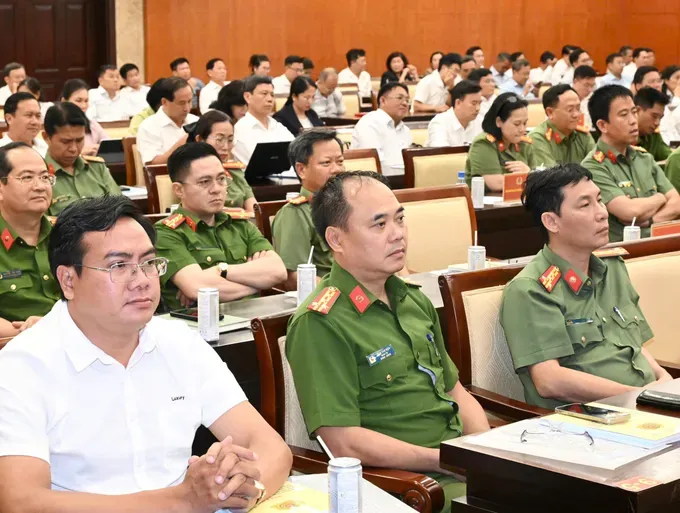
Regarding infrastructure, the City Party Committee has approved the expansion of four drug rehabilitation centers as proposed by the City Police. The HCMC Party Secretary noted that this investment should be phased to meet future demand, incorporate vocational training to provide income for recovering addicts, and be managed effectively. He encouraged exploring diverse, high-quality investment models, including potential special mechanisms, rather than relying solely on public funding.
Officials propose solutions to remove operational bottlenecks
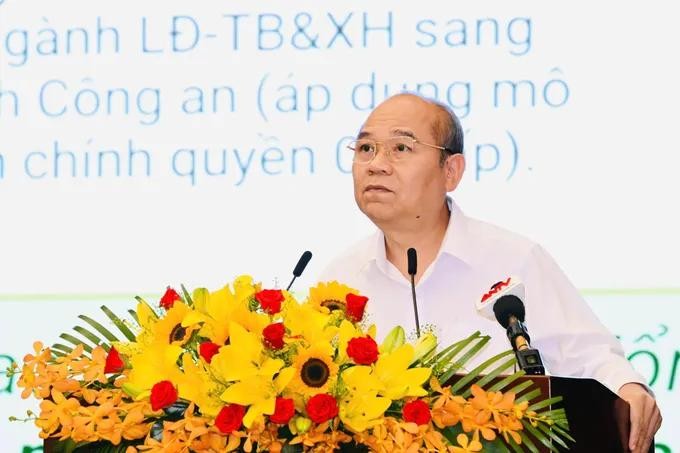
During the conference, officials analyzed current obstacles and proposed solutions.
Vice Chairman Tran Van Bay of the City People’s Committee noted that while the city has implemented comprehensive control and rehabilitation measures, recidivism remains a complex challenge. A core cause, he stated, is the lack of stable employment for those in post-rehabilitation. He proposed building modern facilities that integrate vocational training aligned with the needs of businesses and the labor market.
Deputy Head Ta Quoc Trung of the Propaganda and Mass Mobilization Commission of the HCMC Party Committee, emphasized that communication is a strategic defense, aiming to build "social resistance" against the dangers of drugs. He called for every citizen to act as a fighter, and every family, agency, organization, and business to serve as a "fortress" in the fight against drugs.
Meanwhile, Bui Xuan Cuong, Party Committee Secretary of Saigon Ward, highlighted the unique challenges of central wards. He noted that the high concentration of restaurants, hotels, transient workers, tourists, and a fluctuating foreign population creates a complex environment that requires nuanced and sustained prevention efforts.