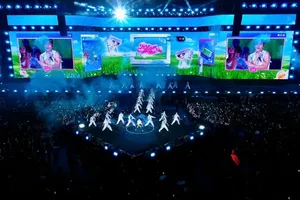
Artificial intelligence is transforming Vietnam’s music scene, creating new opportunities for digital artistry while stirring heated debates about copyright, authenticity, and emotion.

From support tool to “digital artist”
The artificial intelligence fever in music has intensified this year with the emergence and growth of “digital artists” capable of composing and performing. AI-generated music is reshaping how songs are created, distributed, and enjoyed but it also raises tough questions about copyright and creative identity.
When the song Say mot doi vi em unexpectedly became a viral hit with over 10 million streams in two months across social media platforms, many were surprised to learn that the song was entirely “machine-made.” According to its two creators, known by the nicknames Ken Quach and HuongMyBong, both the composition and vocals were generated by AI. Attracted by the song’s popularity, singer Nguyen Vu purchased the rights and invested in producing a music video as his personal project. To date, the MV Say mot doi vi em performed by Nguyen Vu has surpassed 2 million views on YouTube.
The trend of composing and performing with AI has flourished recently. Besides Say mot doi vi em, other AI-created songs such as Mua chieu, Da Lat con mua khong em?, Van ly sau, Hu vo cung biet dau, and Thang bay anh viet cho em have drawn significant attention. Capitalizing on the trend, numerous AI music channels like Sing Song AI, Nhac AI, Nhac tinh AI, Cam xuc AI, and Top hit songs AI are rapidly emerging.
Beyond new compositions, the use of AI voices to cover classic songs is expanding. For instance, rock-style AI covers of Trinh Cong Son’s Diem xua and Ha trang have each attracted over a million listens. Even singer Trinh Vinh Trinh and Nguyen Trung Truc—relatives of the late composer—were astonished by the AI-generated arrangements and vocals.
Previously, several singers like Dan Truong and Thoai Nghi had experimented with AI technology in music videos. Thoai Nghi released the MV Dau hang di, made entirely on a smartphone using next-generation AI tools. Director Pham Vinh Khuong, who created the MV, shared: “With today’s phone technology, combined with AI platforms and video editing apps, producing a professional product is now achievable even without a large crew or big budget.”
Creative Innovation or Legal Dilemma?
However, AI’s growing presence in the music industry has sparked mixed reactions among audiences and skepticism from professionals. Many AI covers of old songs have been found to contain serious errors—such as the Diem xua rock version, where the lyrics were rendered incorrectly.
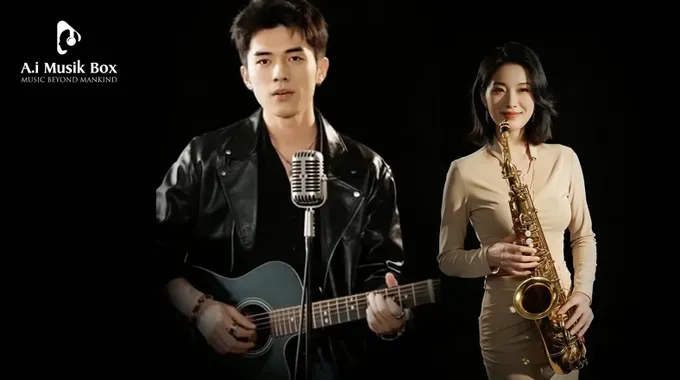
Moreover, most experimental AI music projects have yet to make a lasting impression. Examples include a 15-song AI album by musician Thanh Cong released in May, the AI-singer MV Khuc ca hoa binh launched in October, and Mien hoa ban ngay moi by composer Vi Hoang Anh—all of which generated curiosity rather than artistic recognition. Similarly, AI-assisted MVs by Dan Truong and Thoai Nghi have faced criticism for visual inaccuracies and emotional flatness.
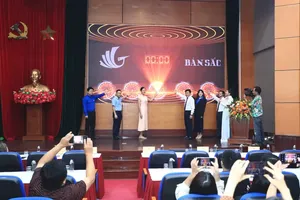
Recently, at the launch of a songwriting competition for the 13th National Youth Union Congress (2026–2031 term), organizers announced that AI-generated songs would be accepted showing openness toward technological creativity. However, composer Hoai An, a jury member, emphasized: “We need honesty from authors when using technology. AI can assist in the creative process, but if it completely replaces the creator, the work loses its meaning. Music must come from human emotion and thought to truly resonate with listeners.”
Amid a flood of AI trash music, major streaming platforms like Spotify, Apple Music, and Deezer have begun tightening their policies. Spotify is partnering with leading record labels to foster responsible AI music development. Apple Music is building tools to block AI works that violate copyrights. In Vietnam, the Copyright Office is proposing comprehensive solutions to safeguard the rights of artists, songwriters, and producers in the digital era.