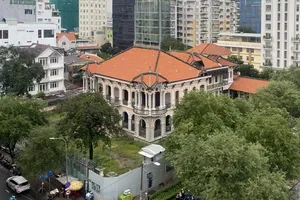
By the end of 2025, Ho Chi Minh City possesses 321 historical–cultural relics and scenic sites, including four special national relics, 99 national-level relics and 218 city-level relics. For 99 national-level relics, the city has four archaeological sites, 44 architectural works, 48 historical sites and three scenic landscapes. This is considered a valuable foundation for the city to develop a rich and distinctive cultural tourism sector in a sustainable direction.
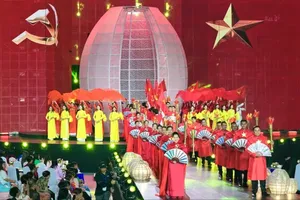
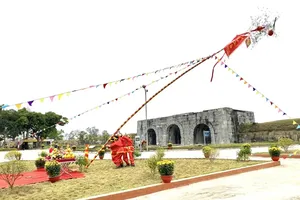
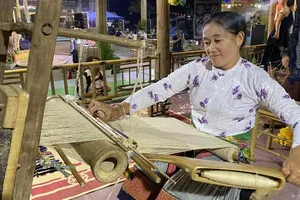
In recent years, various types of intangible cultural heritage have been incorporated into tourism activities, creating positive effects, such as the Tet Nguyen Tieu (Nguyen Tieu Festival) integrated into tours of the ancient Cho Lon quarter and the system of the Chinese Assembly Hall; performance of Don Ca Tai Tu Nam Bo (southern amateur music), Hat Boi (Vietnamese classical opera) and lion-dragon dances; and tours to explore traditional craft villages such as cake-making, ao dai tailoring and calligraphy which allow visitors to interact directly with artisans.
These models diversify the city’s tourism offerings.
Another important highlight is “memory tourism”. As the urban area expands, Con Dao Special Zone in Ho Chi Minh City, a sacred ‘red address’ of the nation associated with historical sites of revolutionary significance and patriotic education, offers significant potential for the city to develop tourism products centered on historical memory, especially as global trends increasingly value cultural-heritage experiences that provide deeper engagement with local identity, history and community memory.
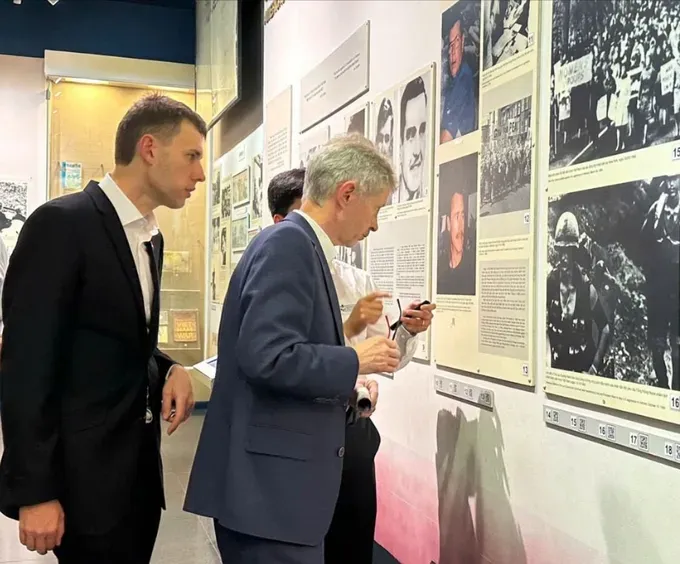
At the same time, Ho Chi Minh City currently has nine public museums under the municipal Department of Culture and Sports. These include the Ho Chi Minh City Museum of History, the Ho Chi Minh City Museum, the Southern Women’s Museum, the Ho Chi Minh Museum – HCMC Branch, the Ton Duc Thang Museum, the Ho Chi Minh City Museum of Fine Arts, the War Remnants Museum, the Ba Ria–Vung Tau Museum and the Binh Duong Museum.
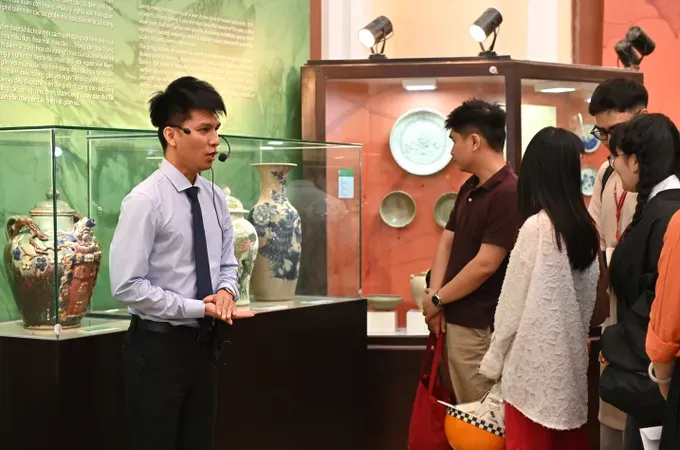
Among these, several museums still operate under traditional models and have not fully leveraged technological advantages, network connectivity, or resource sharing.
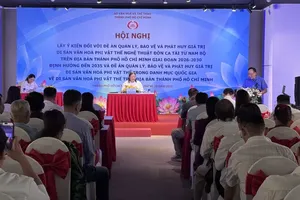
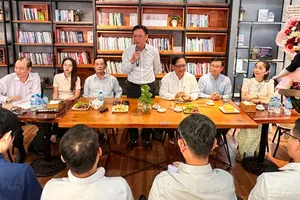
At a recent citywide conference on heritage conservation and promotion organized by the municipal Department of Culture and Sports, numerous cultural managers, experts and delegates proposed the establishment of a Ho Chi Minh City Heritage Center, based on the museums currently under the department.
The center is expected to serve as a centralized governance structure, responsible for coordination, strategic planning, professional support and system-wide development toward professionalism, modernization and effectiveness.
Dr. Hoang Anh Tuan, Director of the Ho Chi Minh City History Museum, stated that the establishment of the Ho Chi Minh City Heritage Center under the municipal Department of Culture and Sports is both necessary and urgent.
Once formed, the center would act as the focal point for coordinating activities related to research, conservation, digitization, communications, and education, contributing to building an urban cultural brand and developing a heritage-based creative industry.
The establishment of the Ho Chi Minh City Heritage Center is not only merely an administrative restructuring but also a strategic step toward linking heritage, museums, communities and tourism within a unified ecosystem, creating momentum for sustainable cultural tourism development and bringing Ho Chi Minh City closer to becoming a leading cultural and creative hub in the region.