A gambling den, a robbery swiftly resolved due to drone data, AI-integrated cameras; previously chaotic intersections are now more organized; and issues of littering and sidewalk encroachment are progressively being tackled.
AI camera systems are demonstrating their efficacy in enhancing security, traffic safety, and urban management in Ho Chi Minh City.
Maintaining peace in the area
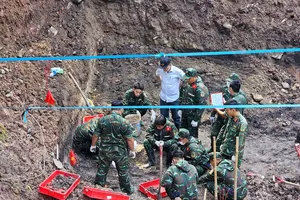
At the end of February, after using drones for surveillance, Ho Chi Minh City police raided a gambling den deep in the woods in Hoa Loi Ward. At the scene, police caught 45 people red-handed gambling on cockfighting and seized many related items.
In late December 2025, a burglary took place in Tan Hung Ward. The perpetrators made off with two laptops and a wallet, subsequently utilizing the victim's bank card to withdraw tens of millions of Vietnamese dong. A little more than a day following the commission of the crime, the Tan Hung Ward Police, in collaboration with other specialized units, arrested the suspect by leveraging image data from the AI camera system.
According to Mr. Nguyen Duc Tri, Chairman of the Tan Hung Ward People's Committee, the AI camera system was officially put into operation on December 24, 2025.
Previously, detecting criminals was usually done through reports, followed by manual tracking and image extraction or tracing using conventional cameras. This process was time-consuming, and the camera system was not seamless, resulting in interrupted image tracing. Therefore, the application of AI cameras helps improve monitoring capabilities and ensures timely and accurate handling of violations.
At present, the ward has deployed 18 AI-integrated smart cameras along with 40 traditional cameras, ensuring complete coverage of the area. These devices are strategically positioned on major roads, at intersections, near ward entrances, in densely populated residential neighborhoods, and in locations identified as having a high risk of violations related to urban order and traffic safety. The selection criteria for installation sites within the ward included areas that necessitate extensive monitoring, experience high traffic flow, and have previously been identified as "hot spots" for security and public order concerns.
Ms. Nguyen Thi Nguyet, who owns a grocery store on Tran Xuan Soan Street, said that not long ago, her store was targeted by thieves attempting to break into a customer's motorbike. Therefore, she feels more secure now that the local authorities have installed AI cameras. She commented that installing AI cameras is a necessary solution to maintain peace in the residential area.
Similarly, Tang Nhon Phu Ward has put into operation an AI Camera Center with 11 smart cameras to enhance security and traffic safety monitoring. The system not only allows authorities to identify, track, and simulate the movement routes of suspicious vehicles, but also assists in the rapid investigation and resolution of many cases.
Building urban order on a digital platform
Recently, Tan Son Hoa Ward has been testing an AI security camera system to improve the effectiveness of monitoring the area and promptly detect and handle legal violations. The AI camera system not only supports law enforcement in their operational work but also contributes to raising public awareness of law compliance.
Colonel Nguyen Van Binh stated that the installation of AI cameras has led to positive changes in the public's awareness of traffic law compliance, fostering a habit of adhering to regulations even in the absence of traffic police. Citizens are also proactively checking information on fines through systems such as VNeTraffic or the website of the Traffic Police Department. Consequently, in the near future, PC08 will advise the Ho Chi Minh City Police to collaborate with the Department of Construction to study and install additional AI cameras at several key locations.
In practice, AI cameras in various localities provide numerous management functions, including facial recognition, behavioral analysis, the detection of suspicious individuals, and the monitoring of unusual behaviors.
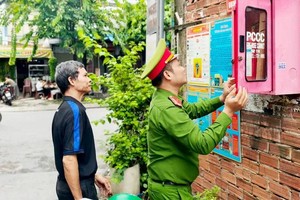
Additionally, they assist in identifying early instances of sidewalk encroachment, disorderly gatherings, and traffic violations, and they support fire prevention, firefighting, and rescue operations.
According to the Chairman of the Tan Hung Ward People's Committee, clear image data with specific time and location details enhances the transparency of handling violations, minimizes disputes, and alleviates pressure on law enforcement.
Moreover, AI cameras serve as a long-term tool for urban management, being strictly regulated and utilized within the appropriate authority and purpose. The ward is committed to continuously reviewing, upgrading, and researching the integration of the camera system with smart urban management platforms, thereby contributing to the development of a civilized, modern, and safe area.
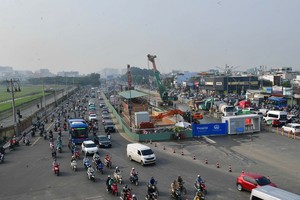
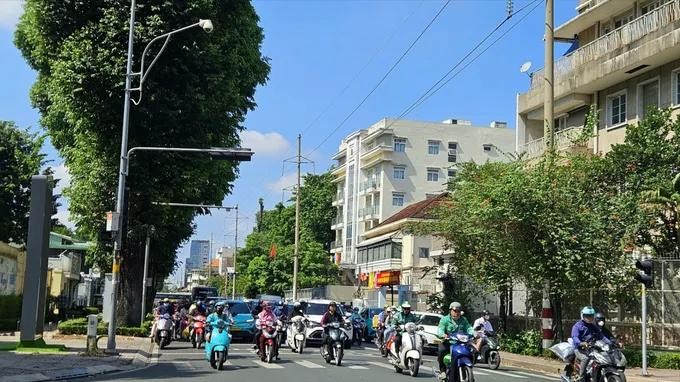
Along with other localities, the Ho Chi Minh City Police Department has installed 31 AI cameras to monitor, detect, and penalize traffic violations. These AI cameras are installed at key intersections and locations where violations, congestion, and traffic accidents frequently occur.
Lieutenant Colonel Nguyen Van Binh, Deputy Head of the Traffic Police Department (PC08), Ho Chi Minh City Police Department, stated that through AI cameras, traffic police have detected and issued fines for thousands of violations.





)