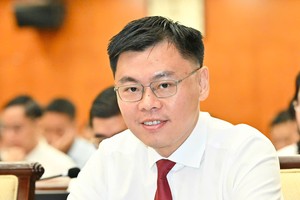
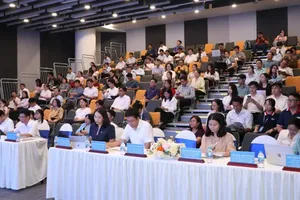
The announcement was made by Deputy Secretary of the Ho Chi Minh City Party Committee Van Thi Bach Tuyet at a meeting between city leaders and representatives from media, publishing and arts organizations held by the Ho Chi Minh City Party Committee, People’s Council, People’s Committee and the Vietnam Fatherland Front Committee of Ho Chi Minh City on the morning of March 5.
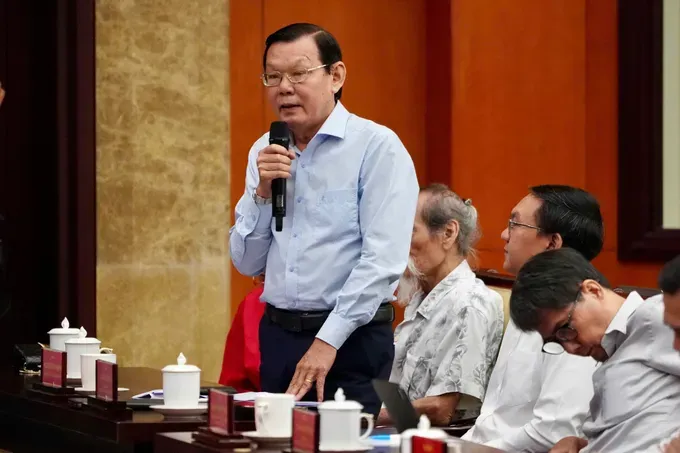
Speaking at the event, Chairman of the Ho Chi Minh City Journalists Association Nguyen Tan Phong said that the gathering served as an encouragement for leaders as well as journalists and editors to carry out their tasks effectively in 2026.
He added that after the merger, the association has performed its organizational structure and personnel, and is now operating smoothly while leveraging the strengths of journalist associations from the former localities.
At the event, artists raised concerns about the shortage of performance spaces and the slow progress of key cultural projects such as the Ho Chi Minh City Symphony, Music and Dance Theater. They called for stronger investment in arts infrastructure and long-term cultural planning.
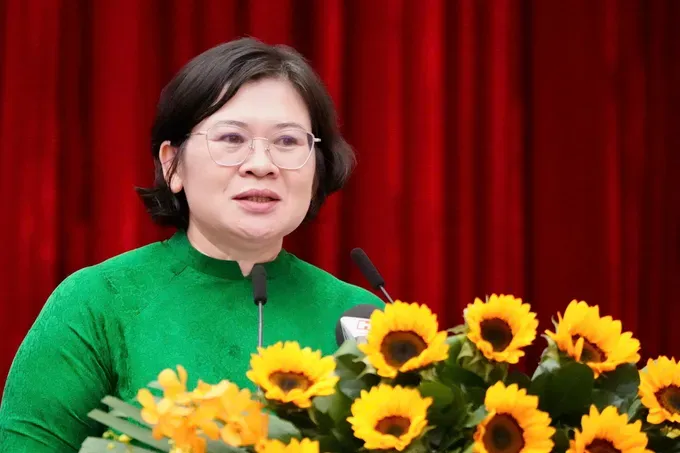
In her remarks at the gathering, Ms. Van Thi Bach Tuyet, Deputy Secretary of the Ho Chi Minh City Party Committee, noted that in 2025, journalists and editors from the city’s press agencies were highly active, producing many works and article series linked to major national events and key policies of the Party and the State.
She said that press and publishing agencies have demonstrated a strong sense of responsibility, serving as a bridge to promptly and fully convey the Party’s and State’s viewpoints and policies to the public.
The city’s cultural and arts sector has also seen positive results, with many notable works and frequent festivals and cultural events delivering both artistic and economic benefits.
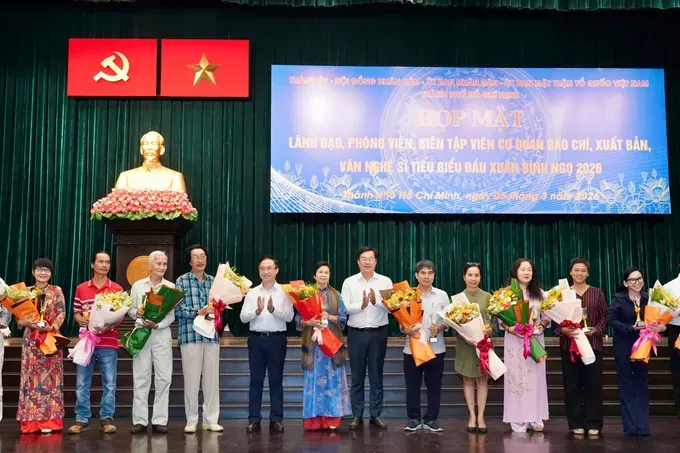
According to her, Ho Chi Minh City is focusing on developing an action program to implement Politburo Resolution 80 on cultural development, while introducing solutions to achieve the best outcomes.
The city aims for comprehensive human development, closely linking economic growth with social progress, equity and quality of life. She stressed that Ho Chi Minh City should not only be an economic hub but also a livable city where residents have opportunities for development, access to healthcare and education, and a safe living environment.
Ho Chi Minh City is preparing to develop a “Happy Family Index” as a foundation for building a civilized, modern and compassionate city. It will also effectively implement the national target program on cultural development for 2025–2030, while promoting cultural industries to become a key economic sector, aiming to turn the city into a cultural industry hub and creative city in Southeast Asia.
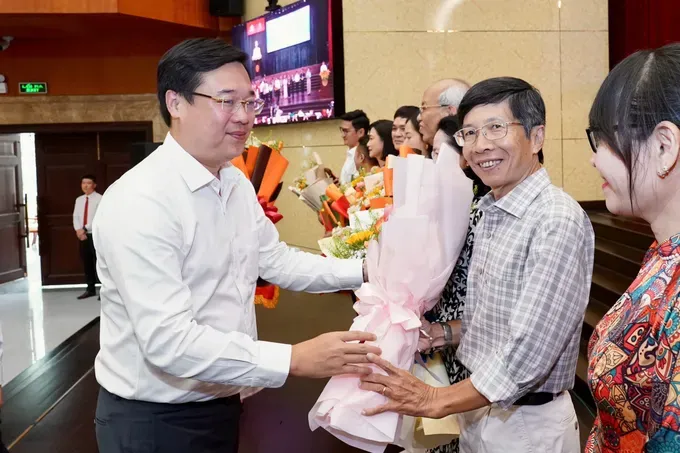
At the same time, the city plans to diversify and promote literary, artistic and distinctive cultural values to the world; and also continues expanding the Ho Chi Minh Cultural Space, investing in a synchronized and focused manner to complete the cultural infrastructure system from the city to the grassroots level.
Key symbolic projects are expected to be completed, including a Traditional Arts Center, a Symphony–Music–Dance Theater, the Rach Chiec National Sports Complex, multi-purpose commercial and entertainment complexes, and large-scale themed parks.
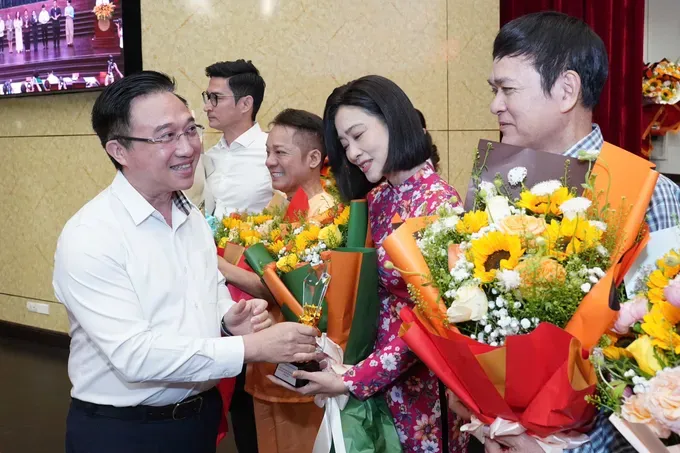
These are some of the key directions set by the City Party Committee for relevant agencies to study and propose solutions for cultural development in the city in the coming period, in order to concretize and implement Resolution 80, the Deputy Secretary of the Ho Chi Minh City Party Committee shared.
According to the Deputy Secretary of the Ho Chi Minh City Party Committee, by the end of 2028, Ho Chi Minh City is expected to have a modern multi-purpose performance center in the Thu Thiem New Urban Area, serving cultural events and festivals.
On the occasion of the 50th anniversary of the city being named after President Ho Chi Minh, the city will also build a large, modern memorial site dedicated to President Ho Chi Minh at the Nha Rong – Khanh Hoi Port area, which will host various cultural activities for the community.
She affirmed that the development of cultural institutions, along with land-use planning and policy mechanisms, has received strong attention from city leaders. In the planning and review of state-managed facilities following the restructuring of the administrative apparatus, the city will prioritize allocating additional facilities for cultural, sports and community activities.
On behalf of the city’s leadership, Deputy Secretary of the Ho Chi Minh City Party Committee Van Thi Bach Tuyet received the delegates’ opinions and noted that the city has reaffirmed its commitment to fulfilling its long-standing pledge to build the Ho Chi Minh City Symphony, Music and Dance Theater.
The city has also assigned the Party Committee’s Commission for Propaganda and Mass Mobilization and the municipal Department of Culture and Sports, along with relevant agencies, to study and propose policies to support the development of culture, arts and literature. The city needs specific mechanisms and policies for this sector to create more motivation and conditions for producing high-quality works for the public and promoting them internationally.
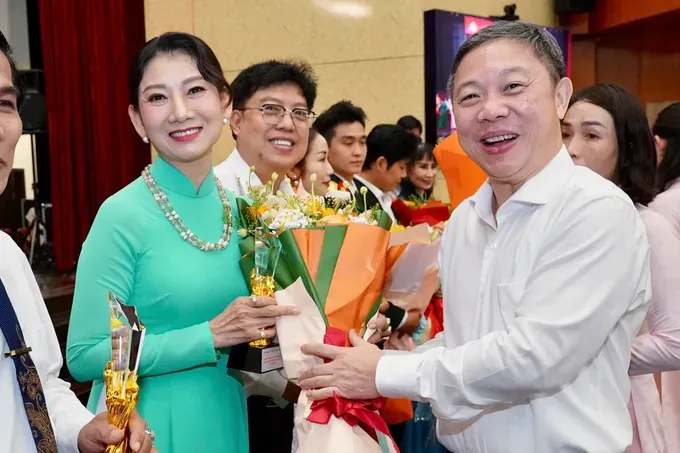
Regarding education, the city is implementing school-based programs to promote cultural values and traditional art forms of the nation. It also focuses on training and fostering personnel working in cultural fields, state management of culture, and especially artists and those supporting artistic activities in today’s digital environment. The cultural sector is advising on measures to ensure culture develops strongly, keeps pace with global trends, leverages the city’s strengths, and becomes an important pillar of sustainable development while nurturing the good values of Ho Chi Minh City’s people.