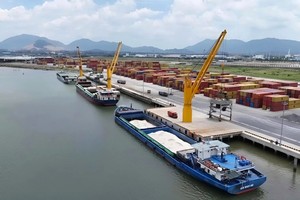
The Ministry of Finance reported at the Government's regular June meeting and an online conference with local authorities that exports continued to be a bright spot for the economy in the first six months of 2026. Total merchandise import-export turnover was estimated at more than US$549 billion, up more than 27 percent from the same period last year. The target of lifting total import-export turnover above US$1 trillion in 2026 is becoming increasingly achievable. These figures demonstrate the economy's resilience amid ongoing uncertainty in global trade.
However, growth figures reveal only part of the picture. The other half consists of trends that became increasingly evident in the first six months of the year and will directly affect the remainder of 2026. The United States has continued to intensify trade remedy investigations, while the European Union is stepping up enforcement of its Deforestation Regulation. Many other markets are also tightening requirements on product traceability, green standards, carbon emissions, social responsibility, and rules of origin. These barriers are no longer merely forecasts or warnings but are already affecting individual export orders.
For businesses, the primary concern has always been how to secure more orders and expand into new markets. While this remains an important question, it is no longer the biggest challenge. Vietnam has signed 17 free trade agreements (FTAs), including several new-generation FTAs. The United States remains the country's largest export market, while the EU, Japan, South Korea, ASEAN, the Middle East, and many emerging markets continue to offer growth potential. The key question now is not whether markets are available, but whether Vietnamese products are capable of meeting the new requirements of global trade.
Entering international markets now requires more than simply meeting quality standards. Businesses must demonstrate the origin of raw materials, production processes, traceability, emissions levels, localization rates, and transparency throughout the supply chain. Competition for Vietnamese goods no longer begins at overseas retail outlets, supermarkets, or border checkpoints, but at raw material production areas, factories, laboratories, and corporate management systems.
At the same time, Vietnam continues to face internal challenges. The slow development of supporting industries means many sectors remain heavily dependent on imported materials, while many agricultural exports are still shipped in raw form. Even industries posting strong growth, such as rice and coffee, have recorded higher output without a corresponding increase in value added.
The Government is determined to achieve double-digit economic growth. To meet that goal, exports must remain one of the country's most important growth engines. However, sustaining export growth requires more than trade promotion. It also depends on institutional reform, the development of supporting industries, digital transformation, science and technology, logistics, raw material supply areas, workforce training, and stronger corporate governance.
Accordingly, the key task for boosting economic growth in the second half of the year is to upgrade the country's manufacturing capacity. This includes continuing administrative reforms, reducing regulatory compliance costs for businesses, developing supporting industries to raise localization rates, building a comprehensive traceability system, strengthening early warning mechanisms for trade remedy cases, and making more effective use of signed FTAs.
Competitiveness also depends on businesses themselves. Investment in technology, innovation, digital transformation, brand building, and supply chain transparency is no longer an option for gaining a competitive advantage but has become a prerequisite for maintaining market access. Under the new rules of global trade, standards are no longer barriers but measures of competitiveness.
Protectionist trends and changes in the trade policies of major economies are unavoidable. These pressures will serve as a test of the resilience and capability of Vietnam's economy.
If Vietnam succeeds in overcoming the new hurdles related to standards, technology, and value-added production, it will not only move closer to its goal of US$ 1 trillion in annual import-export turnover but also establish a stronger foundation for achieving double-digit economic growth in 2026 and beyond, while building a manufacturing sector capable of competing and thriving in a rapidly evolving global trading system.
Vietnam seafood exports rise 12.8 percent in first half, cost pressures mount
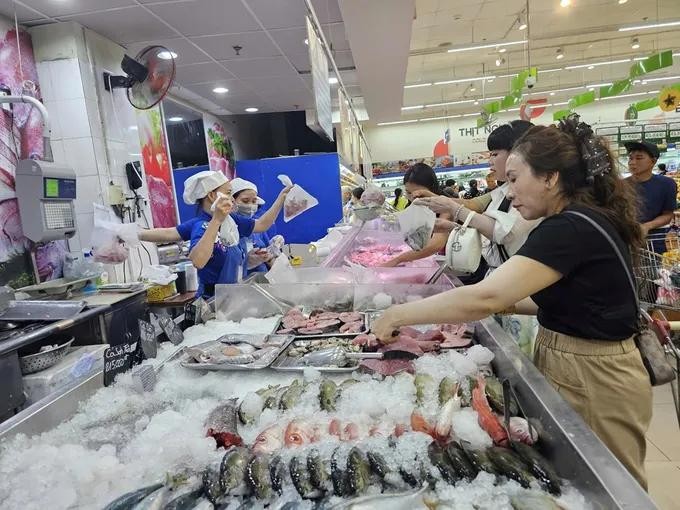
Vietnam's seafood exports approached US$ 6 billion in the first half of 2026, driven by strong demand from China and Hong Kong. However, businesses warn that higher logistics costs, raw material shortages, and trade barriers will pose increasing challenges in the second half of the year.
According to the Vietnam Association of Seafood Exporters and Producers (VASEP), Vietnam's seafood export turnover reached nearly US$ 6 billion in the first six months of 2026, up 12.8 percent year on year.
China and Hong Kong remained the largest import market and the main growth driver for Vietnam's seafood exports. Export turnover to the market reached US$1.5 billion in the first half of the year, up 37.9 percent from the same period last year and accounting for 25.8 percent of the country's total seafood export value.
However, businesses and industry experts said pressure is increasingly shifting toward transportation costs, raw material supplies, and trade barriers.
Le Hang, Deputy Secretary General of VASEP, said the seafood industry is expected to maintain momentum in high-growth markets such as China, ASEAN, and South Korea in the second half of the year, while strengthening compliance with regulations in the United States, the EU, and Japan. The industry must also effectively control input and logistics costs and increase the share of deeply processed and value-added products. These measures will be necessary to achieve the Ministry of Agriculture and Environment's full-year seafood export target of US$11.5 billion for 2026.