From July 1, 2026, Circular No. 77/2025/TT-NHNN issued by the State Bank of Vietnam on ensuring safety and security in the provision of online banking services officially takes effect.
Under the present regulation, credit institutions must introduce additional security measures for high-risk customers and high-value transactions. One of the most significant changes is that many online fund transfers and withdrawals made by organizations and businesses cannot be completed without direct approval and facial biometric authentication by the company's legal representative.
To comply with the circular, many commercial banks have announced that beginning July 1, electronic banking services, including online transfers and withdrawals, may be temporarily suspended if a company's legal representative has not completed the required update of personal information and biometric data.
Commercial banks have also issued detailed guidance for different customer groups.
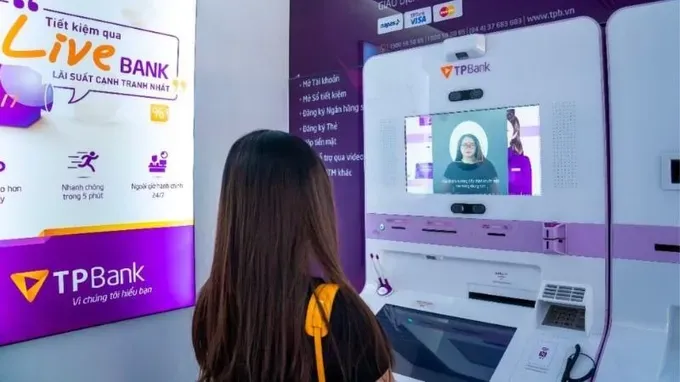
TPBank said it completed transaction classification on its TPBank Biz platform before July 1. For household businesses and micro-enterprises using simplified accounting systems, the legal representative must complete facial verification together with a one-time password (OTP) when making fund transfers or e-wallet transactions of VND10 million (US$380) or more per transaction, or VND20 million or more per day, as well as bill payments exceeding VND100 million or international money transfers.
For organizations established or beginning a banking relationship with TPBank within the previous 12 months, facial authentication is required for transfers and payments of VND50 million or more per transaction or VND100 million or more per day. TPBank said these thresholds are set below the maximum regulatory limits to provide additional protection for corporate funds.
Similarly, ABBank requires facial authentication for businesses that have maintained accounts for less than 12 months or were established within the previous 12 months when conducting transactions of VND50 million or more per transaction or VND100 million or more per day. For customers using the simplified accounting model in which the same person both creates and approves transactions, the legal representative must complete facial authentication for transactions of VND10 million or more per transaction or VND20 million or more per day.
ABBank has also revised the permissions for users assigned the combined "Creator and Approver" role. Under the new rules, users may initiate transactions above the prescribed threshold only if they are the company's legal representative. They may approve only transactions they created themselves and may not approve transactions initiated by other users. Transactions below the prescribed thresholds will continue to follow existing procedures.
Meanwhile, ACB requires corporate customers, except those using simplified accounting systems, to register at least two transaction roles on its ACB ONE BIZ platform.
Specifically, companies must assign one user the role of "Chief Accountant" to create transactions and another user the role of "Transaction Approver," preferably the legal representative or an authorized person. Accounts currently assigned "All Permissions" must be converted to the "Transaction Approver" role, while an additional user must be designated to create transactions.
In addition to TPBank, ABBank and ACB, several other commercial banks, including Vietcombank, VietinBank, Techcombank, Sacombank and MB, have urged corporate customers to complete biometric data updates, review user permissions and register transaction approver accounts before July 1 to avoid disruptions to payment services.