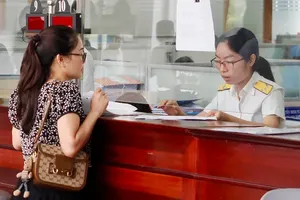
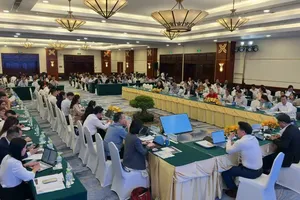
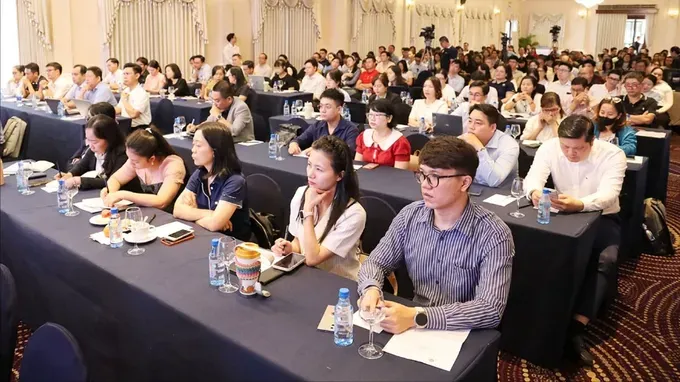
On December 19, the Customs Branch Region II, in coordination with the Ho Chi Minh City Investment and Trade Promotion Center (ITPC), held a dialogue between businesses and city authorities to address difficulties in implementing tax policies and specialized management and inspection regulations for import–export goods.
Prolonged cargo storage raises concerns among businesses
One of the most pressing issues raised by import–export enterprises at the conference was specialized inspection procedures.
A representative of Tu Anh Import–Export Trading and Services Company said that under official guidance from the customs authority, enterprises that have met food safety requirements three consecutive times are eligible for reduced inspections based on self-declaration and self-responsibility. However, in practice, some customs officers still require additional confirmation documents from specialized management agencies, creating extra procedures and prolonging customs clearance times.
Enterprises also face difficulties in determining whether goods are subject to specialized inspection requirements. Some products that were previously inspected were later, following reviews under Decree 15 and Circular 01/2024, determined to fall outside the scope of management. Meanwhile, enterprises were unable to identify a competent agency to receive their dossiers, raising the risk of port delays and additional costs.
Another import–export company also reported that many shipments of imported food ingredients had remained at ports for extended periods because reduced inspection procedures had not yet been applied, despite the enterprise having received written responses from relevant ministries.
In response to the enterprises, Ms. Le Thi Thuy Dung, Deputy Head of the Customs Operations Division at Customs Branch Region II, affirmed that regulations on exemptions and reductions in food safety inspections are not new and are clearly stipulated in Decree 15/2018. Reduced inspections are applied directly at border-gate customs offices based on enterprises’ self-declaration and self-responsibility, with customs authorities conducting only random checks at prescribed rates. The unit is working with the Ho Chi Minh City Food Safety Department to resolve cases lacking a designated specialized authority.
New proposals from enterprises
At the dialogue, another enterprise reported difficulties in importing animal feed. Unlike many administrative procedures that have been decentralized to local authorities, animal quarantine remains largely handled by agencies under the Ministry of Agriculture and Environment, resulting in prolonged processing times, particularly in the receipt and issuance of documents, and causing significant storage costs for many shipments.
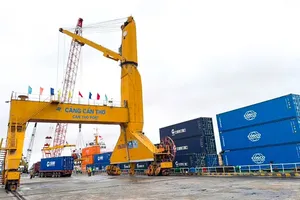
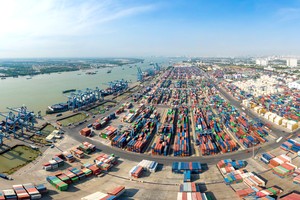
Quarantine activities are mainly concentrated at Cat Lai Port, leading to a concentration of cargo at a single location, congestion and slower logistics turnover. Despite having certified warehouses that meet veterinary hygiene standards, the enterprise faces obstacles in moving goods for quarantine due to new coordination requirements under Decree 167 involving customs supervision.
Regarding this issue, Ms. Le Thi Thuy Dung said that quarantine falls under the authority of specialized management agencies. However, as it is directly linked to customs clearance procedures, customs authorities will continue to fully record enterprises’ feedback and report it to the competent authorities. She emphasized the importance of distinguishing between quality inspections, which permit goods to be moved to approved locations, and quarantine, which must be carried out at designated border-gate or quarantine sites.
A representative of Decathlon Vietnam proposed applying post-clearance inspections to selected goods, such as food and food-contact materials, to ease border-gate pressure and lower business costs.
In response to the proposal, Ms. Le Thi Thuy Dung noted that specialized inspections cover multiple areas, including quality, food safety, quarantine and cultural regulations, with each area overseen by a different line ministry as assigned by the Government. Customs authorities are not the lead agencies for specialized inspections but are responsible only for customs clearance at border gates; for high-risk goods, clearance must be based on confirmation from the relevant specialized management agencies.
She added that post-clearance inspection has previously been discussed in reform programs, but its implementation requires a clear roadmap and comprehensive impact assessment, particularly as the Government is currently revising several major laws related to the management of import–export goods.
Some enterprises also noted that online administrative procedures remain slow and frequently encounter technical errors. Mr. Nguyen Minh Quang, Deputy Head of the Information Technology Division at Customs Branch Region II, said that customs authorities are accelerating the rollout of a digital customs initiative to enable centralized clearance and full digitization of documents.